
The rise of gaming in South Africa and its impact on young people



Over the past few years, the gaming industry has become one of the fastest-growing entertainment sectors in South Africa.
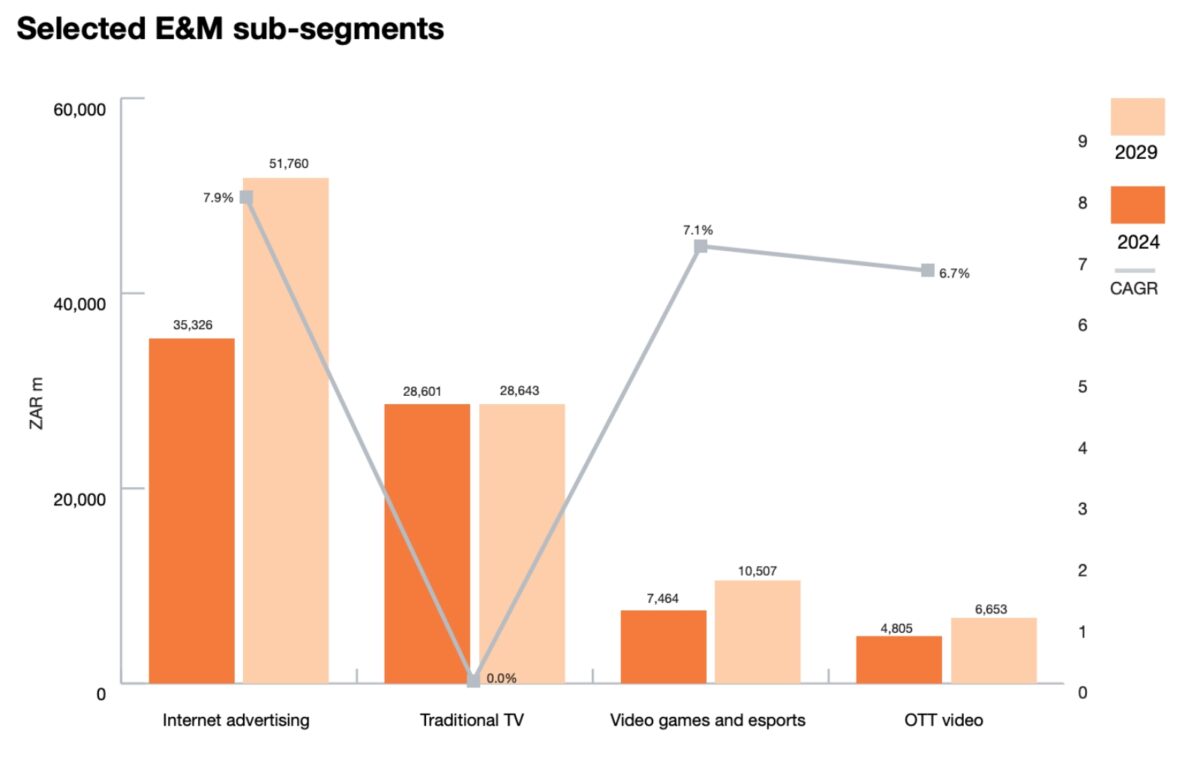
According to PwC’s latest Africa Entertainment and Media Outlook report, South Africa’s video game and esports industry was valued at R8.1 billion at the end of 2025.
This is almost double what the industry was worth at the start of the decade, being valued at R4.8 billion in 2020.
PwC estimated the Compound Annual Growth Rate (CAGR) of South Africa’s gaming industry over the course of the decade to average around 7.1%.
On the back of this, the consulting firm said the industry’s value was likely to reach up to R10.5 billion by 2029.
“South Africa is leading the continent in video games and esports, with mobile gaming dominating, driven by affordability and accessibility,” PwC said.
In 2024, South Africa recorded the highest consumer spending across Africa’s three largest gaming markets, reaching R5.5 billion at a 4.6% CAGR.
Nigeria and Kenya followed at $176 million and $153 million, respectively, albeit with higher CAGRs of 7.4% and 6.9%, respectively.
Despite the growing success of gaming in South Africa, much of the value generated by the industry is directed towards offshore developers and publishers. Africans make up less than 1% of all game developers worldwide.
Cape Town-based studio Free Lives stands out as the clearest example of a domestic commercial success, thanks largely to the viral success of the studio’s first game, Broforce.
Released in 2013, the game has since sold an estimated 2.9 million copies on PC alone and has generated more than R500 million in revenue.
Other local studios which have garnered some attention in recent years include the Johannesburg-based 24Bit Games, which was acquired by American video game publisher Annapurna Interactive in 2023 for an undisclosed sum.
The effects of video games on young South Africans
While video games are enjoyed by all age groups today, the medium is still generally considered to be targeted primarily towards adolescents.
A 2026 study reported that up to 71% of children between the ages of 2 and 17 play video games, with as much as 90% of teenagers doing so. Approximately 4 in 10 teenagers identify as gamers, with 41% reporting they play games daily.
With the popularity of games amongst younger demographics, much research has been conducted on the benefits and drawbacks of regular game play.
The study determined that gaming could lead to loss of sleep and mental health concerns, but only when it is done in an addictive manner that is not moderated.
“A persistent concern regarding psychological well-being is the link between violence in a video game and physical aggression,” the study said.
“Although a 2018 systematic review and meta-analysis found a significant relationship between the two, the effect size was small, suggesting that context may moderate the association.”
The study revealed that video games can also be beneficial for the psychological well-being of young people by providing an avenue for stress relief and emotional reset.
They can also help foster social bonds among players and gaming communities, particularly for those who have difficulty forming offline connections.
Video games can also enhance cognitive ability, with fast-paced action games supporting quicker reaction times and complex strategy games promoting executive functioning.
This can aid academic performance through transferable skills such as critical thinking and problem-solving, with educational games gaining popularity as teaching tools.
The study even found that video games can promote physical activity through exergaming, which involves incorporating movement into gameplay as a form of exercise.
This can then serve as a tool for therapy and rehabilitation for individuals who have specific health conditions or are recovering from injuries.
“While the potential health risks of video gaming remain a topic of concern, a growing body of evidence highlights the potential benefits of video game use for adolescents and young adults,” the study concluded.
“Video games show promise as a novel avenue for adolescents and young adults to cultivate social relationships, develop cognitive skills, promote positive educational outcomes, and even increase physical activity.”










 Loading ...
Loss of sleep I’ve experienced , mental health not so much infact it actively improves my mental health