
The IDC gave black-owned businesses R37.3 billion and white-owned businesses R5.4 billion


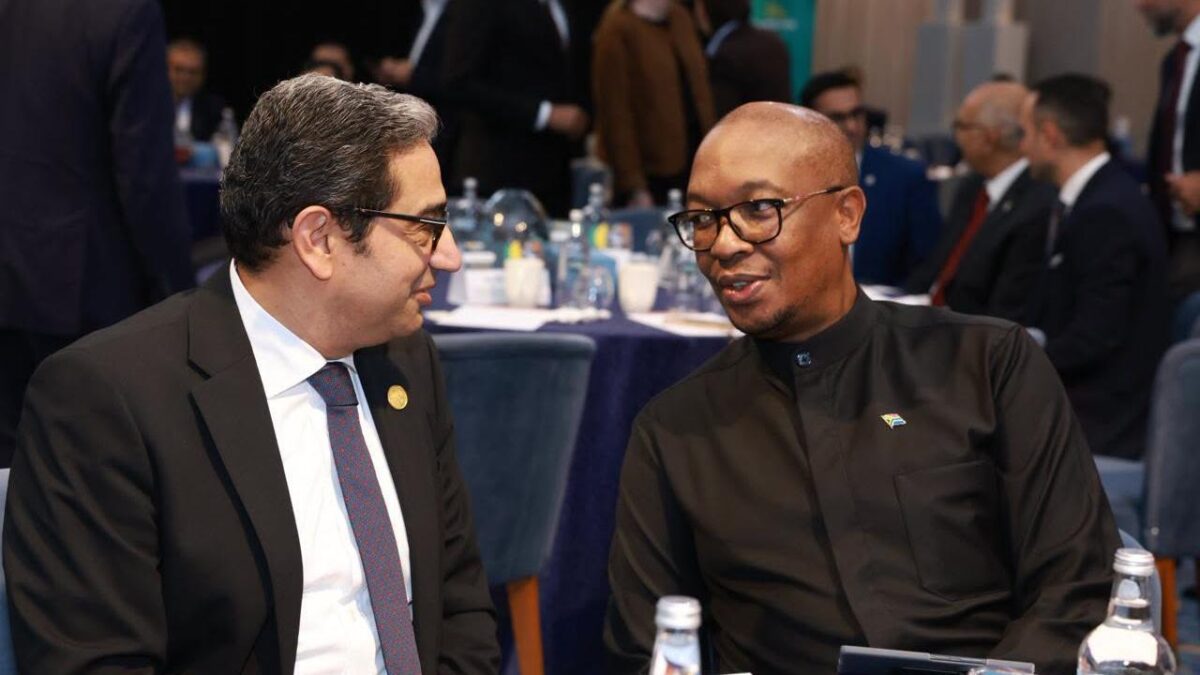
The Industrial Development Corporation (IDC) allocated R37.3 billion to black-owned businesses and R5.4 billion to white-owned businesses.
This was revealed by the Minister of Trade, Industry and Competition, Parks Tau, in response to a Parliamentary question from National Assembly member Jeffrey Mtolo.
Mtolo asked Tau for details about funding decisions of development finance institutions where black-owned manufacturing enterprises have been denied funding.
Tau responded, saying they have engaged with the IDC regarding concerns raised about funding decisions affecting black-owned enterprises.
“The Industrial Development Corporation continues to engage stakeholders on the concerns raised,” he said.
In addition, the IDC Board has established an Independent Complaints Review Panel (ICRP), which is now operational.
The Minister said that the IDC remains committed to advancing industrialisation, transformation and inclusive economic growth.
He provided details on funding from the Industrial Development Corporation for black- and white-owned companies as of 31 March 2026.
- Black-owned businesses accounted for 374 of the IDC’s 683 business partners.
- Black-owned companies represented R37.3 billion in exposure and undrawn facilities.
- Majority white-owned businesses accounted for 59 business partners.
- White-owned businesses accounted for R5.4 billion in exposure and undrawn facilities.
This means that black-owned companies accounted for 55% of the businesses that received funding, and white-owned companies 9%.
“The IDC’s portfolio is, therefore, substantially weighted towards transformed ownership categories and support for black-owned enterprises,” Tau said.
“The remainder of the companies supported by the Corporation are listed entities, subsidiaries and foreign-owned companies.”
The IDC and startup funding
Tau explained that the IDC supports industrial development, transformation and the growth of emerging enterprises, including start-ups.
“Funding decisions are not based on proof of large-scale commercial success, but on an assessment of developmental impact,” he said.
“The IDC also considers commercial viability, job creation potential, transformation objectives and long-term sustainability.”
The IDC’s project development pipeline spans strategic sectors, including agro-processing, manufacturing, and renewable energy.
It also invests in critical minerals beneficiation, green hydrogen, new energy vehicles, digital infrastructure, the blue economy and regional industrial value chains.
Projects are at various stages of development, ranging from feasibility studies and project preparation to commercialisation, implementation and expansion.
Recent examples include green hydrogen infrastructure hubs in Boegoebaai, Saldanha, Coega and Richards Bay.
It also backed the Frontier Rare Earths beneficiation project, and e-mobility and battery-electric vehicle initiatives under the New Energy Vehicle Programme.
Others include renewable energy aggregation projects supplying power to industrial users, as well as agro-processing and mineral beneficiation projects.
In the 2026 financial year, the IDC approved 22 start-up transactions worth R2.9 billion, with an anticipated 5,555 jobs to be created.
“The IDC continues to support enterprises across the business lifecycle, including start-ups, expansionary investments, and working capital funding,” he said.









 Loading ...
Please give a breakdown of the Black businesses according to so-called races