
South African city without stable water charges residents between R406.50 and R8,953.20 if they have boreholes on their properties


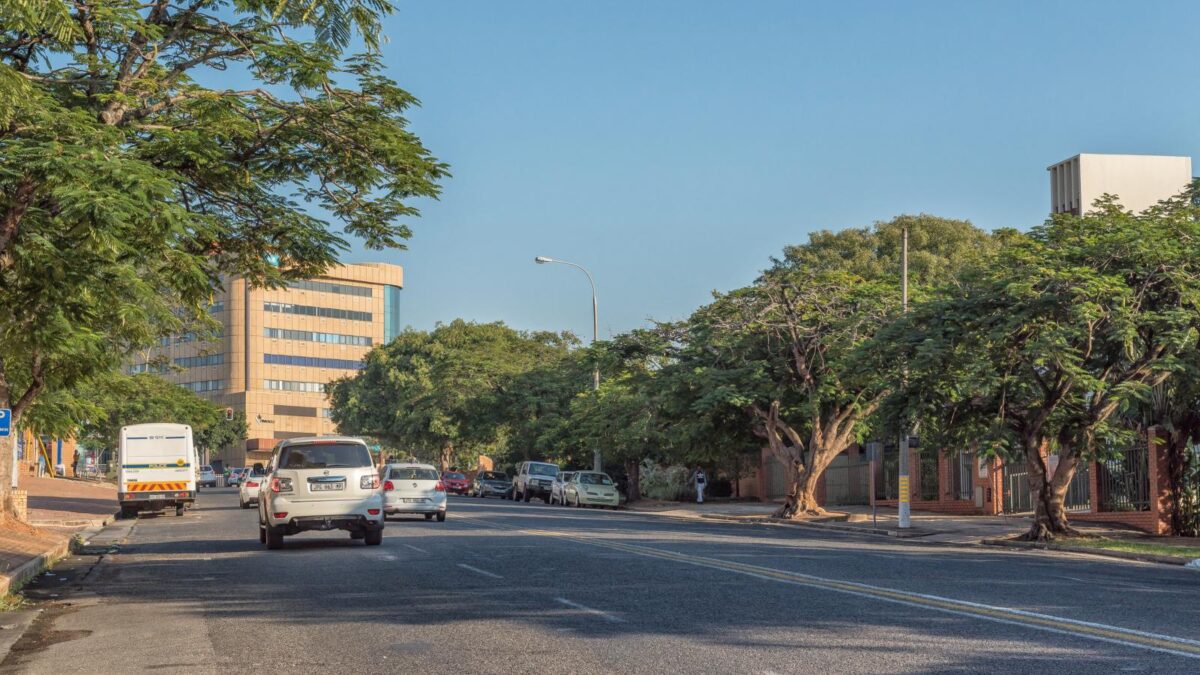
The Mbombela Local Municipality is charging properties with more than one borehole up to R8,953.20, even though it cannot provide them with a stable water supply.
This, Mbombela Local Municipality councillor Ken Robertson said, is unacceptable and should be challenged.
Mbombela Municipality is a local municipality within the Ehlanzeni District Municipality in Mpumalanga, South Africa.
Many well-known tourist towns fall under its authority, including Mbombela (Nelspruit), Hazyview, and White River.
The beauty of the South African bushveld and the charm of the small towns hide the fact that this area is struggling with serious water problems.
Mbombela Local Municipality’s water problems stem from rapid population growth, ageing infrastructure, and significant water losses.
One of the most pressing technical issues is the volume of treated water that vanishes before it reaches paying customers.
These leaks, pipe bursts, and unauthorised abstractions cost the municipality tens of millions of rands annually.
Mbombela’s urban and peri-urban populations have grown significantly over the last decade, outstripping the design capacity of its local bulk water infrastructure.
Taps frequently run dry in some areas. The municipality acknowledged that the bulk water supply networks have not kept pace with regional expansion.
Several rural villages have suffered from inconsistent supply for years, and residents are often forced to buy water to fill tanks.
The issue reached such concerning levels that the South African Human Rights Commission had to step in in 2024 to address the issue.
Mbombela Local Municipality charges residents for boreholes

Robertson said that they are opposing the Mbombela Local Municipality’s decision to keep charging monthly levies on private boreholes.
He said this was unconscionable, as large parts of the Municipality still lack reliable running water.
Residents are using boreholes due to the Municipality’s failure to ensure a reliable water supply, but they are now being penalised with additional levies.
In a recent resolution, the ANC-controlled council rejected a motion by the Freedom Front Plus to scrap the monthly levies on private boreholes.
According to a recent municipal document, R16.5 million has been budgeted for water tankers for the period 1 October to 31 December 2026.
This represents an average monthly expenditure of R5.51 million, amounting to R66 million annually.
The document lists 46 water tanker entries detailing how water is supplied to various wards and rural areas.
Only three of these are municipal water tankers, which means that contractors supply the rest.
These water tanker expenses are racked up against the backdrop of the Municipality’s ongoing water crisis.
Meanwhile, monthly levies are imposed on residents and businesses that use private boreholes connected to municipal infrastructure.
According to the available information, these levies by the Mbombela Local Municipality amount to:
- R406.50 per month per borehole for residents.
- R877.12 per borehole for businesses; and
- Between R6,688.15 and R8,953.20 for properties with more than one borehole.
“The Freedom Front Plus insists that Mbombela drastically change its approach to water supply,” Robertson said.
He argued that the millions spent annually on water transport should be allocated to constructing permanent water infrastructure.
“This includes repairing and upgrading existing pipelines, developing local boreholes and expanding water networks to underserved communities,” he said.
He added that there should be transparency concerning water supply contracts, tender processes, costs and contractors’ performance.
“Water tankers have become a lucrative industry that warrants thorough investigation and transparent contract management,” he said.
He said that the municipality should move away from depending on water tankers and invest municipal funds in sustainable water infrastructure.
You have read 1 out of 5 free articles. Log in or register for unlimited access.








 Loading ...
Socrates didn’t like democracy. Not because he was a tyrant.
We only know Socrates through Plato and Xenophon — he never wrote himself. In Plato’s Republic (Book 6) he absolutely critiques Athenian democracy, not because he wanted tyranny, but because he thought it rewarded rhetoric over competence. He famously compared the state to a ship:
Who should be captain? Anyone, or only those educated in seafaring?
For him, voting was a skill, not a random intuition, and had to be taught systematically. He wasn’t an elitist by birth — he wanted an intellectual democracy, where voting is linked to rational thought, not just birthright.
Democracy treats every opinion as equal, so the uneducated citizen holds the same voting power as the expert. He feared this leads to demagoguery — charismatic leaders exploiting the desire for easy answers.
In an election, the sweet shop owner says “this doctor hurts you, gives you bitter potions, tells you not to eat what you like, while I give you delicious sweets.” The audience would choose the sweet shop owner over the doctor who tells hard truths.
“When you are sick, you want a trained doctor, not a public vote on your treatment”. And “If we trust experts for medicine, why do we not trust experts for politics?”
He was put to death by democratic vote.
In 399 BC Athens put Socrates on trial for corrupting the youth and impiety. A jury of 500 Athenians was invited to weigh the case and decided by a narrow margin that he was guilty, and sentenced him to death by hemlock. It’s seen as the classic tragic example of the foolishness of voters.
Socrates wasn’t anti-democracy in principle — he was against uneducated democracy without critical thinking, which he thought inevitably becomes demagoguery, a system Greeks feared above all.