
Taking money from hard-working South Africans to fund a bloated and mismanaged government



South Africans are burdened with some of the highest taxes in the world, yet receive little in return, as public services remain dysfunctional and state corruption widespread.
This is the view from a growing number of economists and policy analysts who argue that South Africa’s high-tax, high-spending model is failing its citizens.
Despite this, the government’s 2025 Budget has imposed further tax hikes, including above-inflation increases on alcohol and tobacco, commonly referred to as sin taxes.
There was an inflationary increase in South Africa’s general fuel levy, which raised petrol and diesel prices.
As inflation pushes more middle-income earners into higher personal income tax (PIT) brackets, employed South Africans are seeing an increasing share of their earnings go to the state, not because of new tax laws, but because of so-called bracket creep.
The government justifies these rising taxes as necessary to fund ballooning expenditure and service a mounting debt burden.
Public spending is projected to grow at an average of 5.4% annually, reaching R2.81 trillion by 2027/28.
With sluggish economic growth, the state has increasingly turned to local and international lenders, pushing debt to a projected 77.4% of GDP by 2025/26.
Already, R1.2 billion is spent each day just to service this debt.
Meanwhile, IMF and World Bank studies estimated that South Africa’s public sector wage bill has consistently consumed between 12% and 13% of GDP.
A Centre for Risk Analysis report showed that South Africa has the third-highest government wage bill as a share of GDP among 20 major economies.
Despite this unprecedented spending, basic services continue to deteriorate. Municipalities across the country battle to deliver water, electricity, sanitation, and refuse removal.
Infrastructure is crumbling. Hospitals, schools, and police stations are increasingly under-resourced, forcing many South Africans to turn to private alternatives if they can afford to.
Critics argue this disconnect, rising tax revenue and debt alongside declining service delivery — points to deeper structural problems: mismanagement, corruption, and cadre deployment.
They contend that South Africa’s fiscal model takes money from a small, heavily taxed segment of productive citizens and redirects it into an inefficient and often wasteful state system.
Taking money from hard-working South Africans

Many respected economists, including Nobel Prize-winner Milton Friedman, have long criticised high taxation by the state.
Friedman argued that free markets and the private sector are far more efficient at allocating resources than government institutions.
From this perspective, taxing the productive sectors of society to fund a bloated and often inefficient state is both economically unsound and counterproductive.
United States economist Thomas Sowell also advocated against using taxes to transfer wealth from productive sectors to inefficient government programs.
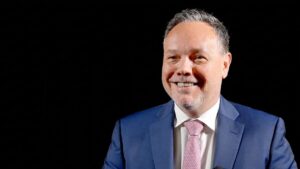
Award-winning South African economist, Dawie Roodt, has regularly lambasted the South African government for its inefficiency and wasting taxpayers’ money.
In a recent interview, Roodt said he is opposed to the South African Revenue Service (SARS) getting additional funding to collect more taxes.
He explained that South Africa’s economy is not growing and that the tax base is extremely narrow, meaning a small number of people pay most of the taxes.
The choice is to take money from this small group of people and give it to politicians to spend, or leave it in their hands to reinvest in the economy.
The tax burden in South Africa is currently very high, which means that the private sector has less money to invest.
“It is always better to leave the money in the hands of the private sector than to give it to politicians to spend,” he said.
“Most of the money that goes to the state through taxes is basically wasted. It is badly managed and spent.”
Roodt explained that he prefers an environment in which as much money as possible is left in the private sector.
“If you give SARS more money, it will squeeze even more money out of the private sector to the detriment of economic growth,” he said.
He said the best way to get a politician to spend less money is to give them less money.





 Loading ...
I don’t believe for a second that the average anc cadre understand how an economy actually works. They punish the very people they need to fill their tax trough, which they then glut themselves stupid on.
I mean, how dumb is that?
We must stop paying tax to the government and instead appoint a private keeper of the wealth, to whom all tax is paid into a trust account, to be used to fund all the services an actual government should provide. In other words, a parallel state which actually works.
Let the anc government fizzle and die without money to sustain the patronage. Personally, I am surprised that Big business who are so threatened by the anc, have not stepped-up years ago to save our country.
The anc regime is NOT a valid and functional government. It is a criminal mafia which would show up the Italian mafia, as inept.