
Renowned academic Conrad Beyers warns about the worst-case scenario for South African banks


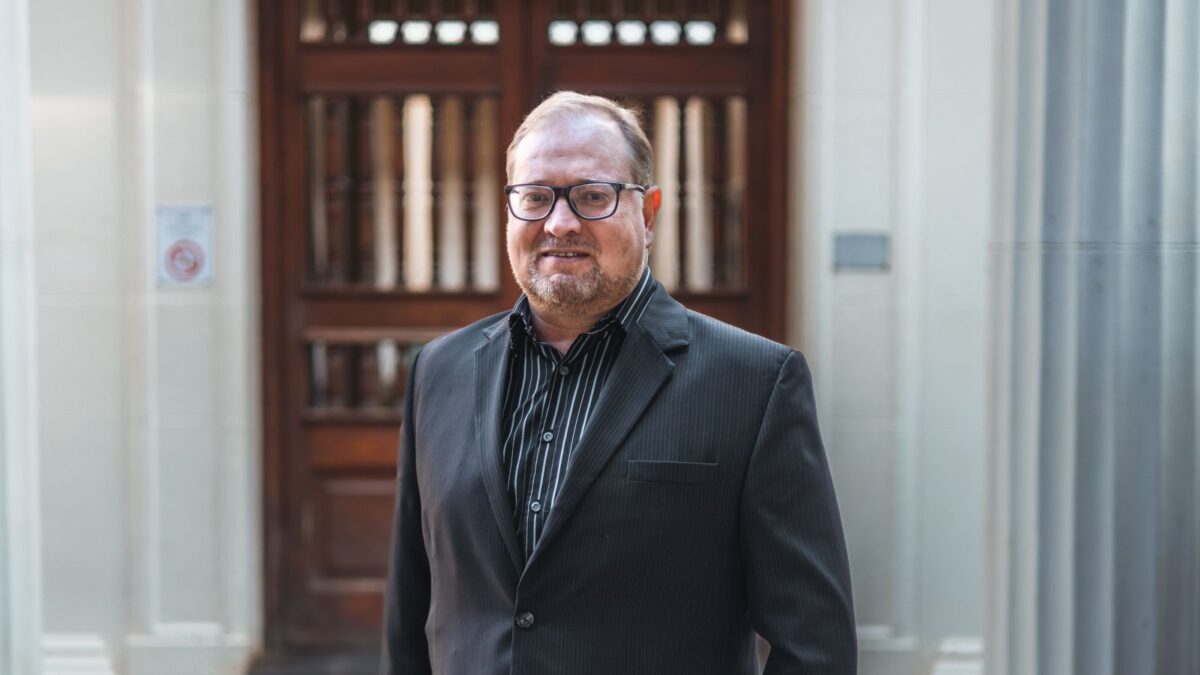
Prof Conrad Beyers, head of the Department of Actuarial Science at the University of Pretoria, warned that South Africa’s banking system underestimates the risk AI poses.
He is a mathematician and actuary whose research focuses on systemic risk and understanding complex real-world networks.
Beyers said that, although Artificial intelligence (AI) is improving people’s lives, it also poses a danger to many industries.
“Entire industries could face disruption in a fraction of the time their leaders might expect,” he said.
“Business, government, and financial leaders pay too little attention to this threat, or approach it with a mindset rooted in an old paradigm.”
“Some of the practices we rely on today could become irrelevant in the new one. This is a global challenge, with direct consequences for South Africa.”
He said that anyone planning the transition to a sustainable future should prepare for what could happen with AI adoption and how quickly they could respond.
He explained that actuaries and risk managers use mathematical models to examine future opportunities and risks, including plausible worst-case scenarios.
These are severe situations or combinations of circumstances that may be unlikely but are conceivable within realistic assumptions about the world.
“AI can make previously impractical actions feasible, speed up decisions and allow many people or businesses to act at once,” he said.
“Such fundamental changes in how industries work can amount to a paradigm shift, which can expand the set of plausible worst-case scenarios and their consequences.”
A warning to South Africa’s banking sector
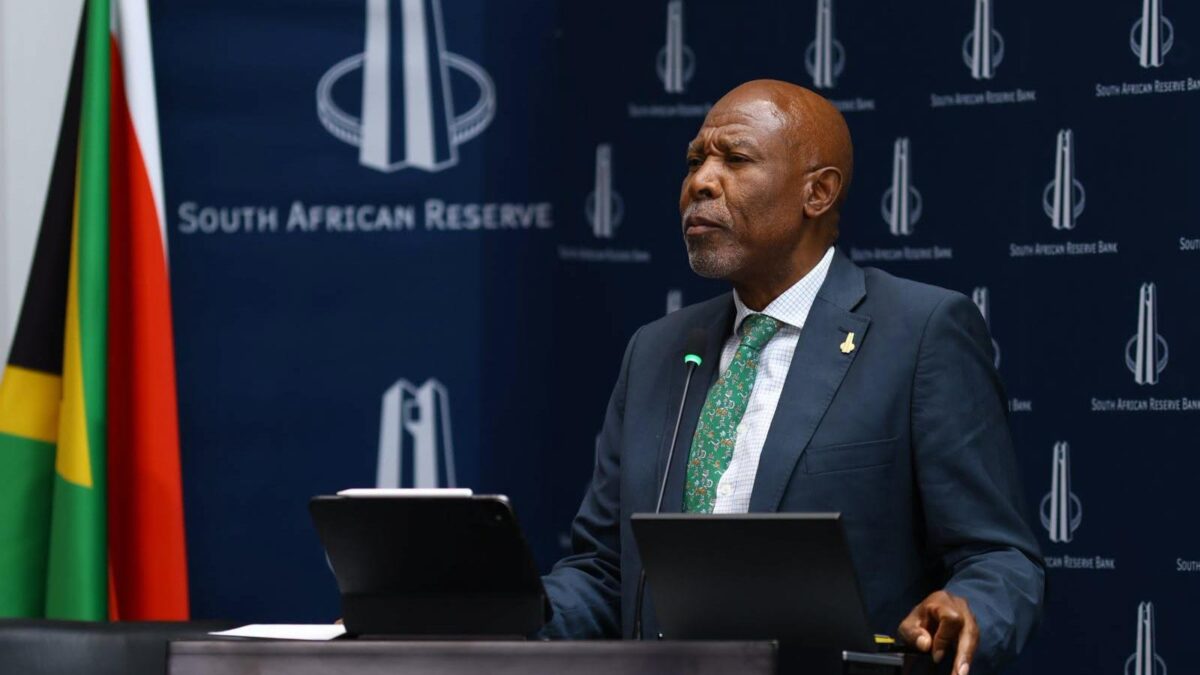
On 16 November 2026, US Federal Reserve Governor Michael Barr warned that AI agents could accelerate withdrawals.
Such an event will cause bank runs to unfold within minutes and overwhelm banks’ ability to respond.
A bank run occurs when many customers rush to withdraw their money because they fear the bank may fail.
Artificial Intelligence and agents open the possibility of new forms of bank runs on a scale and at a velocity never seen before.
Beyers sketched the scenario where a small, innovative bank launches an AI agent that makes it easy for customers to switch banks.
Customers give their consent, and the agent handles the entire process on their behalf within moments.
If enough customers switch at once, the outflow could theoretically sink a major bank within hours.
“When a crisis strikes and you have not prepared for it, you can find yourself in a cycle of perpetual crisis management,” he said.
Authorities can resort to draconian measures, such as blocking transfers. However, that will infringe on people’s rights to move their money or change banks.
He raised the question of whether South Africa’s major banks and the South African Reserve Bank’s (SARB’s) stress tests account for these risks.
“The SARB has access to the data for system-wide tests. If it is not running these stress tests, it should provide the data to university researchers to do it,” Beyers said.
You have read 1 out of 5 free articles. Log in or register for unlimited access.








 Loading ...