
Here is the full DA proposal to the ANC to form local coalition governments accross South Africa


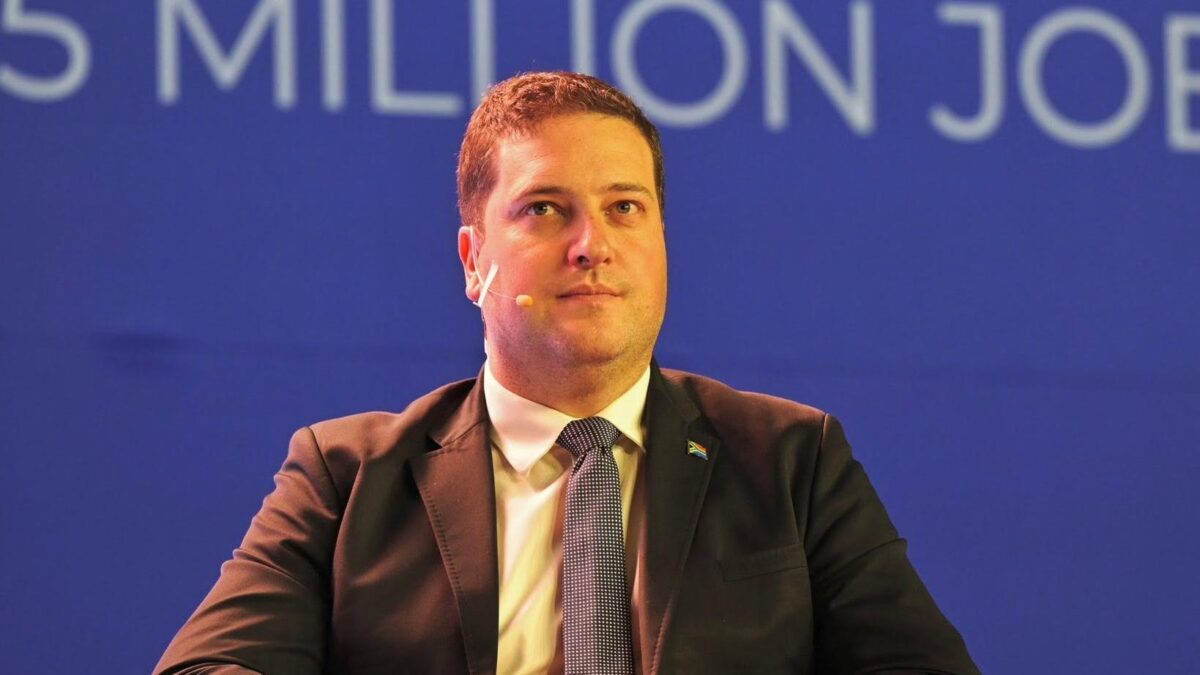
Democratic Alliance leader Geordin Hill-Lewis has published the party’s ‘stability framework’ proposal to the African National Congress (ANC).
He said that proposal would resolve all questions of local government instability for the next five years.
It would also ensure that no council suffers the same revolving door of mayors, giving them the best chance of better service delivery.
“It will cement national and local government stability, both now and in future, and offer flexibility in metro negotiations,” he said.
“It will also accelerate the fight against state capture and corruption and reaffirm South Africa’s non-racial constitutional project.”
Under the proposal, the ANC would lead 93 councils, the DA 24 and the IFP 20, subject to agreement with the IFP.
“Those numbers reflect the principle that the largest party leads the coalition government,” Hill-Lewis said.
“Where the ANC earned the strongest support, we would elect an ANC mayor, and the same principle applies where the DA or the IFP is the largest party.”
The DA leader added that they propose a flexible approach and a willingness to negotiate on the hung metros.
“Our offer would strengthen the Government of National Unity, cementing stability at every level of government, and offer the chance for nationwide progress,” he said.
“It represents a similar principle of co-governance between the ANC, IFP and DA that has thus far saved KwaZulu-Natal from chaos.”
Hill-Lewis argued that it would be a mistake to make the recovery of Gauteng’s cities and other towns and cities depend on unstable coalitions.
“That course guarantees another five years of chaos for residents who have already paid dearly for it,” he said.
“There is a workable, positive alternative. I hope the ANC’s National Executive Committee will give our proposal consideration.”
“I also hope the ANC’s National Executive Committee will authorise its negotiators to meet ours to discuss the outstanding terms.”
Hill-Lewis said they made the proposal in writing during their negotiating engagement on Friday, 20 November 2026. “We have not yet received a response,” he said.
Full DA proposal to the ANC
MR FIKILE MBALULA
SECRETARY-GENERAL, AFRICAN NATIONAL CONGRESS
Dear Secretary-General, Mbalula & The ANC Negotiating Team
RE: A FRAMEWORK PROPOSAL TO STABILISE 137 MUNICIPALITIES IN SOUTH AFRICA IN THE INTERESTS OF DELIVERY AND GOOD GOVERNANCE
1. Purpose
After the negotiation meeting between the African National Congress (ANC) and Democratic Alliance (DA), it was clear that both parties need to recognise what the challenge presented by the current political environment. We have a responsibility to ensure that all citizens live under stable, functional and accountable municipal governments following the 2026 local government elections, and that these governments must deliver for all residents.
Political instability, financial mismanagement, repeated changes of administrative municipal leadership, as well as fragmented governing arrangements have undermined service delivery and public confidence in local government.
The proposal is that, as the two largest parties in South Africa, we have a joint responsibility to the electorate to establish a cooperation framework to stabilise local government. This will ensure that there is stability in municipalities where no party has secured an outright majority, while respecting that the ANC has a distinct political identity and its own policy positions.
In short, our proposed arrangement:
Is based on the principle of proportionality, noting that in a majority of municipalities in South Africa the ANC is the largest party;
Respects the will of the voters by enabling the largest party within the coalition to assume the leadership of the political administration in each municipality;
Ensures that each party is able to maintain its distinct political identity;
Stabilises local government and improves delivery;
Explores different models of collaboration, from confidence and supply arrangements to co-governance arrangements where conditions are suitable.
Necessitates the inclusion of the IFP to ensure stability in KwaZulu-Natal by extending the KZN ‘GPU’ model to local government;
There are 19 municipalities where the ANC and the SACP form a majority, the DA is willing to concede that these are taken off the table to enable the ANC to form stable arrangements among its traditional alliance partners.
This agreement would also contribute, and indeed enhance, to the stability of the Government of National Unity (GNU).
2. Breakdown of Mayoral Allocations
| Party | Mayoralities | Share of hung councils |
| ANC | 93 | 67,8% |
| DA | 24 | 17,5% |
| IFP | 20 | 14,5% |
| Total | 137 |
Mayoral Allocation Across 137 Hung Municipalities (Chart Data)
| Party | Mayoralities | Share |
| ANC | 93 | 67.9% |
| DA | 24 | 17.5% |
| IFP | 20 | 14.6% |
| Total | 137 | 100% |
3. Metropolitan municipalities
The parties would agree in principle that the largest party in each metropolitan municipality assumes executive leadership of the municipalities.
The parties would support the election and continued functioning of the agreed municipal administrations, subject to the terms of the confidence and supply agreements.
The DA is willing to negotiate a deviation from the principle that the largest party gets the mayoralty in certain metros provided the outcome of such negotiations involves a set of agreed priority policies and is mutually beneficial to both parties.
4. Confidence and supply arrangements
The preferred model would be for the party allocated executive leadership to assume responsibility for the mayoralty, executive committee or mayoral committee, and the administration of the municipality.
The supporting party would remain outside the municipal executive, unless otherwise agreed.
The party leading the executive would assume primary responsibility for municipal governance, service delivery and implementation of its programme.
The supporting party would facilitate the election of the agreed executive leadership and support its continued functioning.
The parties would agree on arrangements for the election of speakers and other legislative office-bearers, with a preference for the supporting party to exercise legislative oversight.
Both parties would commit to supporting the adoption of lawful and financially sustainable municipal budgets and other essential financial instruments.
Neither party would support motions of no confidence intended to destabilise an administration established under this agreement, except in circumstances expressly provided for in the agreement.
A graduated dispute mechanism would be agreed to prevent a conflict in one municipality spilling over into others and a corresponding ‘domino effect’ that threatens stability of over 100 municipalities in the country.
Each party would retain its independent political identity, policy positions and right to exercise oversight.
This arrangement would provide stability without requiring either party to enter into joint executive government.
However, the DA is prepared to explore other modalities to improve service delivery and proper financial management in municipalities.
The DA proposes a bilateral meeting as soon as possible, to consider specific examples of how these co-governing arrangements may be constituted.
5. Secondary cities and strategic municipalities
This agreement would ensure stability in many municipalities, including South Africa’s provincial capitals and major secondary cities, ensuring political and economic stability that would enable future economic growth outside of current urban centres. Examples include:
Sol Plaatje
JB Marks
Rustenburg
Msunduzi
Polokwane
6. National Government Stability
In recognition of the importance of political stability at all three spheres of government, the DA would undertake not to support any motion of no confidence in terms of Section 102 of the Constitution, or a motion to dissolve the National Assembly in terms of Section 50 of the Constitution, for a period of at least 18 months from the commencement of the agreement.
This commitment would provide the national government with a defined period of parliamentary stability, reducing the risk of political disruption and allowing the GNU to advance its programme.
The parties recognise that the stability of the GNU is an important national interest and that constructive cooperation at municipal level can contribute to a more stable national political environment.
The commitment would be subject to the Constitution, the rule of law and the terms of the final agreement.
7. Implementation and dispute resolution
The parties would establish a two-party national political mechanism to oversee implementation of the agreement. This mechanism would:
Finalise the allocation of executive and legislative responsibilities in the municipalities covered by the agreement.
Develop municipality-specific confidence and supply agreements.
Coordinate the election of municipal office-bearers.
Resolve disputes between the parties before they result in political instability.
Monitor compliance with the agreement and address any material breaches.
Identify additional municipalities where cooperation could produce stable and accountable government.
All arrangements would remain subject to applicable legislation and the constitutional responsibilities of elected councillors.
8. Principles underpinning the agreement
Municipal governments should be afforded sufficient time and political certainty to implement their programmes.
Executive responsibility must be clearly assigned, with effective legislative oversight.
The distribution of executive and legislative responsibilities should reflect the electoral strength of the parties and the overall balance of the agreement.
Neither party would be required to abandon its policies, principles or political identity.
The overriding purpose of cooperation must be to improve municipal governance and outcomes for residents.
Municipal cooperation should reinforce, rather than undermine, the stability of the GNU.
9. Proposed way forward
The ANC and DA would agree in principle to the framework outlined above and mandate their respective national negotiating teams to finalise the outstanding allocations and municipality-specific arrangements. This would necessitate engagements with the IFP as well.
In the interests of transparency, the DA has been engaged in negotiations with other parties. However, no other arrangement can provide such a comprehensive framework for stability. Other parties have given the DA a hard deadline to conclude agreements, so it would be appreciated if clarity from the ANC could be expedited.
Priority would be given to concluding agreements in the metropolitan municipalities, followed by secondary cities and other municipalities of mutual interest.
The parties would seek to conclude the overarching political agreement as soon as practicable, enabling the orderly constitution of municipal councils and the establishment of stable administrations.
The objective is a comprehensive and mutually beneficial political settlement that provides both parties with a fair distribution of municipal leadership, preserves their political independence, strengthens accountability and secures stability at municipal and national level.
Yours sincerely
Ashor Sarupen
ASHOR SARUPEN
CHAIRPERSON OF FEDERAL COUNCIL
You have read 1 out of 5 free articles. Log in or register for unlimited access.






 Loading ...
The DA offer is genuinely democratic, workable and a clear way out.
Largest party leads: ANC 93, DA 24, IFP 20. Proportional. Transparent. Five years of real stability.
Local stability feeds the national GNU and the economy. Chaotic metros drain growth; functional councils unlock it. Reject this and the ANC continues it’s patronage over recovery — risking both service delivery and the GNU’s survival.
Voters demanded change. This is the clean path. Take it, or own the collapse that follows.