
A man bought a farm for R2.6 million and sold it to the government two years later for R40 million



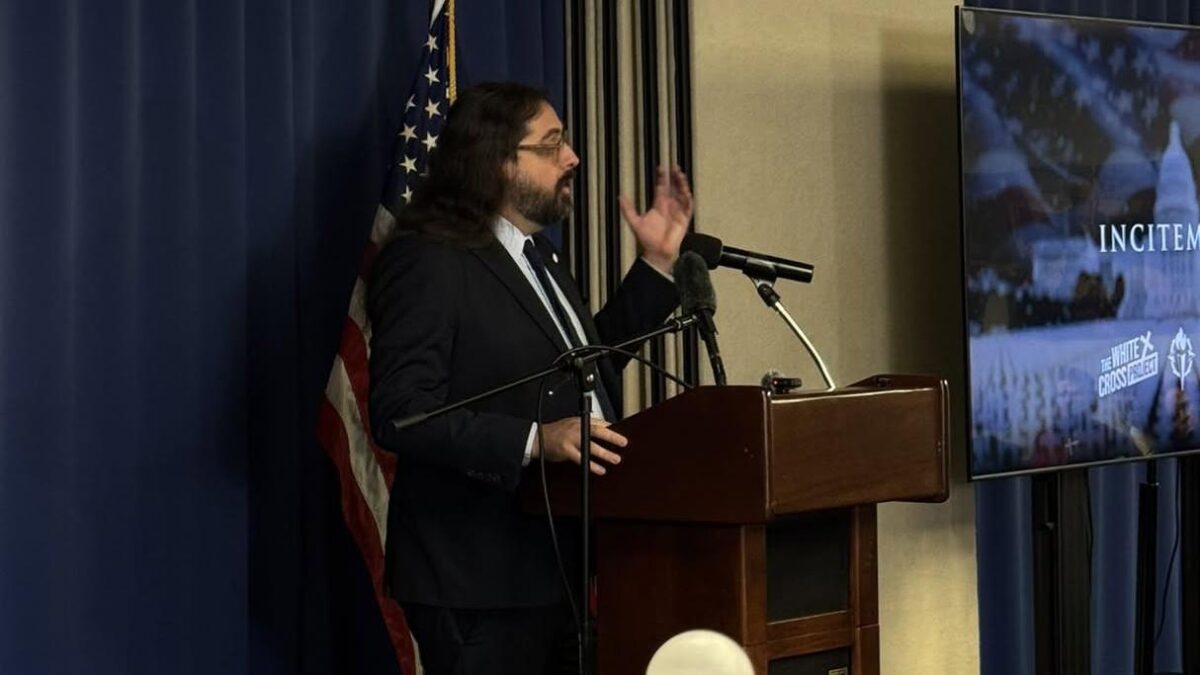
Public Interest lawyer Richard Spoor shared details about a dubious transaction where a person bought a farm for R2.6 million and sold it to the government for R40 million.
Spoor is one of South Africa’s most prominent human rights attorneys with over 30 years of experience.
He is the founder and director of Richard Spoor Inc Attorneys, which focuses on defending the rights of vulnerable groups.
He shared details about a case where he is doing work for a communal property association in South Africa.
“A while back, the communal property association received a rates account for a farm that they knew nothing about,” he said.
It turned out that the government had bought a farm and registered it in the communal property association’s name.
Further enquiry showed that the previous owner had bought the farm for R2.6 million and sold it, two years later, to the government for R40 million.
The association then learned that the government had awarded it a R19 million grant to establish a poultry business on the farm.
“The grant was paid to a company that the communal property association had never heard of,” Spoor said.
“The money was stolen or misspent. The farm lies in ruins. The government says it transferred the farm to the CPA by mistake.”
He added that the government now wants to get the farm back, so it can give it to someone else.
Land reform failure in South Africa
The case described by Spoor is one of the challenges related to land reform in South Africa, which has failed many stakeholders.
Advocate Mark Oppenheimer, President of the South African Institute of Race Relations (IRR), said that there was a misconception that people want land.
He explained that to assess the land issue, one must distinguish between land restitution and land reform.
- Land restitution is where people who had land taken away from them under racial laws after 1913 have the right to get that land back or receive financial compensation.
- Land reform provides the disadvantaged with access to land for residential and agricultural purposes, redressing the racially skewed ownership patterns.
Oppenheimer said that land restitution has been successful, but 88% of claimants chose financial compensation over receiving the land back.
“People wanted cash because it allows them to buy a house in the city, pay for their child’s education, or invest in a business,” he said.
“Land itself isn’t necessarily what everybody wants. What people want is capital and opportunity.”
He added that land reform has been a failure. “The outcomes of these projects have not been very good,” he said.
He cited the example of the Eastern Cape, where 264 farms were acquired by the state for land reform.
“These were working agricultural farms that employed a lot of people in the Eastern Cape,” Oppenheimer said.
10 years later, only 26 farms, accounting for 10%, were still operating. This represented a 90% failure rate.
“This means that all the people who used to work on those farms, who benefited from that employment and the active projects generated there, have lost out,” he said.
Despite these dismal figures, the South African government is continuing unabated with its land reform programme.
The Minister of Land Reform and Rural Development, Mzwanele Nyhontso, provided details about recent developments.
He said that the South African government bought 93,096 hectares of land for redistribution since 1 January 2025.
The state spent R734 million to purchase this land, but it has not yet been transferred to the beneficiaries.
“However, there are 84,000 hectares of state land acquired that have been transferred to beneficiaries,” he said.
You have read 1 out of 5 free articles. Log in or register for unlimited access.







 Loading ...