
The government has a backlog of 787,786 title deeds post-2014 which will take 9 years and cost billions to clear


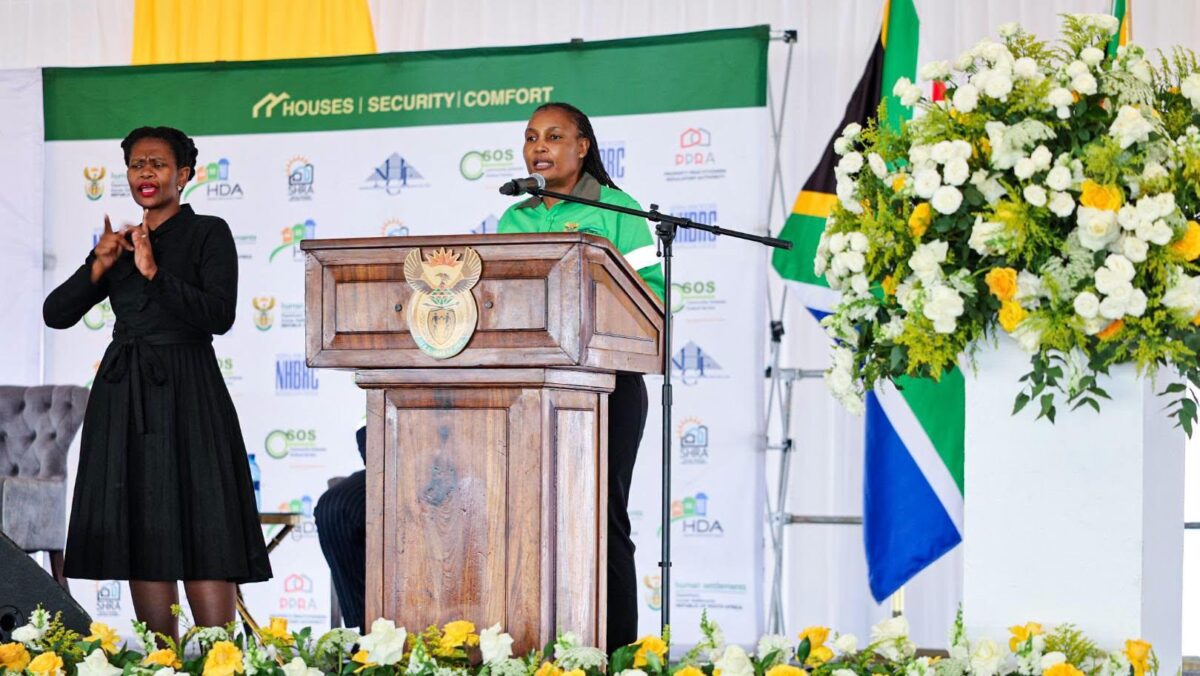
Minister of Human Settlements Thembi Simelane shared details on South Africa’s title deed backlog, which many see as a disaster.
Simelane shared these details in response to a Parliamentary question from National Assembly member Letta Maseko.
Maseko asked Simelane for the title deed backlog for the pre-1994, post-1994, and post-2014 periods.
She also requested information on the time period and cost to eliminate the title deed backlog for the specified periods.
Simelane responded, saying that the title deed backlog has grown significantly over the last 32 years.
- In the pre-1994 category, the backlog is 27,475 title deeds,
- In the post-1994 category, the backlog is 413,986 title deeds.
- In the post-2014 period, the backlog is 787,786 title deeds.
She said that a project to clear the backlog across all categories could take up to 110.5 months to complete.
The process will also cost billions. Simelani provided the estimated costs per category, based on the previous data.
- Pre-1994: R915 million
- Post-1994: R61 billion
- Post-2014: R31 million
That means that the total cost for the Department of Human Settlements to clear South Africa’s title deed backlog will be significant.
Title deeds can improve South Africa’s economy

Many business leaders said that granting title deeds to people living on communal land is an easy way to make them property owners.
One of these experts is venture capitalist, Bank Zero chairman, and former FNB chief executive, Michael Jordaan.
Jordaan said that there is an initiative that would significantly impact land reform and property ownership.
This is granting legal title to many millions of families who live freely and openly on land that, notionally, does not belong to them.
13% of South Africa’s land is held in trust by tribal authorities. 17 million people, or one-third of the population, reside on these communal lands.
“Allocating title deeds to these subsistence farmers would turn impoverished rural dwellers into property owners,” he said.
Newly titled farmland could be leveraged for development loans or eventually even sold. This would unlock and unleash a massive amount of capital for growth.
“In one fell swoop, a third of our citizens would build wealth through property appreciation while having stability and control over their livelihoods,” he said.
“They could make changes and improvements to their properties without the threat that their living rights could arbitrarily be taken away.”
Apart from tribal land, other aspects of titling also need to be tackled, especially the 5 million South Africans living in informal settlements.
“Giving title to residents of informal settlements promotes investment, access to credit and socio-economic integration,” Jordaan said.
You have read 1 out of 5 free articles. Log in or register for unlimited access.










 Loading ...
Work ethic pathetic…killing the economy.
No get up and go!