
South Africa getting a new social grant


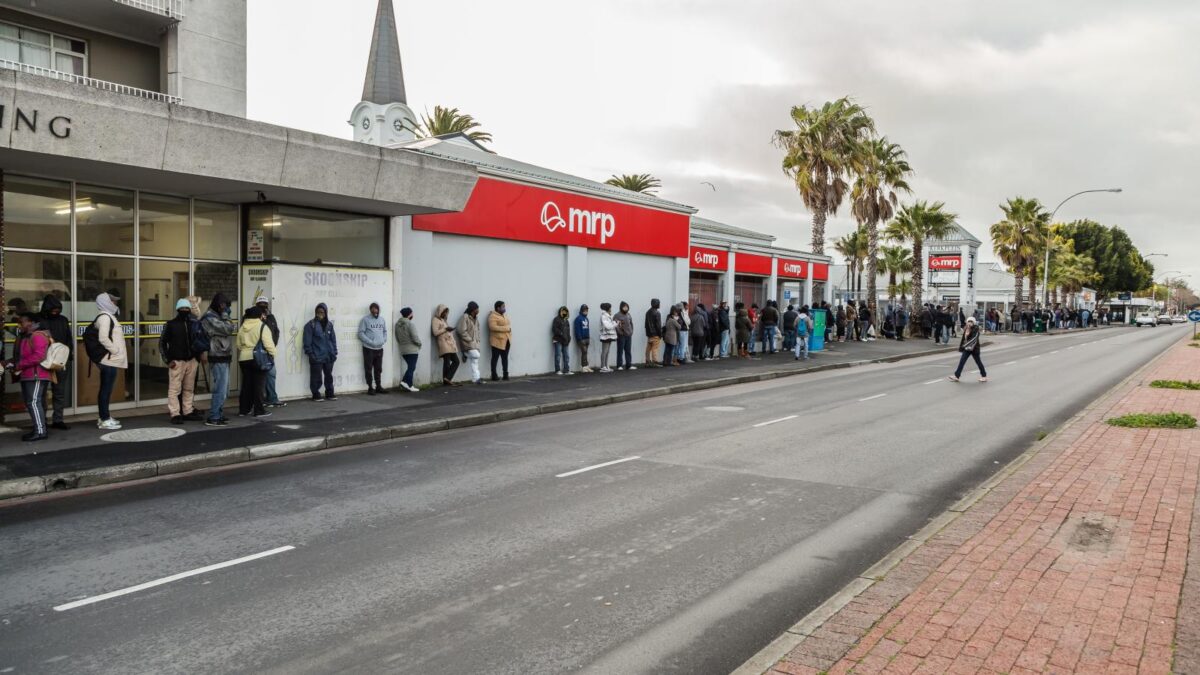
The National Treasury has extended South Africa’s Social Relief of Distress (SRD) grant for one more year, delaying plans to introduce the country’s new Basic Income Support (BIS) grant.
But even as the old grant lingers, the new BIS grant is taking shape as National Treasury starts linking recipients to job opportunities.
President Cyril Ramaphosa promised during his 2026 State of the Nation Address (SONA) that 2026 would be the year that the SRD grant would be transformed into a new grant.
During his SONA, Ramaphosa said the R370 SRD grant would be completely redesigned in 2026 and linked to various job-seeking criteria.
Following the address, the Department of Social Development confirmed the extension of the grant to March 2027, and the National Treasury subsequently allocated funds to the grant in the 2026 Budget.
The grant was allocated an additional R36.4 billion in the 2026 budget to extend payments until 31 March 2027 at the current rate of R370 per beneficiary per month.
Notably, the provision for the SRD grant over the medium term declined to only R1.7 billion in 2027/28 and to R1.2 billion in 2028/29.
The intention was to redesign the SRD grant into the new BIS grant and redirect the funding to the new system in 2027/28.
However, the state is still in the policy-drafting stage of the process, and nowhere near ready to implement it.
In June, the Department of Social Development indicated that the process to get the new grant off the ground was more protracted.
At the time, it said it hoped to finalise the policy for a new BIS grant by March 2027, to get it ready for implementation.
This would only then enable the department to initiate the legislative process needed to implement the grant sometime in the 2027/28 financial year.
With the SRD grant being extended to March 2028, this pressure is off, and it is now unlikely to be implemented before 2028/29.
Notably, according to the Department’s own timelines, the draft policy for the new grant was supposed to be submitted to the Cabinet for approval in September, with the documents gazetted for public comment.
This has not yet happened, with the department noting in early October that it was still getting ready to enter this phase.
Inputs from the comment period must then still be considered and incorporated into the draft policy.
The department had set a broad window for this to happen, with the intention to have the policy finalised by March 2027.
| Date | Goal | Status |
|---|---|---|
| June/July 2026 | Finalise engagements with National Treasury | Complete |
| July 2026 | Update draft policy and submit impact assessment for consideration by the Presidency | Complete |
| August 2026 | Submit draft policy to Cabinet and request approval to gazette for public comment | TBD (October) |
| September 2026 – February 2027 | Update draft policy with new inputs | TBD |
| March 2027 | Submit policy to cabinet for final approval | TBD |
What the new grant will be
While the new social grant is at least another year away from launch, the transformation of the SRD is underway.
Specifically, National Treasury noted in the MTBPS that SRD grant beneficiaries will now be linked to employment, training and business opportunities.
This will be done through the MzansiXchange platform.
This is one of the transformative policies that align with the intentions of the new BIS grant, which is aiming to be more of a jobseeker grant than a baseline state handout.
Ramaphosa noted in his SONA that the BIS’s intention is to ensure that recipients have access to a wide range of support to search for work and sustain a livelihood.
“We must continue to strengthen our social protection system to reach all unemployed South Africans with a basic level of support,” he said.
The Department of Social Development has been more specific with its targets, noting that the BIS will focus on working-age beneficiaries, aged 18 to 59.
“Evidence suggests that when beneficiaries are linked to economic opportunities, they are better able to leverage social assistance to improve their livelihoods,” the department said.
The SRD grant currently goes out to around 8 million people.
However, more targeted recipients, as well as a wider clampdown on fraud and duplication in the system, are intended to reduce the number.
On the other hand, pending litigation could result in the number of recipients more than doubling.
A 2025 High Court ruling found that the means-test threshold related to the SRD grant was invalid.
The government appealed the ruling to the Supreme Court of Appeal in August 2026.
Judgment in the matter is pending, but if the High Court ruling is upheld, 13 million more people could qualify for the grant, pushing the budget cost to R74 billion.
You have read 1 out of 5 free articles. Log in or register for unlimited access.







 Loading ...
Give people jobs, let them work for their money! Grants are there for the ANC to get votes and make people rely on the government for hand outs. How are the few tax payers going to pay for this ever increasing grants?