
The salary for a top CEO in South Africa is R23.191 million



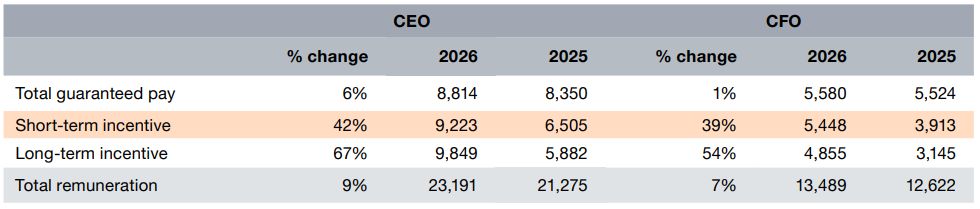
PwC’s 2026 Directors Remuneration and Trends report found that CEO total remuneration increased by 9% and CFO remuneration by 7% in 2026.
The report examined executive and non-executive director remuneration across the Top 200 companies listed on the Johannesburg Stock Exchange.
The analysis covers the period from 1 March 2025 to 28 February 2026 and includes total guaranteed pay and incentives.
The incentives include short-term incentives, long-term incentives and total remuneration, alongside non-executive director fees and shareholder voting trends.
The median total remuneration for CEOs of South Africa’s largest listed companies rose 9% to R23.191 million in 2026, and CFO salaries increased by 7% to R13.489 million
These increases in executive salaries were driven primarily by performance-linked incentives rather than fixed pay.
Median annual short-term incentive (STI) outcomes increased by 42% for CEOs and 39% for CFOs.
Median long-term incentive (LTI) outcomes increased by 67% and 54% respectively over the last year.
By comparison, median total guaranteed pay (TGP) increased by 6% for CEOs to R8.814 million, while CFO TGP increased by 1% to R5.580 million.
PwC Reward Partner Makhosazana Mabaso said that the real story is not that executive pay has increased, but what is driving it.
“The increase has come mainly through incentives, particularly long-term incentives, rather than guaranteed pay,” she said.
“For boards, the focus now is on making sure reward remains connected to performance and sustainable value creation.”
Director fees continue to rise
Non-executive director fees also increased during the reporting period. Median board member fees rose by 7.7%, while chairperson fees increased by 6.5%.
Fees stood at R1.754 million for chairpersons, R1.509 million for deputy chairpersons, R1.193 million for lead independent directors, and R518,000 for board members.
Shareholder support for proposed non-executive director fees remained high at 99.4%, up from 98.1% in the previous reporting period.
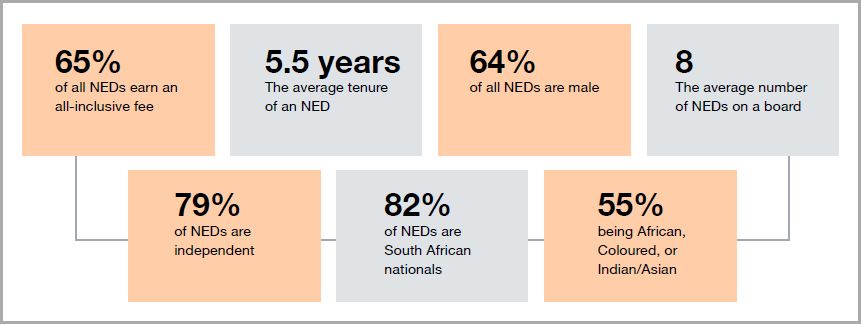
The report also provides a broader picture of the typical board of a Top 200 Johannesburg Stock Exchange-listed company.
On average, boards comprise eight non-executive directors, with an average tenure of 5.5 years.
Of those analysed, 79% are independent, 82% are South African nationals, 64% are male, and 55% are African, Coloured or Indian/Asian.
Shareholder support for remuneration remains strong
Shareholder support for remuneration remains strong, even as expectations around transparency and accountability continue to grow.
Support for implementation reports from shareholders increased from 83.8% in 2025 to 89.6% in 2026.
At the same time, the proportion of implementation reports receiving more than 50% shareholder non-support fell sharply, from 5.4% to 0.6%.
Mabaso highlighted that there are still areas where shareholders expect companies to do more.
“Around 9.6% of remuneration policy resolutions and 9.8% of implementation report resolutions received support of between 50% and 75%,” she said.
“Substantial sign-on awards without performance conditions and large LTI grants without adequate rationale also continue to attract scrutiny.”
She added that the changing regulatory environment is adding another dimension to the conversation.
“Remuneration-related amendments to the Companies Act took effect on 22 May 2026, strengthening requirements around pay transparency and shareholder accountability,” she said.
“Greater transparency presents organisations with an opportunity to take a closer look at how pay decisions are made. It should be more than a compliance exercise.”
“Better pay data enables organisations to identify patterns, uncover potential gaps and make more informed remuneration decisions.”







 Loading ...