
R268 billion in irregular, unauthorised, and wasteful expenditure at South African municipalities


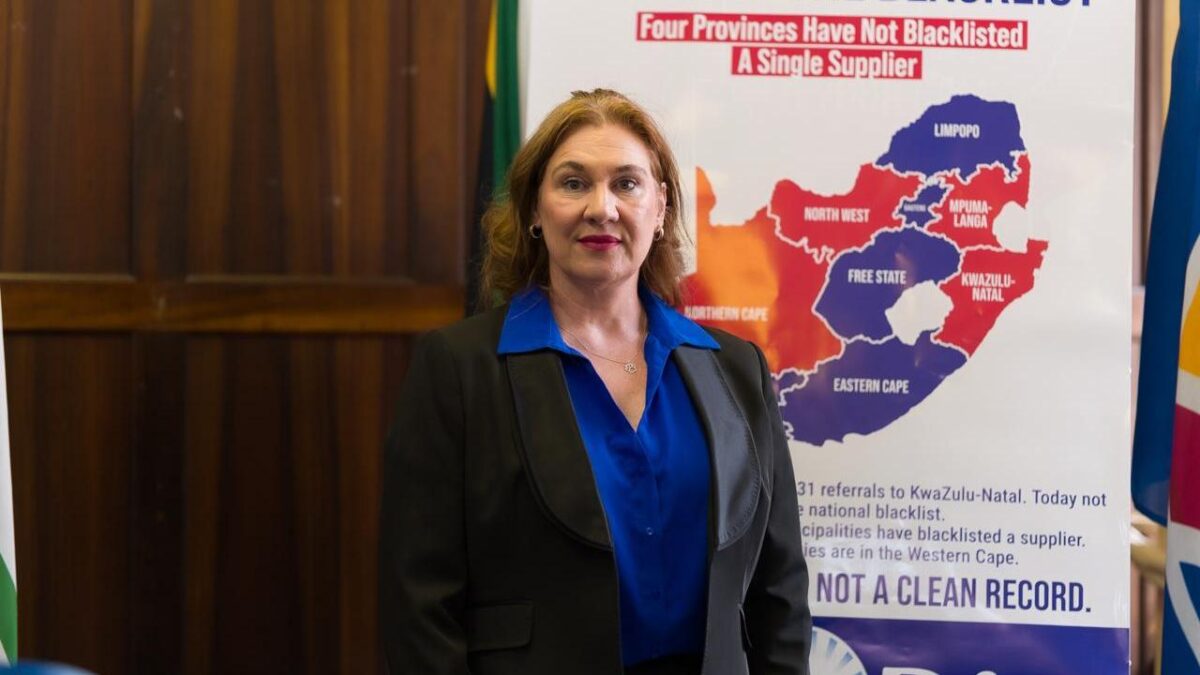
The DA has launched a new whistleblower portal where citizens can submit information about corrupt, fraudulent, and suspicious government tenders.
Dubbed the ‘Blacklist Project’, it gives South Africans a direct way to help expose wrongdoing in their sphere.
This portal was launched in response to widespread corruption and mismanagement across South Africa.
Over the previous financial year, municipal irregular, unauthorised and wasteful expenditure reached R268 billion.
Member of Parliament Wendy Alexander said that, apart from corruption and mismanagement, the blacklisting of companies is another challenge.
She highlighted that many accounting officers fail to blacklist companies implicated in dodgy tenders.
In 2004, Parliament passed legislation establishing a Register for Tender Defaulters. Twenty-two years later, that register remains empty.
“Despite countless corruption scandals and investigations, companies and individuals implicated in wrongdoing continue securing government contracts,” she said.
Alexander argued that this is not a failure of legislation, but a failure of political will to act against corruption.
By September 2025, the SIU had recommended restricting 467 companies and individuals from doing business with the state.
However, of these 467 companies and individuals, only one had been added to National Treasury’s Database of Restricted Suppliers.
Over the past year, little has changed. Of the 509 referrals sent to Treasury, only 18 have been blacklisted.
“At Tembisa Hospital, approximately R2 billion flowed to 207 suppliers through 4,501 purchase orders, yet none of these suppliers had been blacklisted,” she said.
“The consequences are felt by ordinary South Africans through unfinished infrastructure, failing services and wasted public money.
She added that many honest small businesses struggle to compete against suppliers implicated in wrongdoing.




 Loading ...
There is no cure for this ancestral DNA.