
South African manufacturer puts modular flooring in focus as industry looks for practical, repairable Floors


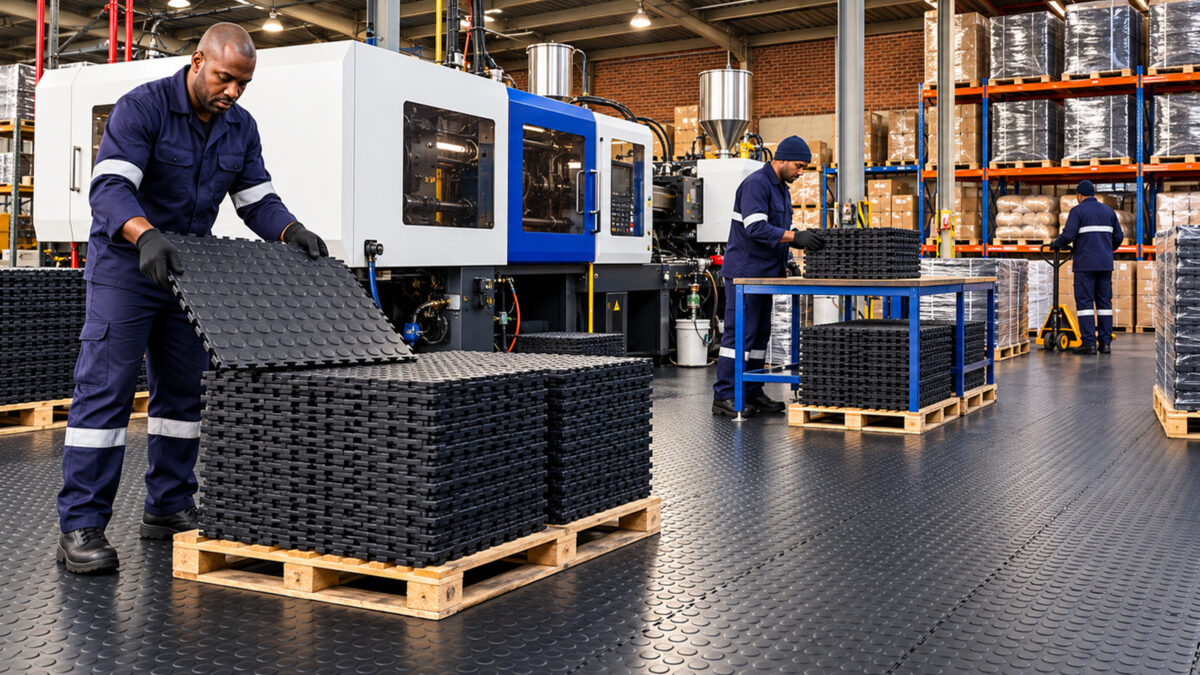
South African manufacturers, workshops, and small businesses continue to navigate operating costs, maintenance demands, and the need to get more life from existing facilities.
An often-overlooked part of the workplace that requires more attention is the floor.
Recent StatsSA data showed manufacturing production increasing by 1.1% year-on-year in July 2026.
The petroleum, chemical products, rubber and plastic products division was among the positive contributors, recording growth of 3.2% compared with the same month a year earlier.
At the same time, South Africa’s plastics recycling industry continues to expand.
Plastics SA figures reported this year showed that approximately 485,000 tonnes of plastic were recycled during 2025, an increase of 3% from the previous year.
The figures point to a broader shift towards finding productive second-life applications for recovered materials across sectors, including manufacturing, construction, automotive, and consumer goods.
One Johannesburg-based flooring manufacturer believes modular flooring has a role to play in that changing industrial landscape.
PVC Floor Tile
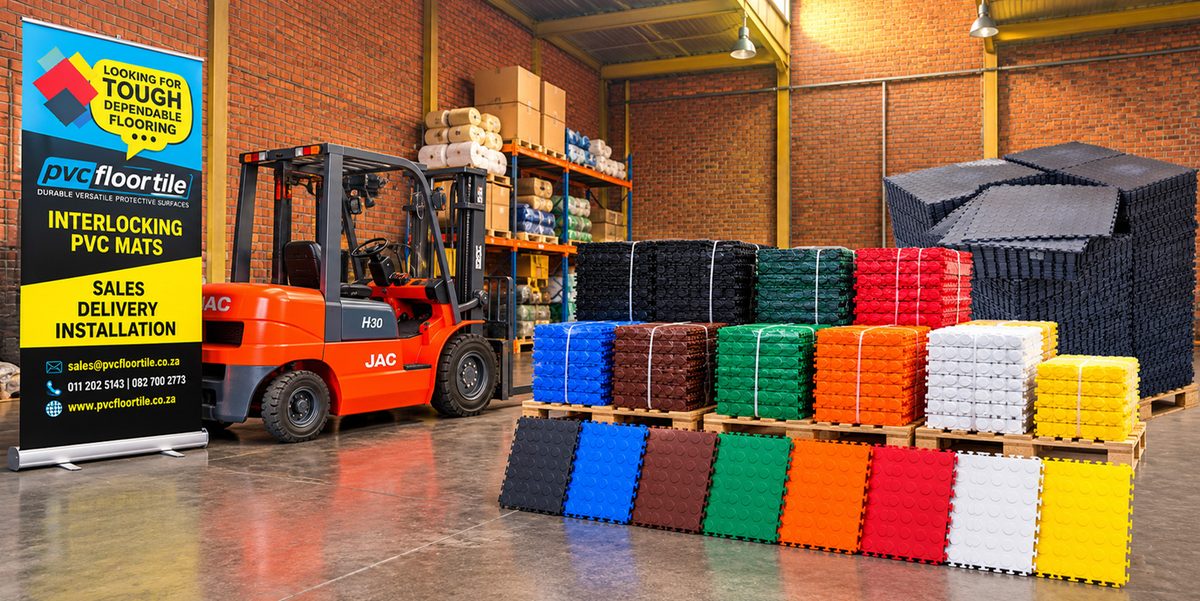
PVC Floor Tile manufactures and supplies modular flooring systems for garages, workshops, factories, gyms, warehouses, and commercial spaces, with several of its interlocking PVC products made from recycled PVC.
Unlike a conventional floor covering that may need to be replaced across a large section when damage occurs, a modular tile system is built from individual sections that lock together.
If one compatible tile is damaged, that section can potentially be removed and replaced without lifting the entire floor.
That simple difference matters in active workspaces.
A floor that can change with the space
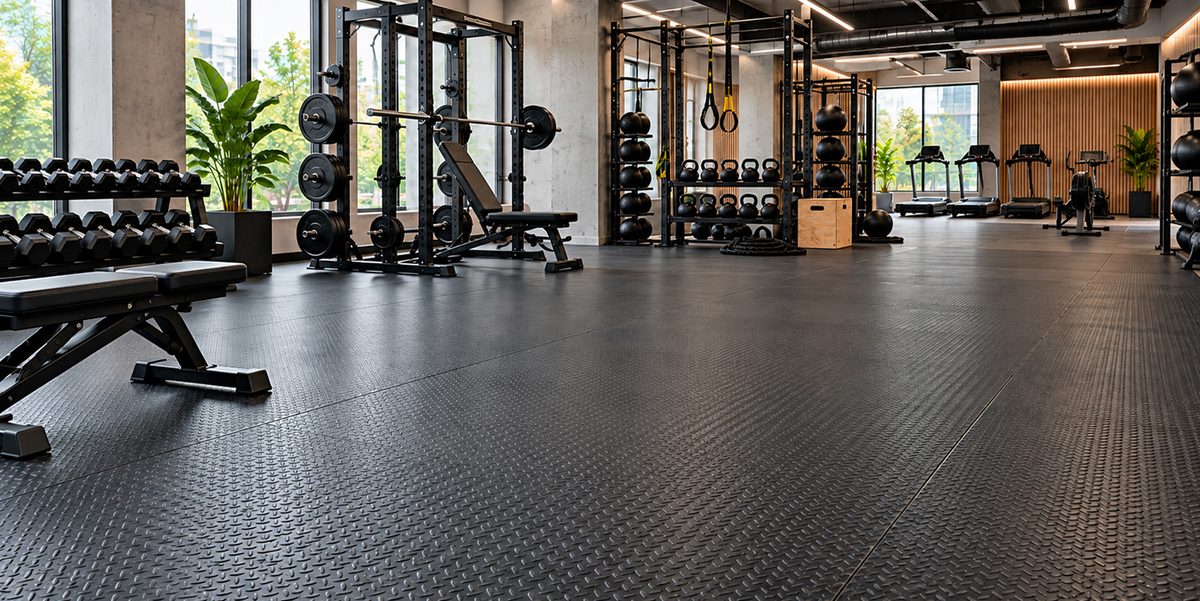
Modern garages are increasingly used for more than vehicle parking. They may also function as storage rooms, workshops, home gyms, detailing areas, or small-business workspaces.
Commercial premises face a similar challenge. Machinery moves, shelving layouts change, workstations are relocated, and certain parts of a floor receive significantly more traffic than others.
This has made modularity an important part of the flooring conversation.
PVC Floor Tile’s 500 mm × 500 mm interlocking PVC tiles, for example, are designed to connect mechanically to form a larger floor area.
Four 500 mm × 500 mm tiles cover approximately one square metre, making it relatively straightforward for buyers to calculate the amount of flooring required.
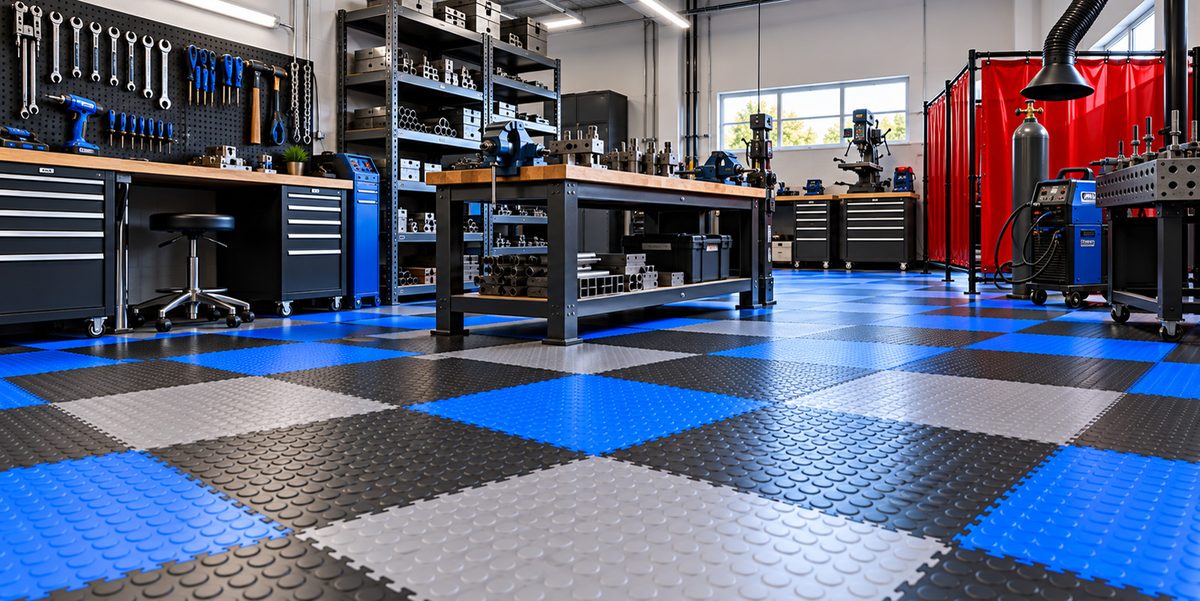
One of the company’s visible-lock PVC products is manufactured from recycled PVC in a 500 mm × 500 mm × 5 mm format and is intended for applications including garages, workshops, warehouses, and selected commercial floors.
The system can be installed over a suitable existing hard floor without permanently coating the entire surface, while damaged compatible tiles can be replaced individually.
That matters where businesses want to upgrade a worn concrete floor without committing to a flooring system that is difficult to alter later.
Garages are becoming more demanding spaces
The garage is a particularly interesting example.
Concrete remains one of the most common garage-floor substrates in South Africa, but older concrete floors can become dusty, stained or visually worn after years of vehicle movement, tools, storage, and maintenance work.
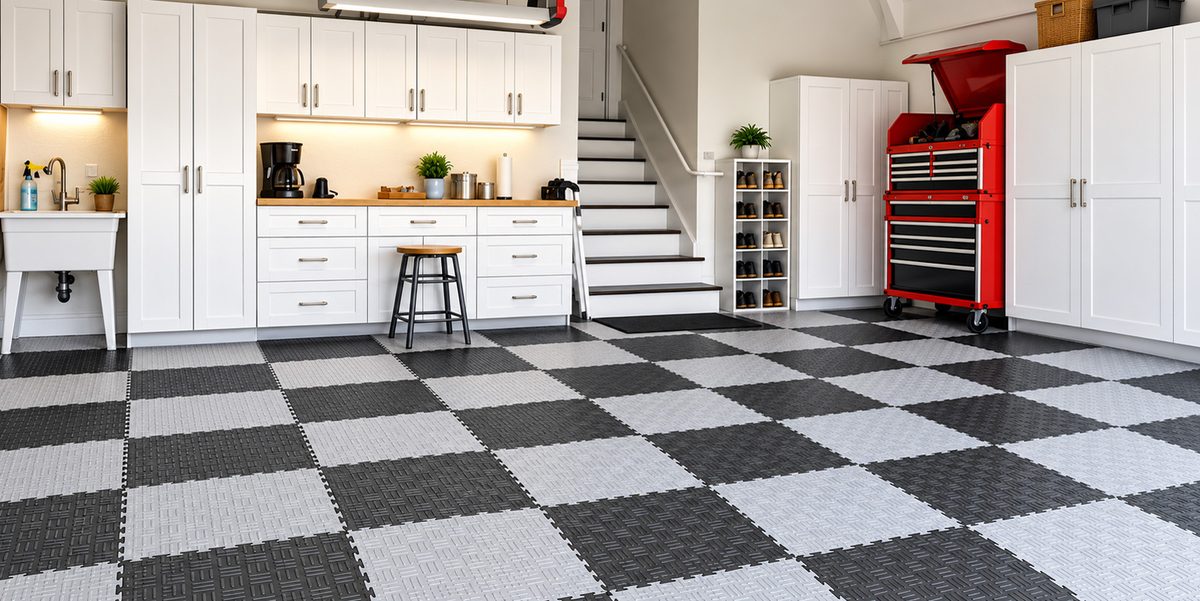
Interlocking garage tiles offer an alternative approach: rather than removing the concrete, an appropriate modular surface can be installed over a stable, reasonably level and prepared base.
PVC Floor Tile’s current garage flooring range includes solid interlocking PVC tiles as well as vented options for areas where drainage and airflow are more important.
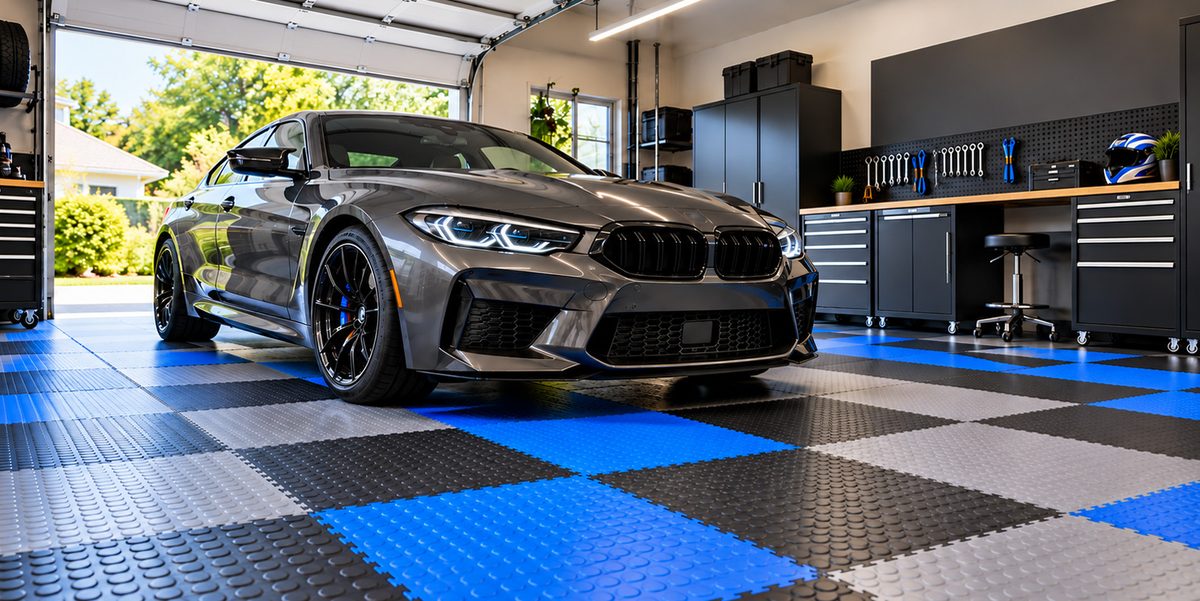
The distinction matters because there is no single floor that suits every garage.
A dry residential garage used mainly for parking has different requirements from a wash bay, a workshop handling tools and equipment, or a vehicle display area where appearance is a priority.
Factors such as moisture, tyre movement, cleaning, equipment weight and the condition of the underlying concrete all influence the correct flooring choice.
PVC Floor Tile’s own garage guidance recommends matching the product to the actual use of the space rather than choosing on appearance alone.
Rubber fills a different role
PVC is not the only modular material being used in these environments.
Rubber flooring serves a different purpose, particularly where impact absorption, cushioning or a more resilient underfoot surface is needed.
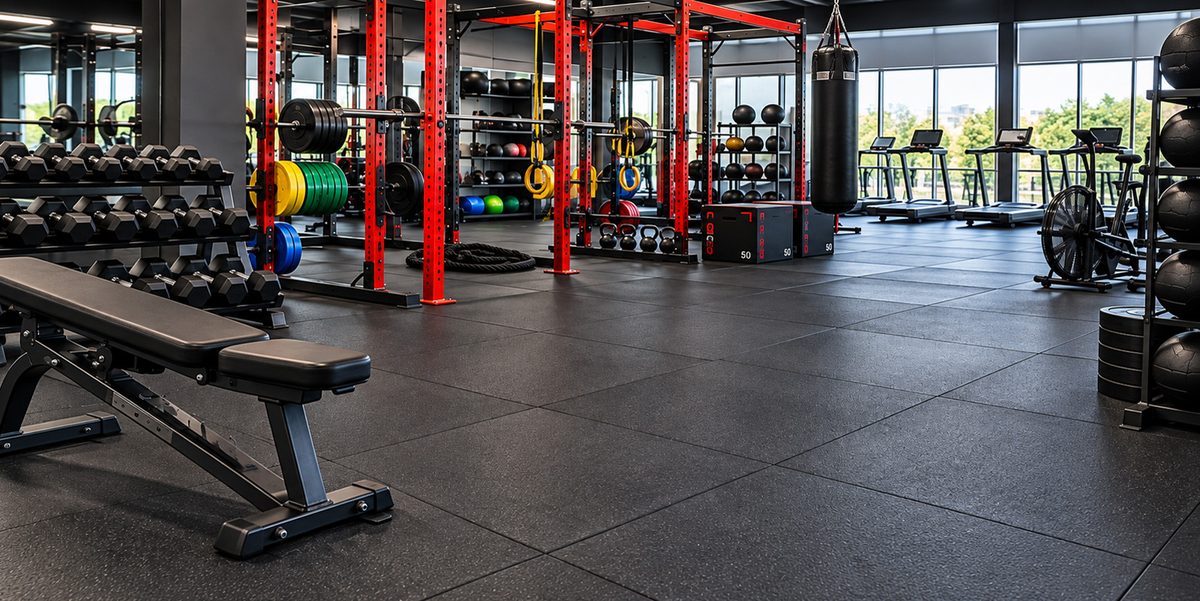
PVC Floor Tile’s ProLock rubber tile, for example, is a 500 mm × 500 mm interlocking rubber product intended for areas such as gyms, workshops, garages and training spaces.
The product is designed as a modular surface that can be connected without adhesive in many standard applications.
The distinction between PVC and rubber is important.
A firm PVC tile may be a practical starting point for vehicle areas, workshops and wider modular floor coverage, while rubber may be more appropriate where cushioning and impact protection are priorities.
For gym spaces, for instance, rubber is generally the stronger starting point around weights and impact-focused areas, while PVC may suit selected lower-impact areas where a firmer modular surface is preferred.
Recycled material moves beyond waste
The broader recycling story also makes products manufactured from recovered material increasingly relevant.
South Africa’s recycling sector has repeatedly emphasised that recycling does not end when waste is collected.
Recycled material also needs viable markets and useful end products.
At the 2026 South African Plastics Recycling Organisation awards, industry participants highlighted the importance of turning recovered plastic into commercially viable products.
That creates an interesting intersection between manufacturing and the circular economy.
A recycled material that becomes a durable product used for years in a garage, factory or workshop represents a very different outcome from material remaining in the waste stream.
However, environmental claims also need to be specific. Not every flooring product is made from the same material or contains the same recycled content.
Buyers should check individual product specifications rather than assuming that every plastic, PVC, polypropylene or rubber tile has an identical composition.
Practicality may be the bigger selling point
For many businesses and homeowners, the strongest argument for modular flooring may ultimately be less about terminology and more about practical ownership.
A floor that can be installed section by section, cleaned using ordinary maintenance methods, expanded later and repaired by replacing individual compatible tiles offers a different maintenance model from a completely fixed floor system.
That does not mean modular flooring is suitable for every project.
Subfloor condition, moisture, vehicle traffic, chemical exposure, machinery, heat and project-specific technical requirements all need to be considered before a floor is specified.
As South African businesses continue to look at durability, local manufacturing, maintenance costs, and more productive uses for recycled materials, modular flooring is becoming part of a broader conversation.
That conversation is about designing workspaces that can adapt rather than simply look finished.
Click here to learn more about PVC Floor Tile.










 Loading ...