
South Africans wait in queues for 2 hours and 41 minutes to get money from the state


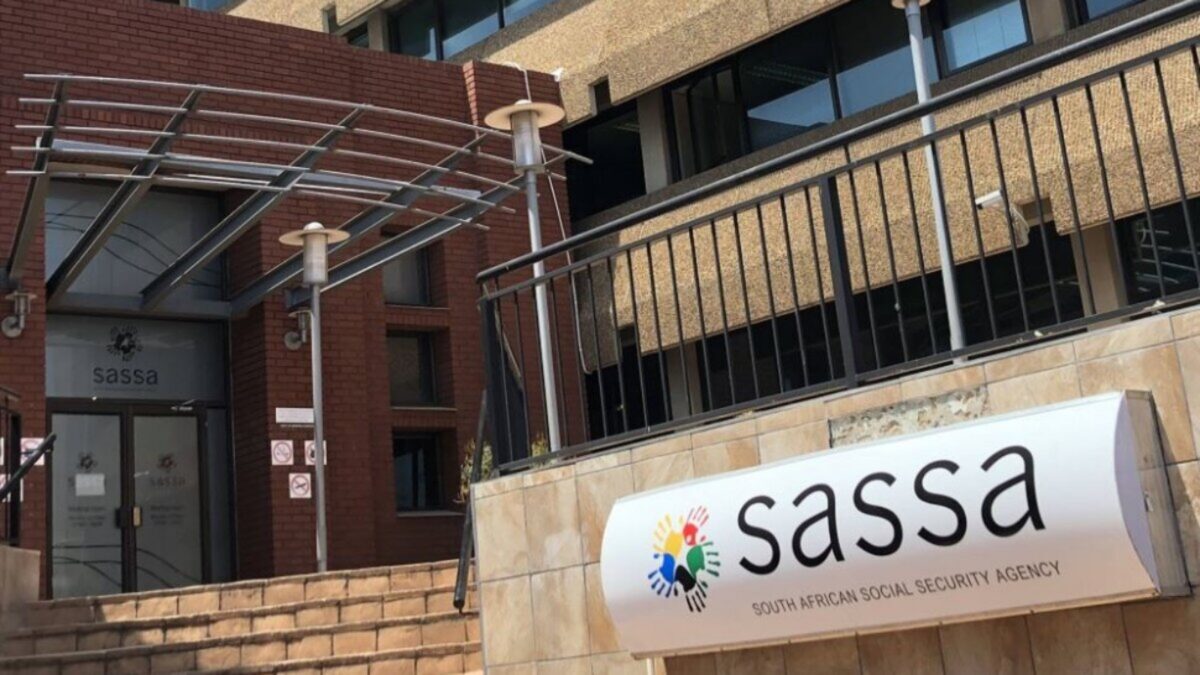
The South African Social Security Agency is experiencing staffing shortages and is currently operating at just 44% of its required frontline capacity.
This was revealed by the Minister of Social Development, Dina Pule, in response to a parliamentary question from National Assembly member Bridget Masango.
Masango had asked the Minister what the current staff complement at each SASSA office across South Africa’s nine provinces was and what types of staff were employed.
She also requested the total number and type of vacancies at each office, and the ideal number of frontline staff required to fully capacitate each office.
Finally, she asked the Minister to disclose the total number of vacant posts advertised and the expected dates by which each vacancy would be filled.
Pule revealed that SASSA had a staff complement of 7,748 employees at the time of her reply, of which 6,846 were permanent staff. The remaining 902 were contracted.
These are spread across the agency’s four operational layers, which are structured by the functions and responsibilities of each layer.
The Head Office is the topmost layer at SASSA, and handles the agency’s policy development, strategic leadership, and systems development.
The second layer covers SASSA’s regional offices and is responsible for intergovernmental and stakeholder relations, as well as monitoring for policy implementation on lower layers.
The third layer comprises the district offices of SASSA, which provide support to the agency’s local offices through oversight and facility management.
Finally, the bottom layer of SASSA encompasses its local offices, with one in each of the country’s local municipalities.
According to Pule, SASSA’s frontline staff across all 275 of its local offices totalled 4,499 filled positions, against a total number of 10,328 approved posts.
This left the agency with 5,829 vacant frontline positions, indicating a frontline capacity of 44%, below the minimum required staffing threshold of 50%.
Staffing shortages leading to longer queues

Pule said the number of vacant positions at SASSA had been facilitated by the agency’s Organisational Structure, which was created in 2005/06 with a total of 18,604 posts.
These posts were reportedly never funded or filled to 100% due to financial constraints at the agency and changes in SASSA Business Processes over the last 20 years.
These include the implementation of automation and digitisation processes across SASSA’s systems, which Pule said had reduced the number of posts required.
SASSA plans to fill 261 vacant funded posts between September and November 2026, with 93 of these being across its Head and regional offices.
In addition to her questions about staff vacancies at SASSA, Bridget Masango also asked the Minister about the average waiting time in queues at each SASSA office.
She asked how these offices planned to address excessive queue times and how the success of these measures would be monitored.
Pule revealed that the average customer waiting time across its offices for the first quarter of 2026/27 was 160.9 minutes, above its performance target of 90 minutes.
The Northern Cape recorded the lowest average waiting time per province at 124.7 minutes, while KwaZulu-Natal recorded the highest average time at 180.1 minutes.
To address high customer waiting times, Pule said SASSA was implementing targeted interventions to improve customer flow, service efficiency, and the overall customer experience.
“A key intervention is the national rollout of a standardised Queue Management System Training Programme for local office managers, team leaders, and frontline officials,” Pule said.
To date, Pule said the training programme had been rolled out in seven of the country’s nine provinces, including Limpopo, Gauteng, Mpumalanga, and the North-West.
The Western Cape and the Free State have yet to receive the training programme rollout. Pule said this was scheduled to be completed before the end of September 2026.










 Loading ...