
BEE is a white tax and one of the biggest obstacles to economic growth in South Africa



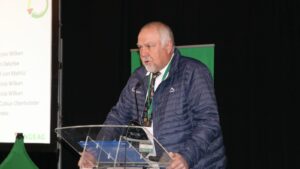
Efficient Group chief economist Dawie Roodt said that black economic empowerment (BEE) is a white tax and one of the biggest obstacles to economic growth in South Africa.
He shared his views on BEE, true black empowerment, and economic growth during a discussion on the Newsday podcast.
Roodt said he supports true black empowerment, which includes a safe environment, providing world-class education, and ensuring all children have enough food.
However, he said the government’s implementation of Broad-Based Black Economic Empowerment (B-BBEE) does not help the vast majority of black South Africans.
Instead, it enriches a small political elite. “BEE in the hands of the ANC means a few well-connected individuals get huge contracts and make lots of money,” he said.
Roodt said that we haven’t made any progress on so-called black empowerment in South Africa.
“In fact, the opposite has happened. The economy is hardly growing, unemployment is high, and poverty levels are going up,” he said.
To improve economic growth and increase employment, the government has to do away with black economic empowerment.
“BEE is one of the single biggest obstacles to economic growth in South Africa. The way BEE is currently implemented is a major obstacle,” Roodt said.
He argued that the government’s planned R100 billion Transformation Fund provides an opportunity to end the current BEE policies.
“My first reaction was to oppose it. However, after thinking it over, I realised there is a strategic opportunity to eliminate BEE entirely,” he said.
He explained that under the current legislation, rules, and regulations, businesses are forced to meet strict criteria.
These criteria include procurement quotas, employment equity targets, and ownership requirements to qualify for a BEE level and do business with the state.
The new proposal suggests that companies could buy BEE points through this fund. “You pay a fee and automatically receive your required BEE level,” Roodt said.
“If we can fulfil all BEE requirements simply by paying into a fund, and scrap every other operational BEE requirement, then I am strongly in favour of it,” he said.
“It will make one thing undeniably clear. This fund is nothing more than a white tax. That is precisely what the so-called BEE has always been, a white tax.”
“Everyone will pay money directly into this white tax fund, exposing so-called BEE for what it truly is.”
Roodt argued that connected political figures will find it irresistible not to steal money from the fund.
“I guarantee that as soon as political cadres walk past this massive new pot of gold, they will stick their fingers into it,” he said.
“There will be widespread corruption, resource misallocation, and theft within the new transformation fund.”
That, Roodt said, will provide the ultimate justification for permanently shutting down the R100 billion transformation fund.
“That is why I strategically support it. It removes the burdensome red tape and heavy compliance costs on businesses, making it cheaper to operate,” he said.
“It also creates the opportunity to publicly expose so-called BEE for the nonsense it is and eliminate it forever. This will remove a barrier to economic growth.”




 Loading ...
If BEE is a white tax, what’s white job reservation and salary disparities is? Always, Daniel Roodt has skewed apartheid sentiments about South African economy.