
ANC is the most destructive force South Africa has ever seen


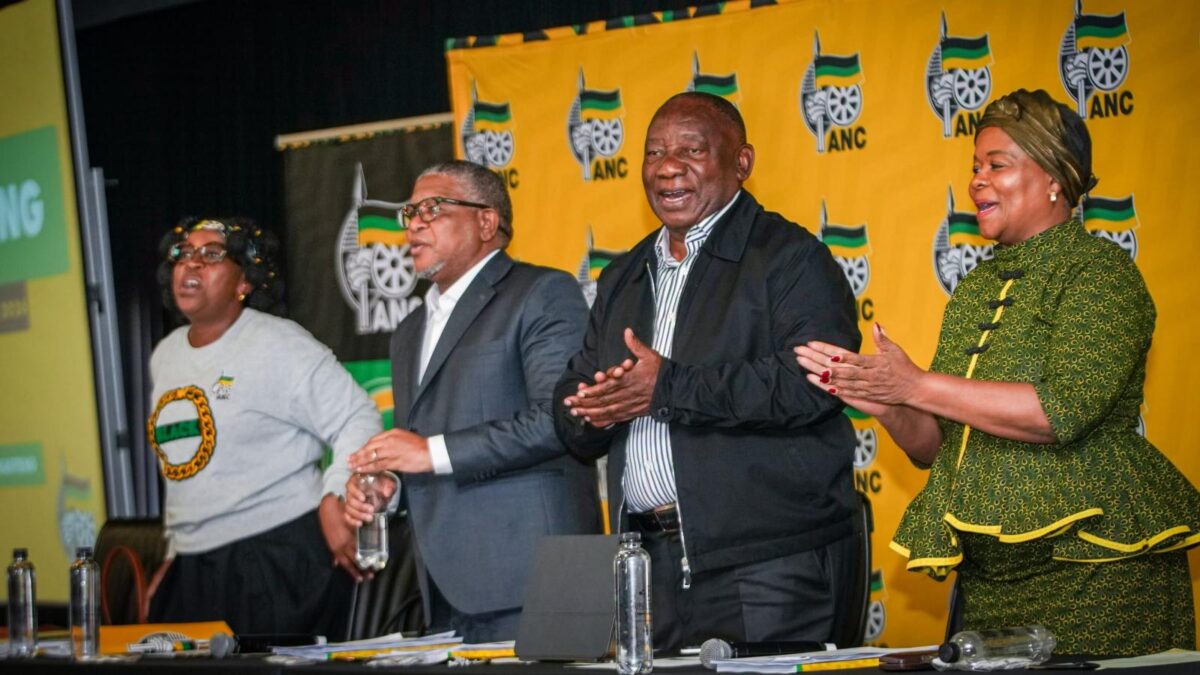
Efficient Group chief economist Dawie Roodt said that the ANC is the most destructive force South Africa has ever seen.
He shared his views during an interview with Newsday, where he said that there were four reasons for his statement.
The first is that ANC members call each other “comrades,” signalling that they subscribe to an outdated ideology.
“The ANC’s ideological roots trace back to Cold War-era socialism and communism, which have failed everywhere they have been implemented,” he said.
The second is that these outdated beliefs result in harmful economic policies, like Black Economic Empowerment (BEE), expropriation, and state centralisation.
The third is cadre deployment, which, Roodt said, leads to incompetent people being placed in important positions because they are loyal to the political party.
The fourth is corruption, which is causing widespread damage across all levels of government, including national, provincial, and municipal levels.
“Considering these factors and how powerful the ANC was, what else could you expect than for them to destroy the economy,” he said.
Roodt added that despite the party’s promises to resolve its problems and rid itself of corruption, the ANC cannot be fixed.
“You have to get rid of the ANC. We must stop being sentimental about political parties because they exist solely to serve us,” he said.
“They cannot recover unless you get rid of the ideology and everything that goes with it. However, you cannot do that because that ideology is part of the fibre of the ANC.”
The ANC is losing power, which carries risk

Roodt said the ANC is losing power in South Africa, which poses additional risks, including the risk of the country fragmenting.
“I am very concerned because the ANC is losing a lot of power. It is no longer the single, dominant political force in the country that it used to be,” he said.
“If you look back to 1910, South Africa has always had a very strong national government that kept the entire country together, whether you liked them or not.”
He added that, in global terms, South Africa is a young nation, as it is just over a century old.
“Before 1948, the British essentially managed the country, followed by the National Party, which served as a strong central force holding things together,” he said.
From 1994 onward, the African National Congress (ANC) played that same centralised role in South Africa.
“That centralised force is gradually crumbling. You see the MK Party gaining power in KwaZulu-Natal, while the DA is the dominant force in the Western Cape,” he said.
Roodt explained that his concern is the long-term political future of South Africa and the risk of political fragmentation.
“Moving power closer to the people through a federal system would not necessarily be a bad thing, but there is a risk of further breakdown,” he said.
He said it was possible that South Africa would fall apart, creating multiple separate entities or countries.
“Regardless, the ANC is undeniably losing power, and we are in the midst of a political transition toward something new,” he said.
“What that destination looks like remains uncertain, and it will likely be a difficult, uncertain, and bumpy ride along the way.”






 Loading ...
You don’t need to be an economist or rocket scientist to know that