
The “silent disease” you need to know about



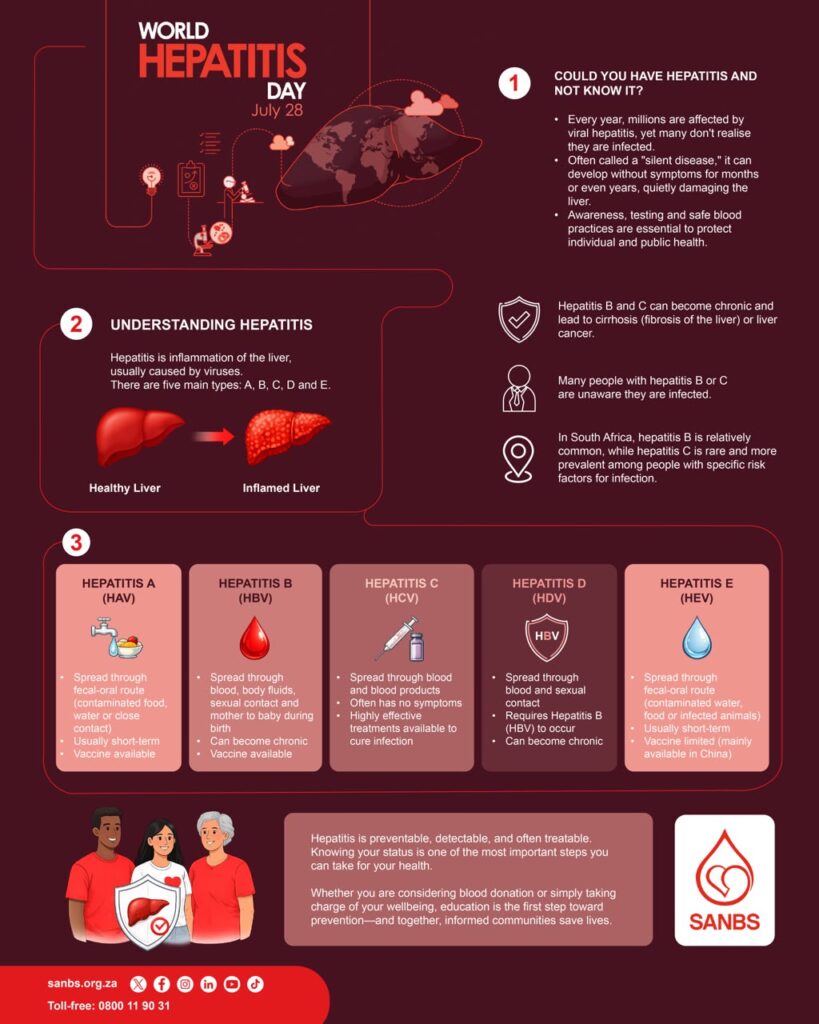
Every year, millions of people around the world are affected by viral hepatitis, yet many do not know they are living with it.
It is referred to as a “silent disease” because it quietly damages the liver for months or even years before symptoms appear.
This means many people are only diagnosed after significant liver damage has already occurred.
As a result, it is important that South Africans know the facts, understand their risk, and seek testing when necessary.
Understanding hepatitis
Hepatitis is inflammation of the liver and is commonly caused by viruses.
There are five main types of viral hepatitis:
- Hepatitis A and E are usually linked to contaminated food or water and are often short-term illnesses.
- Hepatitis B and C are the greatest public health concerns because they can become chronic infections that silently damage the liver over many years.
- Hepatitis D only occurs in people who already have hepatitis B.
When symptoms do appear, they may include:
- Persistent fatigue
- Fever
- Loss of appetite
- Nausea and vomiting
- Pain in the upper-right side of the abdomen
- Dark-coloured urine
- Pale or clay-coloured stools
- Yellowing of the skin and eyes (jaundice)
Because many of these symptoms are common to other illnesses when jaundice is absent, hepatitis often goes undiagnosed.
Know your status
Testing is the only way to know whether you have hepatitis.
Early diagnosis allows people to begin treatment sooner, helps reduce the risk of severe liver disease, and prevents them from unknowingly passing the virus to others.
Consider speaking to a healthcare provider about hepatitis testing if you:
- Have had unprotected sex with multiple partners
- Have risk factors associated with injecting drug use or sharing needles
- Work in healthcare or have regular exposure to blood
- Live with someone diagnosed with hepatitis B
- Were born to a mother living with hepatitis B
- Have unexplained abnormal liver function test results
Protecting South Africa’s blood supply
For the South African National Blood Service, protecting patients starts long before blood reaches a hospital.
Every person who donates blood first completes a confidential health and lifestyle assessment to identify potential risk factors.
Every donated unit is then tested using advanced laboratory technology for transfusion-transmissible infections, including hepatitis B and C.
This ensures that every unit of blood supplied to patients meets the highest safety standards.
Education is key
“Education is critical in the fight against hepatitis,” said Dr Ute Jentsch, Acting Medical Director at the South African National Blood Service.
“It empowers people to understand their risk, seek testing when appropriate, and make informed decisions about their health.
Dr Jentsch added that the hepatitis B vaccine, which can be administered at birth, is highly effective at providing lifelong protection against the virus.
“Widespread vaccination protects individuals and helps safeguard the health of future generations, including potential blood donors,” said Dr Jentsch.










 Loading ...