
Government says its plan to alleviate unemployment is working despite 8 million South Africans not working



South Africa’s Employment and Labour Minister has said that government efforts to reduce unemployment are working, despite 8.1 million people remaining jobless in the country.
The Minister of Employment and Labour, Nomakhosazana Meth, was questioned about her department’s current plans to address the jobs crisis in South Africa.
She was asked if she believes the Department of Employment and Labour is doing enough to combat unemployment in South Africa.
She responded that the department’s current job-creation plans are working, but challenges remain.
“The strategies and programmes implemented to date by the government to alleviate unemployment levels are working,” She said.
She also said her department aims to create 6 million new jobs by the end of 2030, an ambitious goal for the country.
These comments come at a time when unemployment in South Africa is at a record high, with approximately 8.1 million working-age citizens unemployed.
The unemployment rate is 32.7%, while the expanded rate, which includes those not actively seeking work, is 43.7%.
Since the Covid-19 pandemic, where unemployment reached record levels, South Africa has failed to bring the rate below 30%.
These numbers cast doubt on Meth’s claims that the government is adequately handling the jobs crisis in South Africa.
The Department of Employment and Labour has tried to alleviate unemployment through a number of initiatives.
These initiatives include employer tax incentives, public employment programmes, and skills development grants.
Meth conceded that it may be hard for South Africans to see any benefits from these programmes currently, given the scale of the unemployment crisis.
“Given the structural nature of the unemployment crisis, it may not be easy for some to notice their effectiveness,” she said.
Unemployment is a growing concern
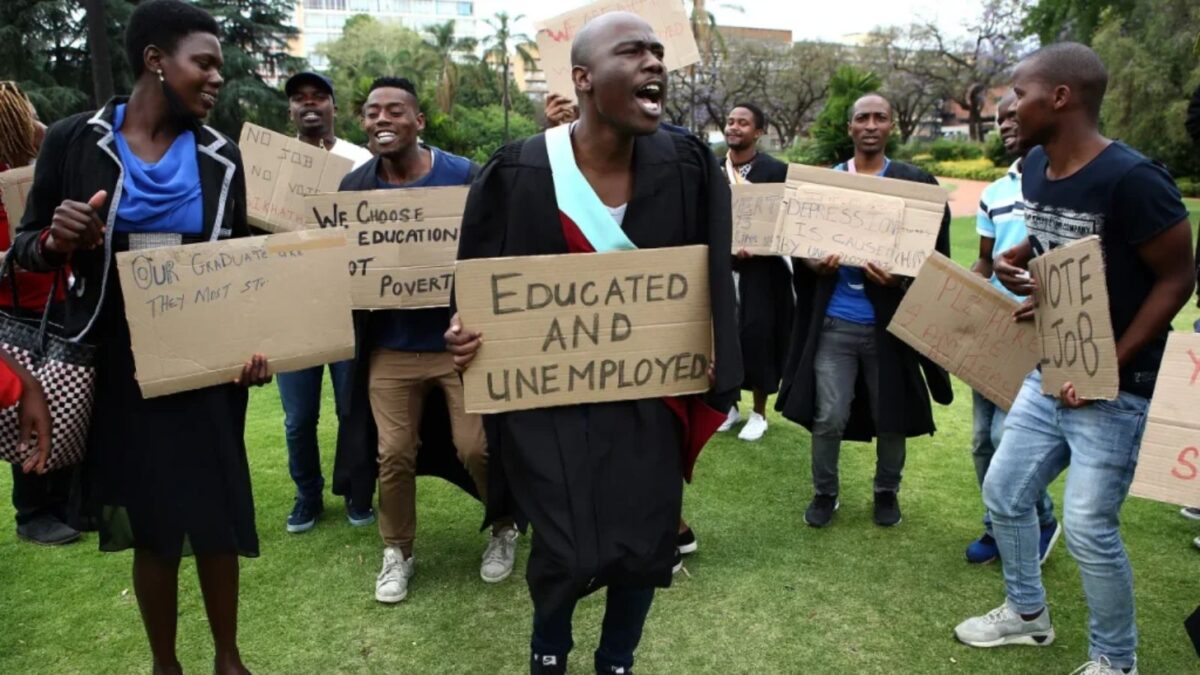
Job creation has been a problem in South Africa for decades, with stagnant economic growth and a lack of investment choking businesses.
In 2025, the country’s GDP grew by 1.1%, a modest number compared to other emerging economies.
This means that existing companies are struggling to expand their operations and employ more people.
Meth said that businesses in the private sector play an important role in combating unemployment and need to work with her department.
“We need the private sector and everyone’s contribution to address this problem,” she said.
With the poor job creation in the private sector, Meth said initiatives from the Department of Employment and Labour were vital.
“The situation could have been much worse had the government not intervened,” she said.
These initiatives, including the expanded public works program (EPWP), aim to create a large number of jobs in the country.
Currently, the EPWP aims to create 5 million work opportunities before 2029, which would go a long way to helping Meth’s department reach its 2030 target of 6 million new jobs.









 Loading ...
Brilliant results since at least 20 years. These ANC ” leaders ” live obviously on a different planet. The hurdles for small companies getting bigger every year.