
Big change to ATMs and cash in South Africa planned


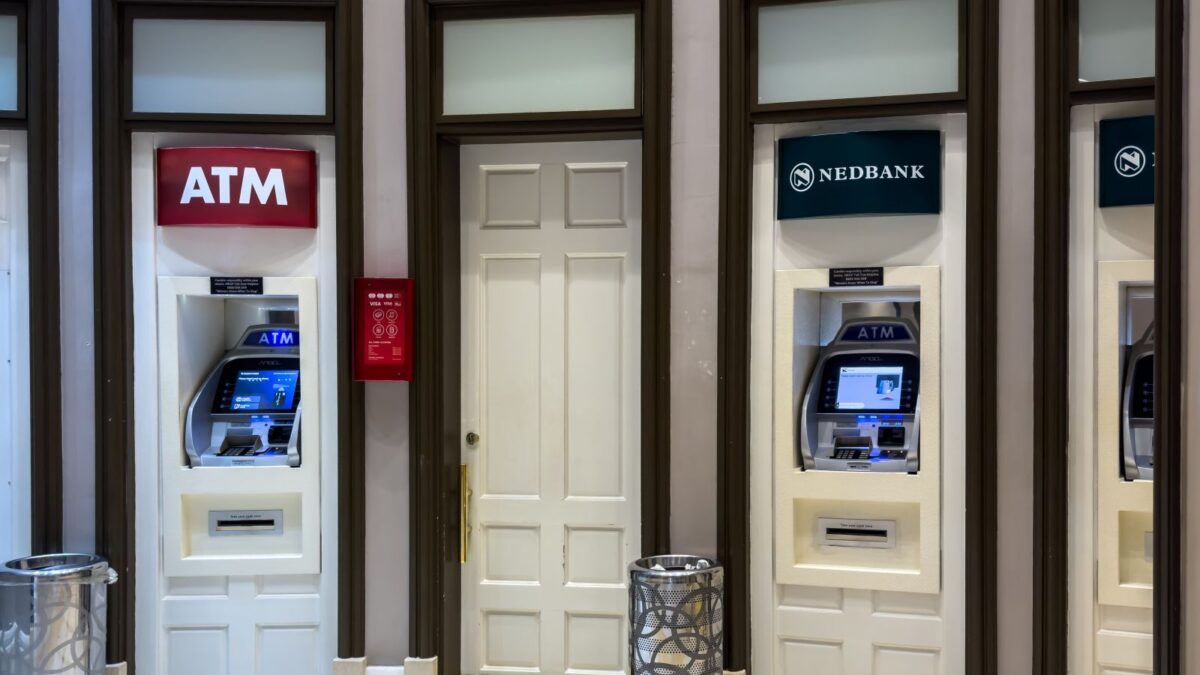
Steven Kark, the CEO at Paycorp Holdings, has warned that South Africa’s planned changes to ATMs and cash can have dangerous consequences.
Paycorp Holdings is a global payments provider operating in Southern Africa, Eastern Europe, and the United Kingdom.
It owns and operates large ATM estates in multiple countries, enabling value-added services across ATM networks, merchant acquirers, and card issuers.
Kark’s warning about ATMs in South Africa followed the South African Reserve Bank’s (SARB’s) Position Paper on Cash.
The SARB Position Paper on Cash in South Africa outlined three objectives for cash: reducing costs, ensuring equitable access, and securing physical currency.
“Cash remains a foundational pillar of South Africa’s payment system and a critical instrument of economic inclusion, resilience and public trust,” it said.
However, it stated that the cash ecosystem in South Africa is under growing strain through fragmentation, duplication, and rising costs.
There are also uneven service standards, market failure risks, and limited regulatory oversight that undermine the affordability and accessibility of cash services.
This paper tried to address these challenges, which it said will help to make cash more affordable and accessible to those who use it most.
Among other things, this paper proposed a major change to South Africa’s ATM system, aiming to end branded ATMs nationwide.
This will see the rollout of white-label ATMs that are independent of the nation’s traditional bank-owned ATM infrastructure.
White-label ATMs are independently owned machines which not tied to a specific bank that allow customers from any bank to withdraw cash and transact.
Paycorp Holdings CEO Steven Kark warns of unintended consequences

Kark said that the South African Reserve Bank’s diagnosis is wrong and that it may destroy exactly what it’s trying to fix.
He explained that the ATM interchange in South Africa hasn’t moved since 2019. Over those seven years, inflation has compounded across every cost line.
This means that everything related to ATMs, including hardware, cash replenishment, CIT, security, maintenance, and site rental, has become more expensive.
The revenue available to an independent ATM deployer (IAD) or bank to recover those costs has stayed flat.
“When you suppress the price of a service below its cost of provision for long enough, you get less of that service,” he said.
“That is not a market failure. It is the predictable consequence of a regulatory pricing decision.”
He said that while independent ATM deployers play a growing role in meeting everyday cash needs, they are commercially fragile.
“The fragility is a direct consequence of frozen interchange. The logical policy response is to fix that, not build a new institution to manage the downstream effects,” he said.
He explained that the fee a cardholder’s bank charges for an ATM withdrawal bears no relationship to the interchange that bank pays to the deployer.
“The issuing bank collects a substantial per-withdrawal fee, then passes a fraction to the ATM deployer,” he said.
“The deployer covers all deployment costs and a commercial return from that fraction. The cost compression has been borne almost entirely by deployers.”
He urged the South African Reserve Bank to scrutinise that margin if it is genuinely concerned with the cost of cash.
“Fix the interchange. Examine the bank margin. Let the operators who know this sector deploy infrastructure,” he said.
“A regulator that suppresses the price of a service and replaces the market with a centralised institution hasn’t solved a market failure. It has created one.”










 Loading ...
I don’t know what these people are thinking. Do they know and understand how all the communities survive in the townships?
South Africa was probably the first country in the world when it launched SASWITCH in 1985 enabled everyone to transact on an ATM regardless of where you banked. Why would the reserve bank think that by implementing a system that is very similar to a communist state owned bank improve on what is already established and working for many years.
Banks need to continue to have the ability to implement their own innovations to differentiate themselves from each other – implementing a central system controlled by the reserve bank is not the answer