
South Africa’s fixed investment rate at dangerous levels



South Africa’s fixed investment rate (FIR) paints a worrying picture for the country’s future, as it is currently well below the global average.
The FIR shows how much capital is being invested in the country compared to its GDP. This indicates expected economic growth, where a higher FIR indicates a healthier economy.
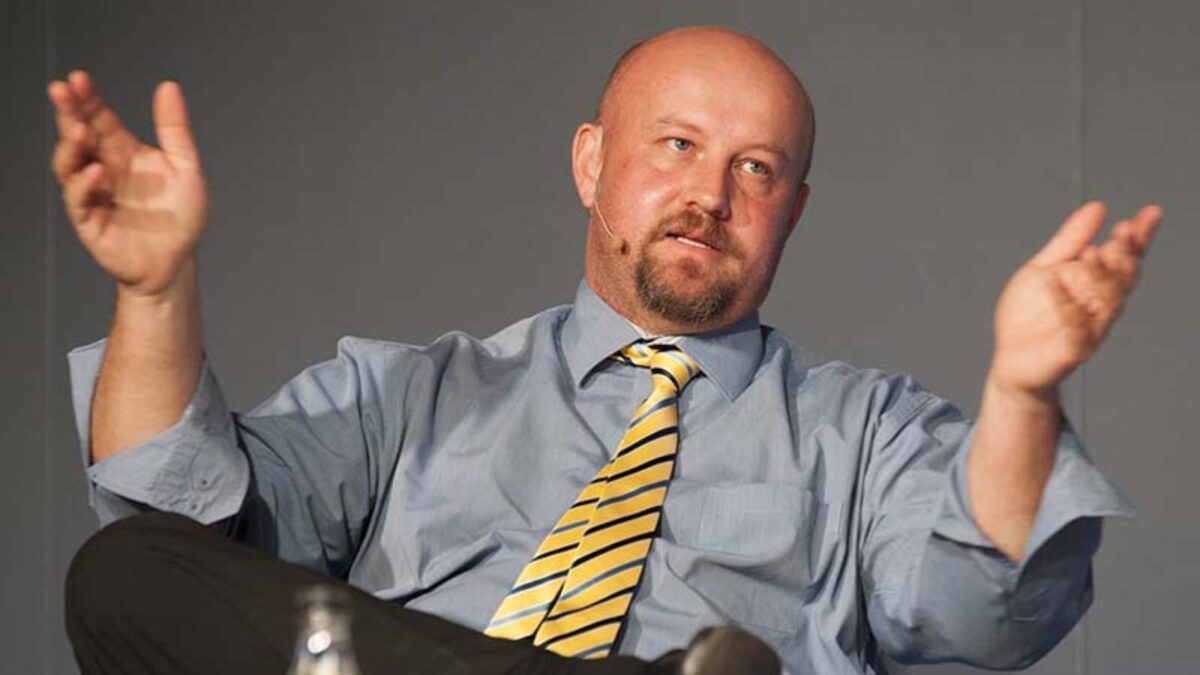
Political economist Frans Cronje spoke about South Africa’s FIR on the Common Sense podcast, discussing the significance of the number.
The FIR is the most important number to consider when discussing South Africa’s economy, as it provides a clear understanding of its future.
At the start of the ANC’s leadership, the FIR accounted for only 15% of the country’s GDP, and it gradually rose. By 1998, the rate had grown by approximately 1%, a modest increase that pointed to stability in the country.
After a brief drop at this time due to the stock market crash in Asia, the FIR continued to climb, peaking at 22% at the start of 2008.
In the wake of the 2008 financial crisis, FIRs took a hit worldwide, and South Africa was no exception. In the two years after the financial crisis, South Africa’s investment rate dropped by roughly 5% from its previous peak.
This drop did not stop there, as the FIR continued to spiral downward over the next 15 years, reaching 14% in 2025.
This means that since 1994, after all of its ups and downs, the fixed investment rate has ultimately dropped by 1%.
The lack of growth is paired with South Africa’s stagnating GDP growth, which grew by 1.1% in 2025.
This growth rate is expected to increase in 2026, but these projections are still well below those of other emerging economies.
South Africa vs the world
It can be hard to understand South Africa’s FIR until it is compared with the investment rates in other world economies.
For emerging economies, the FIR is currently averaging approximately 24%, higher than South Africa’s 2008 peak.
This represents a roughly 10% gap between South Africa and its emerging economy partners.
The gap is not only in the FIR. Emerging economies are showing far better GDP growth, averaging roughly 4% compared to South Africa’s 1.1% over the last year.
South Africa’s FIR is also considerably lower than the global average, which is currently hovering around 25%.
The low investment rate in South Africa helps explain why the country struggles to grow its GDP, as businesses lack the necessary support to expand.
When the economy lacks investment, businesses lack the capital to create more jobs or provide more services, preventing them from serving a growing population.
This lack of investment has been a primary driver of the country’s unemployment crisis, with the unemployment rate reaching 32.7% over the past year.
Cronje said lifting the country’s FIR would alleviate many of these issues, boosting GDP growth and lowering unemployment.
He said South Africa should be aiming for a 25% FIR, which would lead to GDP growth in line with other emerging markets.
He also noted that a higher investment rate would directly influence the unemployment rate, with a 25% FIR leading to an unemployment rate of 10% in the next two decades.
The close links between the Fixed Investment Rate and other important economic figures are why Cronje called it a “foundational number”.
He said this statistic is the bedrock of long-term economic and political assessments, as it directly influences how an economy can grow.
He said that lifting the FIR would lead to economic success and political stability in South Africa, whereas the FIR staying the same could have dire consequences for the country.








 Loading ...