
The government spent R20 million on VAR, but it is not enough


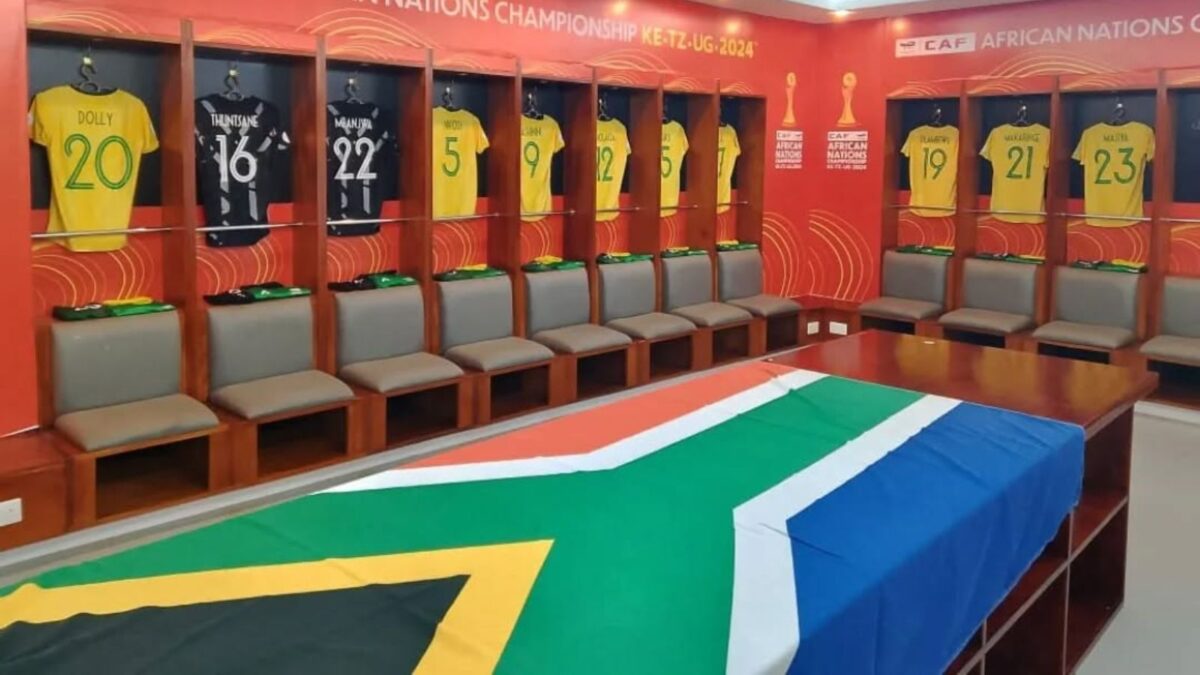
The South African government has spent R20 million on new technology for the country’s soccer league and is expected to spend more.
The government approved a R20 million payment to the South African Football Association (SAFA) to implement Video Assisted Refereeing (VAR) in the country.
This technology is widely used overseas in both domestic and international competitions, with SAFA saying it would put South African soccer on par with other countries.
VAR technology is a system designed to help referees by giving video replays of events in the match, ensuring that their decisions are fair if they initially miss something.
The technology is intended to improve the accuracy of officiating in soccer matches, reducing the number of mistakes officials make.
SAFA was initially given R20 million by the government to introduce this technology into the Premier Soccer League (PSL), South Africa’s top-tier competition.
It said that this amount will not be sufficient for the technology’s implementation, and additional funding is now necessary.
South Africa’s Minister of Sport, Arts, and Culture, Gayton McKenzie, said the additional cost of VAR is currently unknown.
He said that further funding would be requested based on the progress made with the initial R20 million.
He also argued that bringing VAR into South African soccer was a matter of national interest, to expose the country’s players and officials to international standards.
In competitions like the FIFA World Cup, VAR is used in every match, with the refereeing staff expected to be well-versed in the technology.
This prevents South African referees from participating in international tournaments because they lack the required skills.
McKenzie also had good news about VAR, saying that the cost of bringing it into the PSL would be lower than they originally thought.
He said his department had conducted analyses of the technology’s costs, engaged with FIFA, and determined that the initial R20 million would cover most of the core technology costs.
South Africa already has the technology

While South Africa might not have VAR in the PSL, the country has played an important role in integrating technology into refereeing.
In rugby, the Television Match Official (TMO) plays a role similar to VAR, assisting referees by showing different angles of incidents that have already occurred.
This technology is used throughout the game to improve officiating accuracy and promote player safety.
The first use of TMO was in 1995 in Pretoria, South Africa, in a game played by South Africa’s Blue Bulls.
This game was used as an initial test for the technology, before it was implemented worldwide in 2001.
Since 2001, TMO has been used in all of South Africa’s test matches and top-tier club matches.
While the technology was initially limited to checking if tries should be allowed, it was soon expanded to check all types of fouls and offences in the game.
Implementing TMO did not cost South Africa’s government, as broadcasters such as SuperSport absorbed the technology’s costs.
The broadcasting company had already invested in equipment to film rugby matches from multiple angles, allowing the TMO to use this existing infrastructure.
Comparing the costs of VAR and TMO is difficult because TMO was largely funded by broadcasting companies.
This means that the South African Rugby Union (SARU) had to pay very little for its implementation, compared with the high costs SAFA faced.
Broadcasting companies footing the bill for TMO did come with its own challenges, as stadiums became reliant on these groups for the vital technology.
This meant that unless a game was televised, stadiums lacked the capacity to run their own TMO systems.
This quickly created a divide in South African rugby, where some leagues and teams were left behind in implementing the technology.






 Loading ...