
The government’s pension fund invested in 15 companies which lost 100% of their money


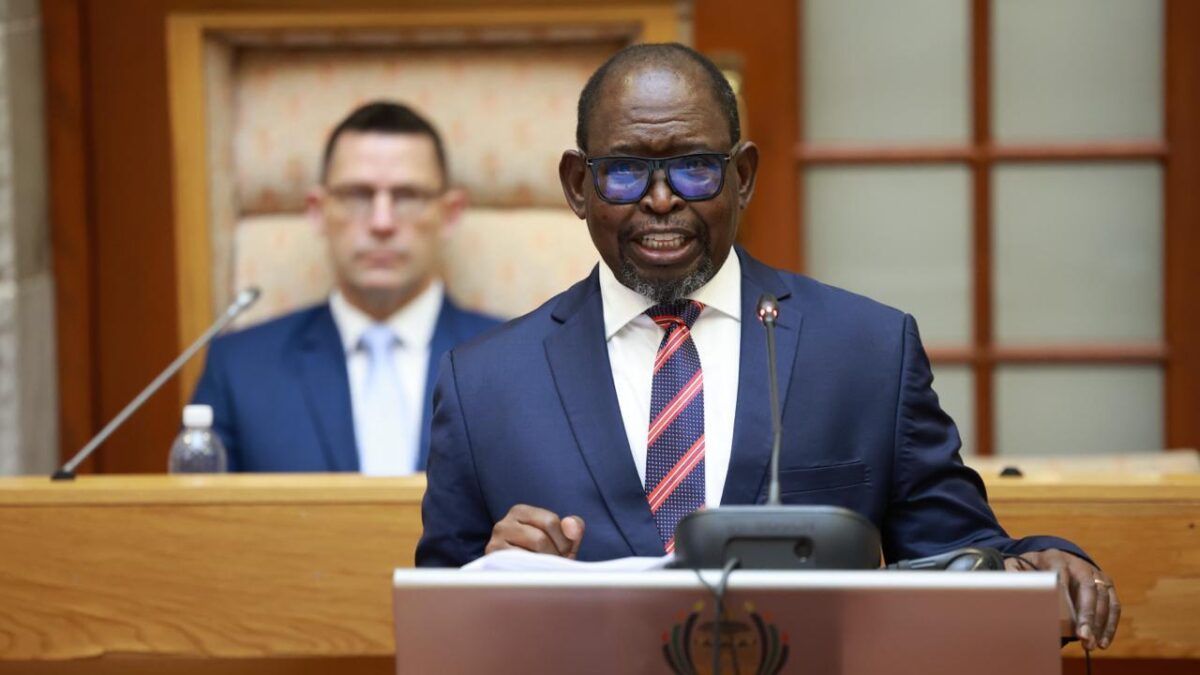
The Public Investment Corporation’s Isibaya Fund, a South African state-owned entity, invested in many companies and projects which lost all of their money.
This was revealed in a Parliamentary question from Andrew Bateman to the Finance Minister about the PIC’s unlisted portfolio investments.
The Public Investment Corporation uses the Isibaya Fund as a specialised, unlisted developmental investment vehicle.
The Isibaya Fund has been under scrutiny over poor investments and investing billions in dubious companies.
The issue was highlighted in a list of Isibaya Fund provided by the Finance Minister, which showed many investments with a -100% Internal Rate of Return (IRR).
The IRR is the discount rate that makes the Net Present Value (NPV) of all cash flows, both negative investment amounts and positive returns, equal to zero.
More simply, the Internal Rate of Return is a measure of how quickly your money grows when you invest in a project or business.
The higher the IRR, the better the investment. You typically want to invest in things which give you the biggest IRR, as it means your money is working harder.
The Public Investment Corporation’s list of Isibaya unlisted portfolio investments showed that many of these investments had an IRR of -100%.
An Internal Rate of Return of -100% is the ultimate financial red flag. In plain terms, it means the PIC has lost absolutely everything invested in these businesses.
Hitting an Internal Rate of Return of -100% can happen in many ways, including:
- Total Business Bankruptcy: You invest capital into a startup or project, the company liquidates, and there is no residual value left to repay shareholders.
- An Aborted Project: A company realises mid-way that a project isn’t viable, and scraps the entire project before it generates a single rand of revenue.
- Total Asset Write-Off: Buying an asset that is completely destroyed, stolen, or rendered legally obsolete immediately, with zero insurance payout or salvage value.
An IRR of -100% is as bad as it gets, as you cannot lose more than 100% of the money you initially invested.
Poor investments by the PIC’s Isibaya Fund
The PIC is an asset management firm wholly owned by the government of the Republic of South Africa, represented by the Minister of Finance.
Its clients are primarily public sector entities, including the GEPF, Unemployment Insurance Fund (UIF), and Compensation Commissioner Fund (CC).
The PIC manages a diversified investment portfolio comprising multiple asset classes, including listed equities, real estate, capital market, private equity and impact investing.
Finance Minister Enoch Godongwana published an updated, detailed list of the Isibaya unlisted portfolio investments of the Public Investment Corporation.
The list revealed that 15 companies had an Internal Rate of Return of -100% and a total value of zero.
There were many more companies which lost nearly 100% of their money, but which still had some value.
The companies with an IRR of -100% and a total value of zero include Amalooloo, Berlin Beef, Concor, Educor, Ekuzeni, and Independent Media.
Others are LA Crushers, Musa, Naturecell, Solar Cap – Orange, Urban Lifestyle, VIA Bounty, Yalu, Bayport, and S&S Refinery.
The data showed that the Public Investment Corporation’s Isibaya Fund invested R4.45 billion in these companies but received no proceeds from them.
| South Africa | Investment | Proceeds | Market Value | Total Value | IRR |
| Amalooloo | R188 million | 0 | 0 | 0 | -100% |
| Berlin Beef | R60 million | 0 | 0 | 0 | -100% |
| Concor | R315 million | 0 | 0 | 0 | -100% |
| Educor | R355 million | 0 | 0 | 0 | -100% |
| Ekuzeni | R31 million | 0 | 0 | 0 | -100% |
| Independent Media | R888 million | 0 | 0 | 0 | -100% |
| LA Crushers | R30 million | 0 | 0 | 0 | -100% |
| Musa | R250 million | 0 | 0 | 0 | -100% |
| Naturecell | R39 million | 0 | 0 | 0 | -100% |
| Solar Cap – Orange | R168 million | 0 | 0 | 0 | -100% |
| Urban Lifestyle | R499 million | 0 | 0 | 0 | -100% |
| VIA Bounty | R1374 million | 0 | 0 | 0 | -100% |
| Yalu | R75 million | 0 | 0 | 0 | -100% |
| Bayport | R149 million | 0 | 0 | 0 | -100% |
| S&S Refinery | R28 million | 0 | 0 | 0 | -100% |
The Public Investment Corporation defends the Isibaya Fund
The Public Investment Corporation has previously defended the investments and track record of the Isibaya Fund.
It highlighted that most of the Isibaya Fund’s non-performing loans and heavy impairments are legacy issues.
It also said that judging the Isibaya Fund purely on traditional financial metrics misses its primary purpose.
Because Isibaya is a developmental fund, the PIC stressed its mandate to deliver socio-economic returns alongside financial ones.
More recently, the PIC suspended the Acting Head of Unlisted Investments. It said that this had no impact on its mandate.
“Investment processes and portfolio management activities have continued without disruption,” it said.
For the financial year ending 31 March 2026, the Unlisted Investments portfolio has approved approximately R5.4 billion in new transactions.
The Unlisted Investments portfolio has also developed a strong pipeline of potential investments it will evaluate.
“The PIC continues to strengthen and enhance its investment approval processes, and these improvements are now yielding tangible outcomes,” it said.
The PIC is currently undertaking a broader review of its organisational structure and internal processes.
As part of this process, the Head of Unlisted Investments position will be re-advertised if deemed to fit within the new structure.







 Loading ...
The primary purpose of the Isibaya Fund is to drive socio-economic development by making unlisted investments that generate both financial returns and positive social impacts. The PIC does not have a mandate to achieve the best return on their investments, whereas all other investment companies do have a mandate to achieve the best possible return on the investments which they make on behalf of their clients. All this means is that the Isibaya fund is a vehicle designed to plunder the GEPF of its funds. Just google the GEPF and PIC’s financial losses for the past 10 years and you will see that the GEPF by way of the PIC has lost in the region of R88 billion through failed investments such as Ayo Technologies, Steinhoff, PPC/Afrisam and many other instances!!