
What South Africa needs to win the war on crime



Ian Cameron, Chairperson of Parliament’s Portfolio Committee on Police, said South Africa needs more than the army deployment to win the war on crime.
His comments came after President Cyril Ramaphosa’s State of the Nation Address on Thursday, 12 February 2026, where he announced interventions to fight crime.
One of the interventions is deploying the South African National Defence Force (SANDF) to support the police, as the state did with great effect in tackling illegal mining.
“I have directed the Minister of Police and the SANDF to develop a tactical plan on where our security forces should be deployed,” he said.
The focus will be on the Western Cape and Gauteng to deal with gang violence and illegal mining.
“I will inform the National Assembly and the National Council of Provinces regarding the timing and place of deployment of our soldiers and what it will cost,” he said.
Ramaphosa added that the government, the South African police, and the military have to act to rid our country of gang violence.
“At the same time, we are implementing an integrated strategy to address the root causes of crime,” he said.
Cameron said the decisive intervention is justified given the sustained and escalating levels of gang violence in the two regions.
“A properly mandated and time-bound SANDF deployment can help stabilise hotspots and create operational space for law enforcement,” he said.
However, Cameron added that stabilisation is not a strategy and that an effective police service is needed for a long-term solution.
“The SANDF cannot replace the investigative and intelligence functions of the South African Police Service or the Directorate for Priority Crime Investigation,” he said.
“Soldiers can assist with visibility and area control. They cannot dismantle drug networks, build racketeering cases, or secure sustainable convictions.”
South Africa needs structural reform to fight crime
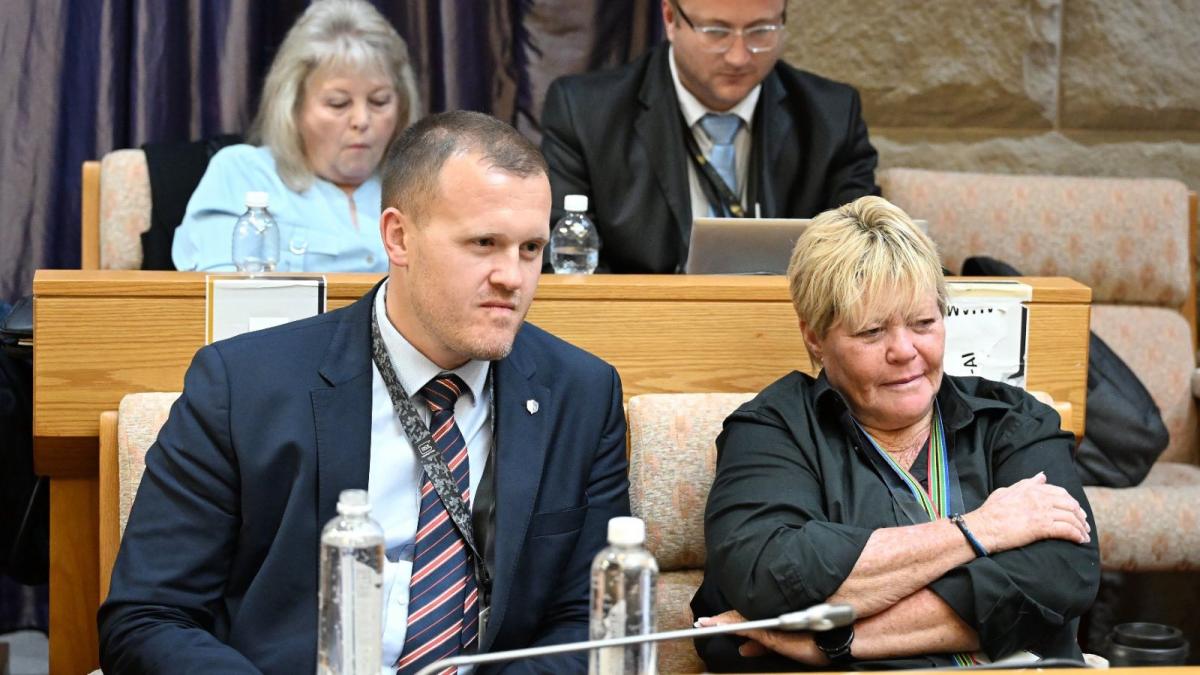
Cameron said South Africa needs structural reform to address organized crime and gang violence. This includes:
- Intelligence-led policing grounded in credible crime intelligence.
- Prosecutor-guided investigations into drug networks and organised crime syndicates.
- Financial disruption and asset forfeiture targeting syndicate leadership.
- Clear expansion of policing powers to competent metropolitan governments.
- Conviction-driven case building, not arrest statistics.
“The expansion point must be concrete. For example, the City of Cape Town Metro Police has demonstrated operational capacity,” he said.
“Granting it enhanced forensic authority, particularly ballistic analysis powers in gang-related gun violence, could be a major force multiplier.”
He called for rapid local ballistic tracing integrated with national systems, which would link shootings faster, identify repeat firearms.
This would also strengthen case dockets and improve conviction rates, which are needed to get criminals off the street.
“Where municipal capability exists and can measurably improve safety outcomes, it should be enabled within a coordinated national framework,” Cameron said.
He added that Ramaphosa’s announcement that all SAPS and Metro Police members will be re-vetted is necessary. “Organised crime infiltration is real,” he said.
“But vetting without consequence management rings hollow. Corrupt officers have already been identified in past investigations.”
“If disciplinary outcomes are overturned at the senior level, accountability becomes selective.”
“Short-term stabilisation may calm hotspots. Long-term safety requires empowered competent structures, institutional integrity, and measurable accountability.”








 Loading ...
Africa only submits to the lawvof the jungle. Violance
Public hangings broadcasted on the 7pm News Bulletin.
Case in Point . . .see the low crime rate in the Middle East & the Orient.
Very harsh punishment for criminals