
The speech of a President with one eye on the exit door


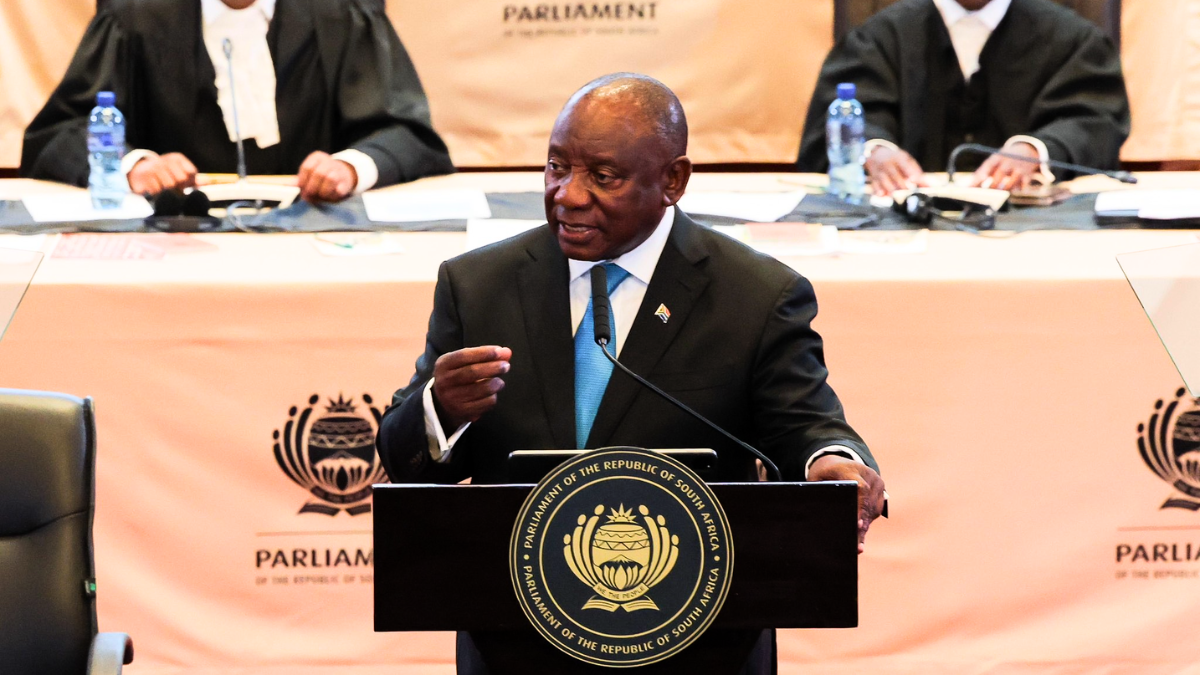
“This was the speech of a President who appears to be bowing out, with one eye on the exit door.“
“In an election year, promises are easy. Implementation is the litmus test, and this is where our government falls hopelessly short.”
“South Africans deserve honesty and meaningful action as opposed to repeated declarations, plans, and talk of task teams that invariably fail to implement”.
These are the views of Wayne Duvenage, CEO of the Organisation Undoing Tax Abuse (OUTA).
He issued a scathing response to President Cyril Ramaphosa’s 2026 State of the Nation Address (SONA), characterising the speech as deeply disappointing and replete with “hollow promises.”
The President’s commitments to tackle corruption, build infrastructure, and professionalise the public sector are echoes of speeches he has made for the past eight years, said Duvenage.
The country does not suffer from a shortage of plans, but rather a critical “shortage of implementation, transparency, and accountability”.
An endless cycle

OUTA argues that the President’s address follows a tired formula: a crisis arises, followed by a commission, and then the establishment of a task team or ad hoc committee.
Despite these bureaucratic manoeuvres, public trust continues to erode as implementation lags.
The organisation points to the National Anti-Corruption Strategy as an example of this inertia.
First promised in the 2020 SONA as a “whole-of-society compact” due for launch that same year, the framework was only presented in its final form two years later, where it has since “gathered dust,” only to be mentioned again in the 2026 address.
Similarly, Duvenage said that promises made as far back as 2018 regarding the clean-up of State-Owned Enterprise (SOE) governance and the removal of boards from procurement roles remain unfulfilled.
While Ramaphosa identified organised crime as the primary threat to South African democracy, OUTA contends that the true danger lies within the government itself.
The organisation asserts that corruption is thriving within state institutions, enabled by the very cabinet members and leadership ranks supposedly tasked with stopping it.
“Organised crime thrives where public officials are compromised, and where procurement processes are allowed to be abused without consequences,” notes Duvenage.
Commenting on the deployment of the SANDF to combat illegal mining and gangsterism, OUTA views this as an admission of failure to properly reform the South African Police Service (SAPS).
They argue that military intervention cannot substitute for the “institutional repair” needed to create an ethical and capable police force.
Governance failures
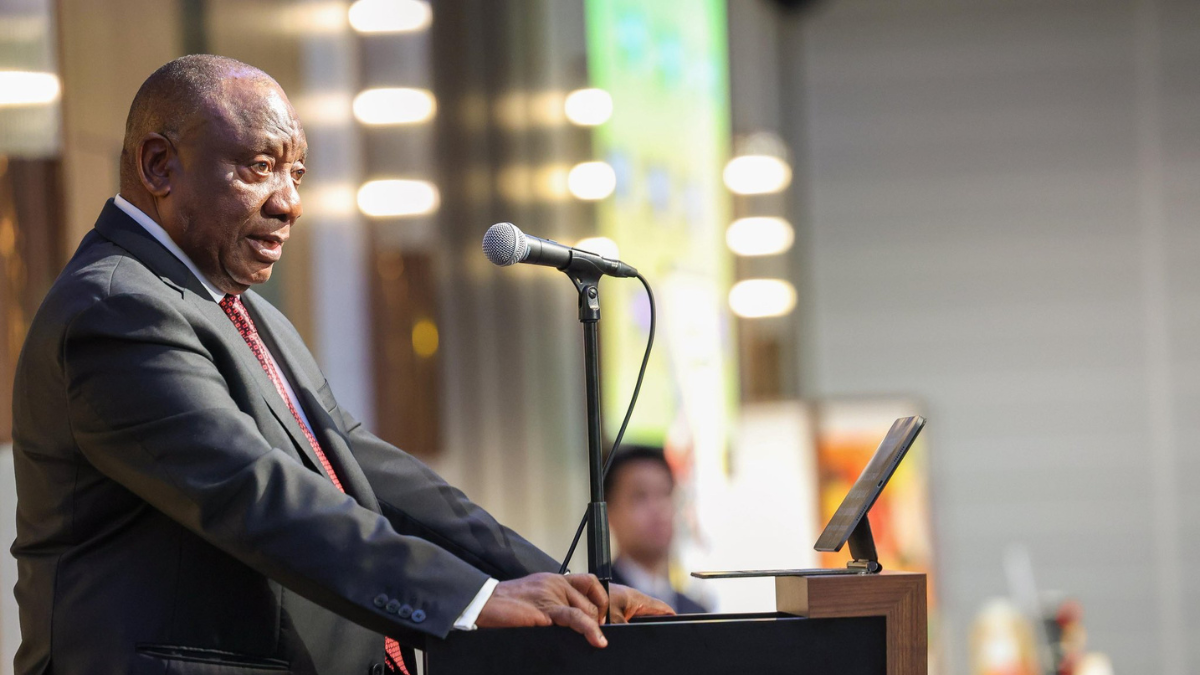
Addressing the water crisis, OUTA welcomed the President’s acknowledgement that the issue stems from poor planning and maintenance but warned against “fixing a gaping wound with a plaster” by simply creating new agencies.
The organisation insists that without resolving the entrenched dysfunction caused by patronage networks and cadre deployment, new committees will fail.
Duvenage asks, “How many municipal managers have been successfully charged and jailed for the multiple cases of raw sewage flowing into our river systems?”
Regarding the economy, OUTA dismissed the President’s references to improved credit ratings and a strengthening Rand as largely the result of international dynamics rather than government action.
They say that these improvements come off a very low base and do little to alter the reality of alarmingly high youth unemployment.
Ultimately, OUTA’s stance is that strong language without enforcement merely deepens public cynicism.
With more than 50 commitments made in the speech, the organisation questions how these will be achieved without clear deadlines, funding details, or consequences for failure.
“South Africa needs implementation, transparency, and measurable accountability, not another cycle of announcements and deferred action,” the organisation stated.



 Loading ...
Ramaphosa’s legacy will be one of an underwhelming wimp of a president who had to ask a committee for permission to tie his shoelaces. He has to be the disappointment of the century.