
ANC cries foul over plan that could see Starlink roll out in South Africa



The African National Congress (ANC) has issued a strong rebuke of Communications and Digital Technologies Minister Solly Malatsi for what it alleges is him exceeding his legal authority.
This is by instructing the telecoms regulator, the Independent Communications Authority of South Africa (Icasa), to amend equity ownership rules that could benefit foreign operators such as Starlink.
Malatsi’s directive instructs Icasa to address what he describes as legal flaws in its existing equity ownership regulations for the ICT sector.
However, the ANC has interpreted the move as an attempt to amend legislation indirectly.
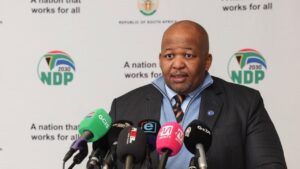
In a statement released following the publication of a Government Gazette on 12 December 2025, the ANC said it was “deeply concerned” by Malatsi’s policy direction.
It proposes alternative compliance mechanisms to the long-standing requirement that licence holders in the ICT sector be at least 30% owned by Historically Disadvantaged Groups (HDGs).
According to the ANC, the notice “introduces policy directions that exceed the Minister’s authority, undermine South Africa’s transformation framework, and threaten the integrity of our ICT and postal regulatory environment”.
The party further alleged that the move reflects “a troubling trend where ministers belonging to the Democratic Alliance seek to bypass Parliament”, adding that “no minister may amend or suspend legislation via a policy directive.”
The ANC said laws governing the sector can only be amended through Parliament, not by ministerial instruction.
A central point of contention is the Gazette’s proposal to allow alternative compliance mechanisms to the 30% HDG ownership requirement.
The ANC warned that such provisions would enable certain operators, “notably foreign satellite providers like Starlink”, to ‘bypass core transformation obligations embedded in South African law.’
The party also questioned claims made by the minister that the department received around 19,000 public submissions on the draft policy, with 90% allegedly in support.
The party has also called on Parliament, through the Portfolio Committee on Communications and Digital Technologies, “to urgently hold the minister accountable for the legality, intent, and consequences” of the Gazette.
What is the ANC so upset about?

At the centre of the dispute is Malatsi’s proposal to introduce Equity Equivalent Investment Programmes (EEIPs) into the ICT sector.
EEIPs would allow companies that cannot meet direct ownership requirements to fulfil empowerment obligations through alternative investments, such as infrastructure rollout, skills development or enterprise support.
This could see Starlink sidestep the required 30% ownership stake for HDGs through a R500 million pledge for free internet in 5,000 rural schools.
Malatsi first proposed EEIPs as an alternative to the 30% ownership threshold in May 2025, triggering sustained criticism from ANC MPs.
The mechanism is widely viewed as a potential pathway for SpaceX’s Starlink to operate in South Africa without local equity ownership.
Critics argue that EEIPs would effectively weaken South Africa’s black economic empowerment framework.
Malatsi, however, has rejected this interpretation. In the Gazette, he said there is little evidence to support claims that EEIPs undermine BEE, noting that the ICT Sector Code already recognises such programmes as contributing to empowerment.
He said the policy direction is intended to support transformation initiatives already provided for under the ICT Sector Code and the B-BBEE Act.
The minister also pointed to problems with Icasa’s 2021 ownership regulations, which require all operators, service providers and spectrum licensees to be 30% black-owned.
He argued that these regulations go beyond the Electronic Communications Act and deviate from frameworks set by the Department of Trade, Industry and Competition without approval.
For this reason, Malatsi instructed Icasa to revise its rules to align with the amended B-BBEE ICT Sector Code, while taking into account national policy goals around affordability, accessibility, investment and competition.









 Loading ...
They dont want Elon to benefit the country and its citizen, he must benefit the party.