
Reparations to black communities for slavery not needed in South Africa


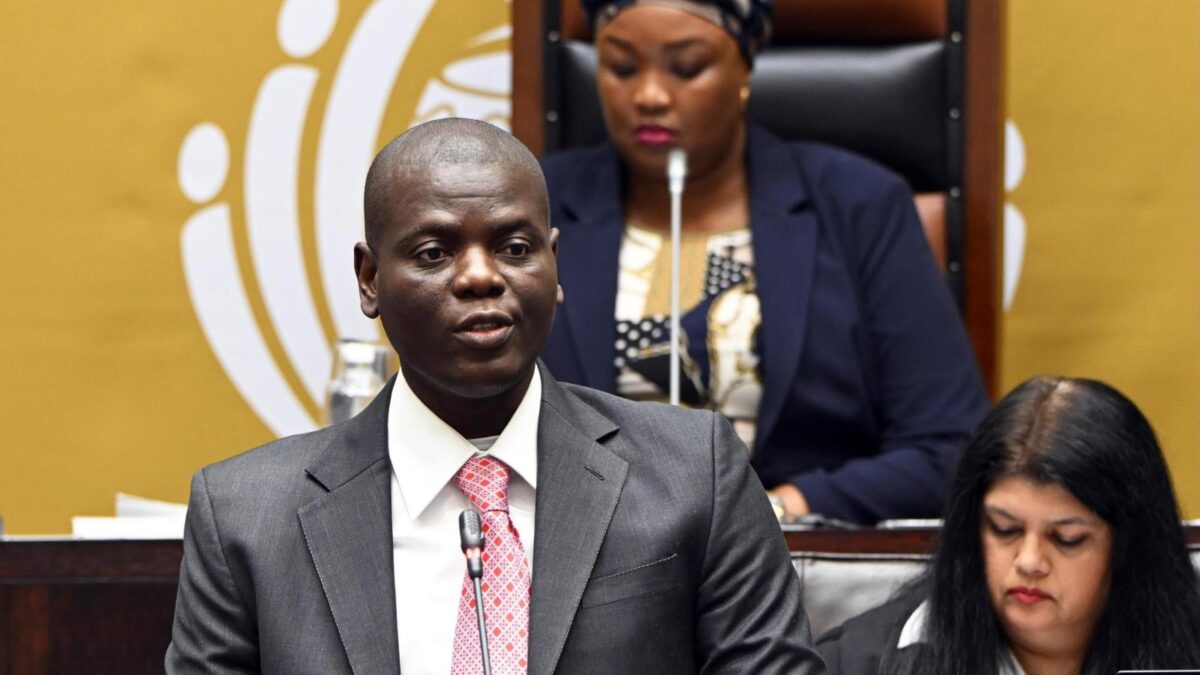
Minister of International Relations and Cooperation, Ronald Lamola, said reparations for black communities within South Africa for slavery are not needed.
Lamola shared this information during a question-and-answer session in Parliament about the United Nations declaring slavery a crime against humanity.
National Assembly member Zwelakhe Mthethwa asked Lamola whether the government would deliver meaningful reparations to black communities.
He also asked what concrete measures would be implemented to ensure equitable redress and socio-economic benefit.
Lamola responded, saying the United Nations General Assembly resolution declaring slavery a crime against humanity is non-binding and does not require ratification.
The resolution also does not impose obligations on member states, like South Africa, to provide reparations at the domestic level.
“The primary purpose of the resolution is to affirm an international position recognising slavery and the transatlantic slave trade as crimes against humanity,” he said.
He added that it aims to promote global dialogue, education, remembrance, and international cooperation in addressing the consequences of slavery.
“It is important to clarify that the Khoi and San peoples were not subjected to the chattel slavery addressed by this resolution,” he said.
“They were also not victims of slavery as defined under international crimes against humanity frameworks.”
He added that while South Africa supported the resolution, it does not establish or determine reparations for black communities within South Africa.
“Reparative justice for affected communities remains an issue to be pursued through separate, appropriate, and historically accurate domestic processes,” he said.
“It is done in accordance with the Constitution and South Africa’s commitment to inclusive and differentiated redress.”
Lamola said the resolution is neither an appropriate nor relevant instrument for securing equitable redress.
“The resolution specifically addresses the historical and contemporary consequences of slavery as defined under international law,” he said.
“Accordingly, the Government does not associate Khoisan redress with this United Nations resolution.”






 Loading ...
“National Assembly member Zwelakhe Mthethwa asked Lamola whether the government would deliver meaningful reparations to black communities.
He also asked what concrete measures would be implemented to ensure equitable redress and socio-economic benefit.”
Redress for people who were not affected by the slave trade? What is wrong with this dude?