
The adopted G20 declaration that the US was hoping would never happen



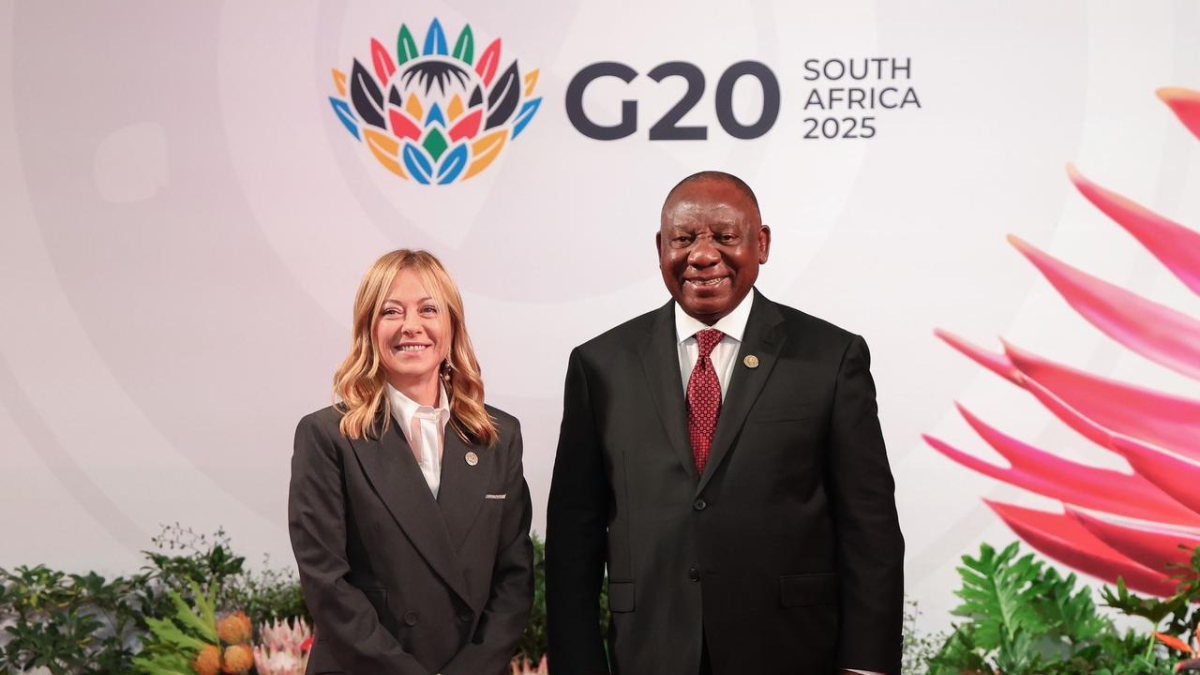
In a move that surprised many, G20 leaders supported the Leaders’ Declaration at the beginning of the meeting in South Africa on Saturday, 22 November.
The early adoption, highly unusual in G20 diplomacy, set an assertive tone for the first-ever summit held on African soil and signalled strong collective support for South Africa’s agenda on debt relief, climate action and inclusive global governance.
Hosted under the banner of “Solidarity, Equality, and Sustainability,” the South African presidency said that the summit has been rooted in the African philosophy of ubuntu — a belief that collective humanity and mutual support underpin prosperity.
Leaders pledged that responses to global crises must “leave no one behind,” underscoring a shared recognition that geopolitical fragmentation and economic inequality demand coordinated action.
By adopting the declaration at the very outset, G20 members sent a pointed message of consensus amid diplomatic tensions.
South African officials had signalled throughout the year that they would not be “bullied” into abandoning a negotiated outcome document.
This stance was sharpened when the United States announced that it would boycott the summit and oppose any attempt to produce a formal declaration.
Instead of backing down, Pretoria secured broad alignment ahead of the gathering, enabling leaders to endorse the full document within the opening session, with some concerns raised by US ally Argentina during the discussion.
Reuters reported that G20 envoys drew up a draft leaders’ declaration on Friday without US input, in a surprise move that a senior White House official described as “shameful”.
Peace and debt relief at the forefront

Opening amid escalating geopolitical tensions, the declaration reaffirms the G20’s commitment to the UN Charter and international law.
Leaders condemned attacks on civilians and infrastructure, emphasised the humanitarian costs of conflict and called for “comprehensive, just and lasting peace” in Ukraine, Sudan, the Democratic Republic of Congo and Palestine.
The declaration links peace directly to economic resilience, warning that conflict-driven instability undermines global supply chains, food security and development.
Debt sustainability forms one of the declaration’s strongest pillars.
Leaders expressed deep concern that interest payments by low-income countries have more than doubled in the past decade, strangling their ability to invest in essential services and climate adaptation.
The G20 recommitted to the Common Framework for Debt Treatments, acknowledging the need for more timely, transparent and coordinated restructuring. Cases in Chad, Zambia, Ghana and Ethiopia were noted as progress but also as evidence that further improvements are needed.
To strengthen long-term collaboration, the G20’s Finance Ministers launched the Africa Engagement Framework (2025–2030), aimed at enhancing financial coordination, investment and resilience across the continent.
Climate action, minerals, and ‘fairness’
With climate impacts intensifying, the declaration reaffirms the G20’s determination to pursue the 1.5°C target under the Paris Agreement.
Leaders pledged to support adaptation, mobilise affordable financing and scale up technological assistance to developing economies.
The declaration highlights the stark reality that over 600 million Africans remain without electricity, and endorses ambitious energy goals, including tripling global renewable energy capacity and doubling energy efficiency improvements by 2030.
A central highlight is the Mission 300 initiative, aiming to connect 300 million Africans to electricity by the end of the decade.
Recognising Africa’s critical role in the global clean-energy transition, the G20 adopted the Critical Minerals Framework, designed to guide transparent and sustainable development of mineral value chains.
Importantly, the framework affirms the sovereign right of mineral-rich countries to pursue local beneficiation and industrialisation — a significant shift from traditional extraction-based models.
South Africa placed youth empowerment and gender equality at the centre of its presidency.
The declaration adopts the Nelson Mandela Bay Target, which aims to reduce the proportion of young people not in employment, education or training by 5% by 2030.
Leaders also endorsed the updated Brisbane-eThekwini Goal, committing to reducing the gender labour participation gap by 25% by 2030 and encouraging efforts to narrow the gender wage gap by 15% by 2035.
A defining moment for the G20 — and for Africa

Reform of the UN Security Council features prominently, with leaders calling for a wider, more representative body that gives greater voice to underrepresented regions, including Africa, Latin America and the Asia-Pacific.
The declaration also celebrates the African Union’s expanded role as a full G20 member, marking the second year of its participation.
The early adoption of the Johannesburg Declaration stands as a diplomatic victory for South Africa and a strong rebuke to efforts to undermine the summit’s outcomes.
Read the full declaration below:






 Loading ...
Dave and John Miller are enemies of millions of SA people with no work. As whites leave jobs are lost. Yet they applaud a thieving corrupt party. They talk about development. Less taxpayers means less development. As for climate change according to those nanas New York should be under water by now. So there you go. The anc has been bad for SA. It’s like opening a can and finding it full of worms. The G20 is a talk shop. How much revenue was lost due to roads closed? They could get up at 5am like the rest of SA to get there on time.