
Gauteng water crisis: Residents blamed for municipal failures



Many areas across Gauteng, particularly the economic hub of Johannesburg, are in a full-blown water crisis.
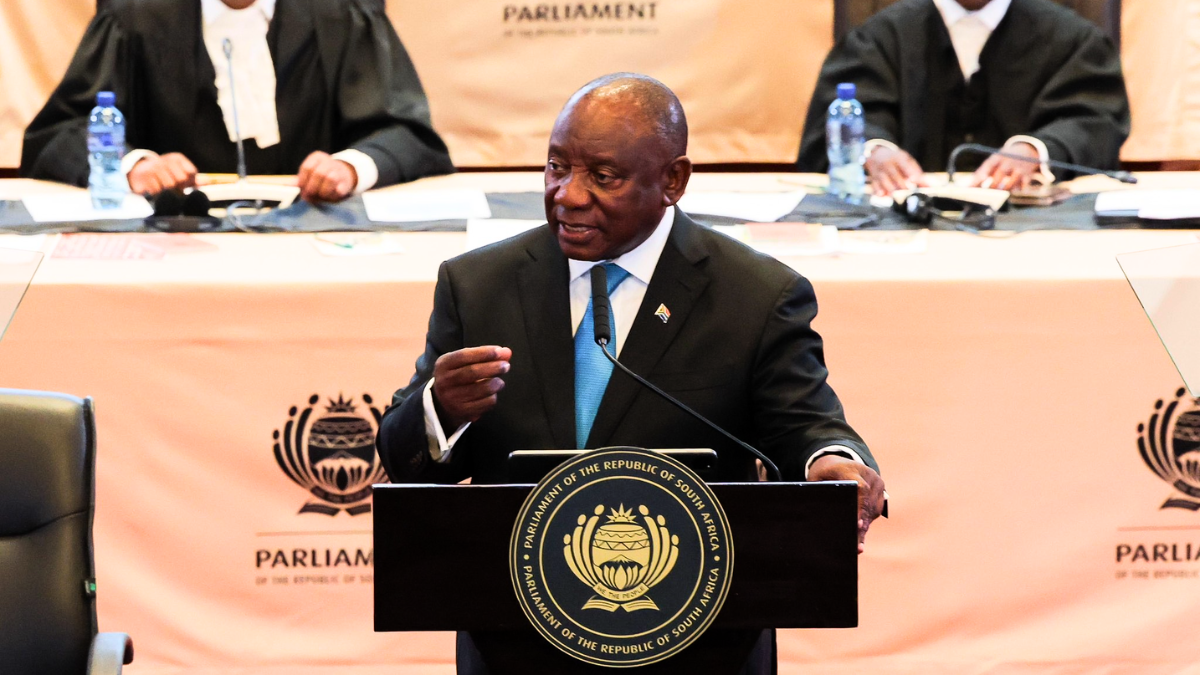
Neighborhoods like Westbury, Ebony Park, and parts of Soweto have endured dry taps for weeks, going on months, prompting Parliament to haul city management before them. Promises for restoration have come and gone.
Johannesburg is experiencing weeks-long outages, while Tshwane reports exceeding its water limits by 22%, warning that prolonged supply interruptions will continue unless water use drops dramatically.
Many Gauteng metros are bemoaning consumption, but experts say such warnings seek to shift blame from municipal underinvestment in infrastructure onto residents and businesses.
The province’s water crisis has been entirely preventable as the problem is not supply.
Department of Water and Sanitation (DWS) Director-General Dr. Shaun Phillips told Parliament that Rand Water provides sufficient water to meet municipal needs.
“If they were to reduce leaks in their distribution systems and invest more in distribution infrastructure, including storage and pumping capacity, this issue would not exist,” he said.
Imagine Rand Water as a hose and most Gauteng municipalities as buckets with leaks. No matter how much water is added, they will never be completely filled.
The scale is reflected in the province’s Non-Revenue Water (NRW) figures. NRW is the volume of potable water distributed for which the municipality receives no income. The target is less than 25%.
Looking at data from the DWS’s monthly Gauteng metro dashboard, published on 29 August 2025, NRW in Johannesburg is 48.4%, Tshwane 39.1%, and Ekurhuleni 28.9%.
Looking at just leaks, Johannesburg loses around a third of its water.
Yet to fix it, a Parliamentary briefing noted that Johannesburg Water has an infrastructure upgrade and renewal backlog of approximately R26.61 billion, which is likely to increase.
Water expert Dr Anthony Turton echoed this, telling Newsday that the crisis is a combination of factors:
- All municipalities have poor infrastructure, though some are worse than others.
- All municipalities face substantial NRW issues, with varying severity.
- The population has nearly trebled in the last four decades, increasing demand for jobs and water.
- Internal migration to cities has added extra pressure on services, including water and sewage.
- Many municipalities have purged technically skilled staff, replacing them with loyal but incompetent cadres.
- Messaging from the focus on the Platform for a Water Secure Gauteng (PWSG) society using less water, but this largely ignores population growth and migration pressures.
He added that unless more water is added into the system (despite leaks), the economy will decline, jobs will not be created, and social instability will rise.
Yet, the official messaging largely ignores these pressures and oversimplifies the crisis to that of consumption from residents.


The scale of the issue and moving forward
Speaking to Newsday recently, the Professor said that “there is a 100% correlation with governance failure as nowhere in South Africa do we have an absolute water scarcity.”
“Taps are dry because municipalities have failed for a variety of reasons, including the mismanagement of funds, inability to collect revenues, lack of ring-fencing for finances and the loss of technical skills due to purges.”
Turton said that since the Jacob Zuma presidency, he has consistently urged the Presidency to recognise water as an economic enabler.
Without reliable supply, businesses cannot survive, investors will not commit, and jobs cannot be created.
Despite efforts under both Zuma and Cyril Ramaphosa, including establishing a Business Water Chamber, he said that the Presidency has shown little interest, with repeated attempts at engagement being blocked.
He argued that the core issue lies in the Constitution, which lacks accountability and, through the Cooperative Governance Clause, prevents the DWS from regulating effectively across tiers of government.
To restore investor confidence and create jobs, he suggested either amending this clause or establishing an independent water regulator.
Turton further recommended ring-fencing municipal finances, using Special Purpose Vehicles (SPVs) to build capacity, and depoliticising water management by appointing only technically competent leaders.
WaterCAN’s Dr Ferrial Adam recently told Newsday that “the majority of dry taps we see today are not caused by natural scarcity but by governance failures.”
“Billions have been spent on upgrades that never materialised or were riddled with corruption,” said Adam.
“The problem is less about not having water than not managing water.” “Without competent governance, no amount of rainfall or dam storage will translate into reliable taps.”
WaterCAN has consistently called for:
- Professionalising water services by ending political appointments and hiring qualified engineers.
- Transparent reporting of water quality and infrastructure data.
- Ringfenced budgets to prevent diversion of water funds.
- Expanding citizen initiatives like Water Testing Week.
- Stronger independent oversight through Chapter 9 bodies and civil society action.
Adam stressed that “South Africa is not running out of water; it is running out of time to fix governance.”
DWS says that municipalities must cut leaks, replace ageing pipes, refurbish reservoirs, and expand storage and pumping capacity.
Improved coordination with Rand Water, municipalities, and Treasury is needed to implement turnaround plans, ensuring sustainable supply and better water service delivery

Joburg and Tshwane plans
Tshwane has said that it is tackling its NRW issue through major investments in pipe maintenance, conservation campaigns, better metering, and collaboration with the Water Partnership Office to secure private funding for infrastructure upgrades.
“We must aggressively reduce water consumption, which is currently above the license requirement, and non-revenue water losses,” wrote mayor Dr Nasiphi Moya.
The Tshwane budget for the 2025/26 financial year includes a total of R1.4 billion for upgrades to water and electricity infrastructure to improve reliability and address service delivery challenges.
Johannesburg is working with the Strategic Water Partnerships Network to cut losses, improve billing, and aims to save over 37,000 megalitres annually.
The city said it was working with the National Treasury to implement trading service reforms for metropolitan municipalities.
In a presentation to Parliament, Joburg Water noted that in the 2025/26 financial year, the entity has a capital budget of R1.7 billion for infrastructure investment, up from R1.29 billion in the 2024/25 budget.
Factoring in the renewal backlog and expansion plans, the group said it requires an annualised investment of R3 billion per year for the next 10 years to address infrastructure issues.
At a recent Parliamentary meeting, the committee agreed with the DWS that Johannesburg Water had a credible plan to address the challenges, but emphasized that adequate funding is essential for the plan to be effective.
It said municipalities could curb water losses through better funding and equipping of leak repair teams to ensure faster response times, replacing aging or damaged pipes, and introducing pressure management measures such as pressure-reducing valves.
The department also stressed the need for municipalities to invest more broadly in their water distribution systems.








 Loading ...
Proudly brought to you by the ANC, well done!