
One small village in South Africa produces many of the country’s most dangerous killers



An investigation by award-winning News24 journalist Jeff Wicks revealed that a small village in rural South Africa is a breeding ground for South Africa’s most dangerous assassins.
This was one of the facts shared by Wicks in his harrowing new book, The Shadow State: Why Babita Deokaran had to die.
In this book, Wicks provided details about the events leading up to Babita Deokaran’s murder in 2021. He also followed the story after she was assassinated.
Deokaran was a civil servant who worked her way up from an accounting clerk to the acting chief director of financial accounting at the Gauteng Department of Health.
In August 2021, she halted R850 million in suspicious payments to hundreds of companies linked to Tembisa Hospital.
She uncovered a sophisticated extraction network draining public health funds meant for the poorest communities, and called for a forensic investigation.
On 11 August 2021, she alerted the department’s chief financial officer that their lives could be in danger.
“Morning CFO, I am just worried that the guys in Tembisa are going to realise we are onto something. Our lives could be in danger,” she said.
Her boss, Lerato Madyo, replied: “Morning Babita, I have requested the HOD’s grant approval for the investigation.”
“This was a lie. No investigation was ever launched. The payments were released after her death,” Wicks said.
Deokaran was shot dead in a hail of bullets outside her home in Mondeor, Johannesburg. She had just dropped off her daughter at school.
Although the hitmen paid to kill her were caught, Wicks and his investigative team started to investigate the murder, asking who ordered it and why.
While the hitmen are spending time behind bars, the people who ordered the hit and were behind Deokaran’s murder remain free.
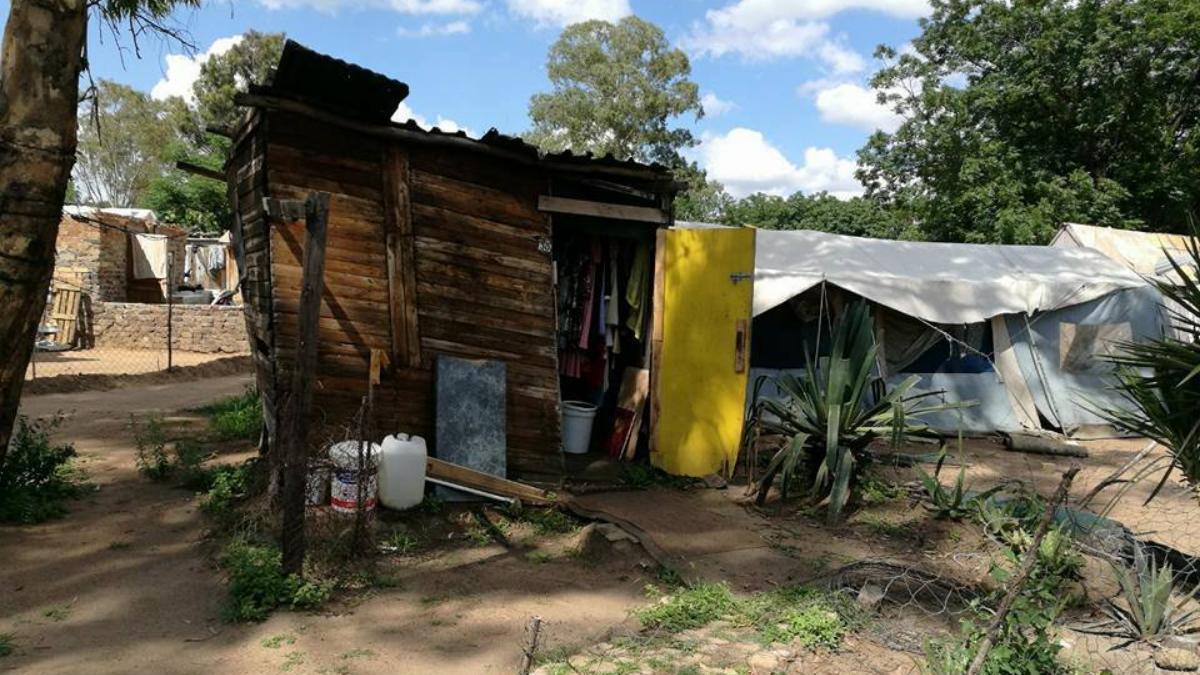
Nhlawe aka ‘Hitmen’s Hollow’

At the launch of his book in Killarney, Johannesburg, on 27 August, Wicks, a two-time recipient of the prestigious Taco Kuiper Award, reflected on the years-long investigation that underpins his work.
Answering moderator Mandy Wiener’s question about why he travelled to what he calls “Hitmen’s Hollow,” Wicks said: “There was one word, ‘Nhlawe,’ a small village outside Weenen in KwaZulu-Natal, buried in the pile of court documents.”
He explained that the decision to go there came out of frustration:
“The genesis of the trip to Nhlawe was born out of desperation, because we’d been on the story for months and were struggling to take it forward.”
“Even though we were following the court processes with the hitmen, they did nothing to advance us towards the ‘why’ or ‘who.’”
With only a list of six names to guide them, Wicks and his colleague set off. The journey, he recalled, was unnerving.
“It is a dry, arid village in the heart of a valley, and no one wanted us there. As soon as we started asking questions about these men, we received warnings about how dangerous the hitmen were.”
According to Wicks, the suspects were not simply a random group, “they knew each other from birth, spent their formative years in the valley, and all left in search of a better life in the reef, falling into the taxi trade, which is blood-soaked ground itself.”
“This trip told us that there was credence to the claim that these were hitmen.”
He added that vicious turf wars between villages had turned Nhlawe into a proving ground for assassins:
“Weenen is a violent place and a crucible for minibus taxi assassins. In 2019, thirty-nine people were killed in a bitter feud between rival villages.”
Much of that violence, he wrote, played out in Nhlawe, with the death toll stretching into Johannesburg and Durban.
Wicks concluded that the killers in the Babita Deokaran case were bound by a shared past: “We left Weenen certain that the Deokaran killers had ties that stretched back to childhood. Each featured somewhere in the minibus taxi world.”
To unpack more, The Shadow State: Why Babita Deokaran had to die is now available online or at any reputable book store. It is a harrowing yet critical read.













 Loading ...
Typical gangster state =vote for a new coalition government – SA will change for the better then!