
SANDF in freefall



The South African National Defence Force (SANDF) is falling apart, with the collapse of state entities and underfunding at the core of its demise.
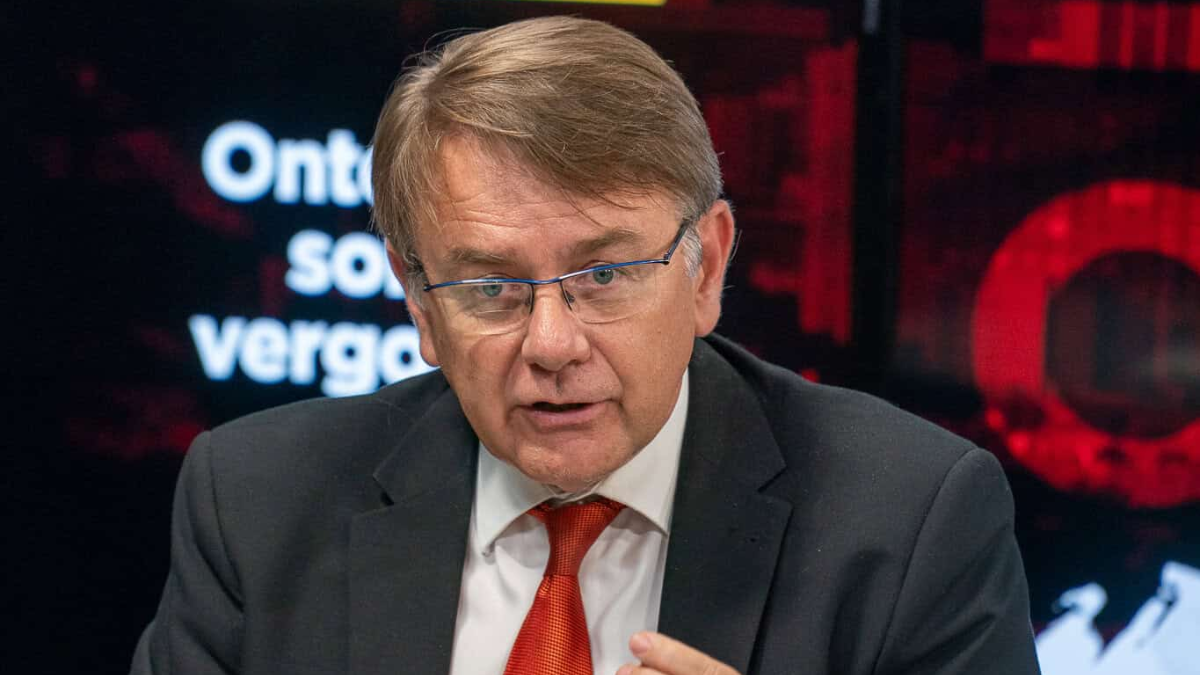
This is according to Chris Hattingh, the Democratic Alliance’s spokesperson for Defence and Military Veterans, who told Biznews that the SANDF is in tatters.
He said that the SANDF faces significant challenges stemming from poor leadership, corruption, historical underfunding, and misalignment of national defence objectives.
This was echoed by Leleti Maluleke from Good Governance Africa, recently arguing that “despite its strategic importance, it faces serious problems that threaten its operational effectiveness.”
“Underfunding, inadequate resources, maintenance failures and internal discipline issues have weakened the force, raising questions about its ability to fulfil its obligations.”
“The SANDF has almost 200 aircraft, and 16 will be available on a good day. Our submarine fleet is also basically gone, and I don’t think it can be recovered,” said Hattingh.
Earlier in the year, the DA reported that the Air Force would need roughly R8 billion to restore key platforms like Rooivalk and Gripen jets to service.
Similarly, for the Navy to refit (a complete maintenance overhaul) its submarines and frigates, it will require roughly R700 million per vessel.
“We’ve also got a rapidly ageing defence force, with the outflow of older people having surpassed the number of younger people entering the SANDF and Air Force.”
In addition to this, Hattingh argues that South Africa’s defence force is operating without direction.
He explained that the defence review acts as a road map for the SANDF, asking questions such as what type of defence force is needed, what kind of equipment is necessary, and how the SANDF should modernise.
According to the defence review, implementing the first milestone would arrest the SANDF’s decline, the second would rebalance it, the third would capacitate it, the fourth would allow it to respond to challenges, and the fifth would give it limited war capability.
“Not a single milestone from the 2015 Defence Review was implemented, which basically means that the SANDF is rudderless,” Hattingh said.
“Once we become defenceless, we become an easy target. There’s a saying that there will always be a capable military on our soil, whether it’s our own, it’s our own choice.”
The decline of the military industry

South Africa has a R57 billion Defense budget. Dr Moses Khanyile, director of the Centre for Military Studies at Stellenbosch University, said that the current defense budget is inadequate to maintain a modern military capable of effectively addressing both internal and external threats.
Khanyile is calling for increased investment in research and development within local defence industries to ensure that the country does not remain vulnerable.
Hattingh also said that while South Africa may still have some of its defensive fleet available, that which remains is falling behind technologically.
“We’re not where we were in 2015. The world has moved on, and so has the defence industry,” he said.
“We had the research and development capacity in Denel and Armscor, but we’ve lost most of that because of state capture and cadre deployment.”
He highlighted that state-owned aerospace and weapons manufacturer Denel was a major player in the international arms community.
“Before the state capturers got their greedy hands on Denel in 2015, it was a top company,” Hattingh said.
This period saw irregular activities, including a R229 million hull fabrication contract awarded to Gupta-linked VR Laser in November 2014, instead of the Denel subsidiary LMT as originally specified, which the Special Investigating Unit (SIU) described as “fraught with irregularities.”
Denel executives also breached internal policies and the PFMA by awarding R2.8 million in bursaries for pilot training to three students, and by acquiring R10 million in legal services from unapproved provider Khampha Attorneys.
Additionally, improper financial assistance of R334 million was given to LMT, violating both the PFMA and the Companies Act.
These actions pushed Denel from profitability into years of losses, with cash flow problems so severe that the company struggled to pay full salaries, prompting many employees to seek work in the Middle East
“They were an original equipment manufacturer of note in the world. There’s still a lot of Denel’s technology left after state capture, but the entity has lost a lot of its capability.”
Hattingh says the same is true for the Armaments Corporation of South Africa (Armscor), the SANDF’s arms procurement agency.
However, Armscor also faces the issue of the SANDF’s underfunding, with 68% of its budget being allocated to salaries, leaving only 32% for operations, equipment, maintenance, and everything else.
This leaves very little to be spent on military infrastructure and arms.
Newsday has reached out to the Department of Defence and Military Veterans for comment. This will be added once received.











 Loading ...
R68B still seems a little to me.