
South Africa’s 43 deputy ministers are critical to governance – Ramaphosa



President Cyril Ramaphosa has said that deputy ministers are critical in the functioning of the South African government, but added that a leaner executive would be ideal.
This follows criticism that deputy ministers are redundant and have unnecessarily bloated the country’s executive to 75 members.
During a National Assembly Plenary hearing on Tuesday, which allowed Members of Parliament (MPs) to pose questions to the President, several MPs took the opportunity to address the issue of deputy ministers.
In response to a question from African National Congress MP Livhuwani Ligaraba, which assumed that deputy ministers play an important role in the executive, Ramaphosa said the following:
“Deputy ministers continue to play a critical role in our governance. They are members of the executive and participate in cabinet discussions,” he said.
He explained that every proposal in cabinet meetings starts with the minister and deputy minister, who discuss the matter with their director generals and deputy director generals.
Ramaphosa says these proposals are discussed across various forums and departments before being presented in a cabinet meeting.
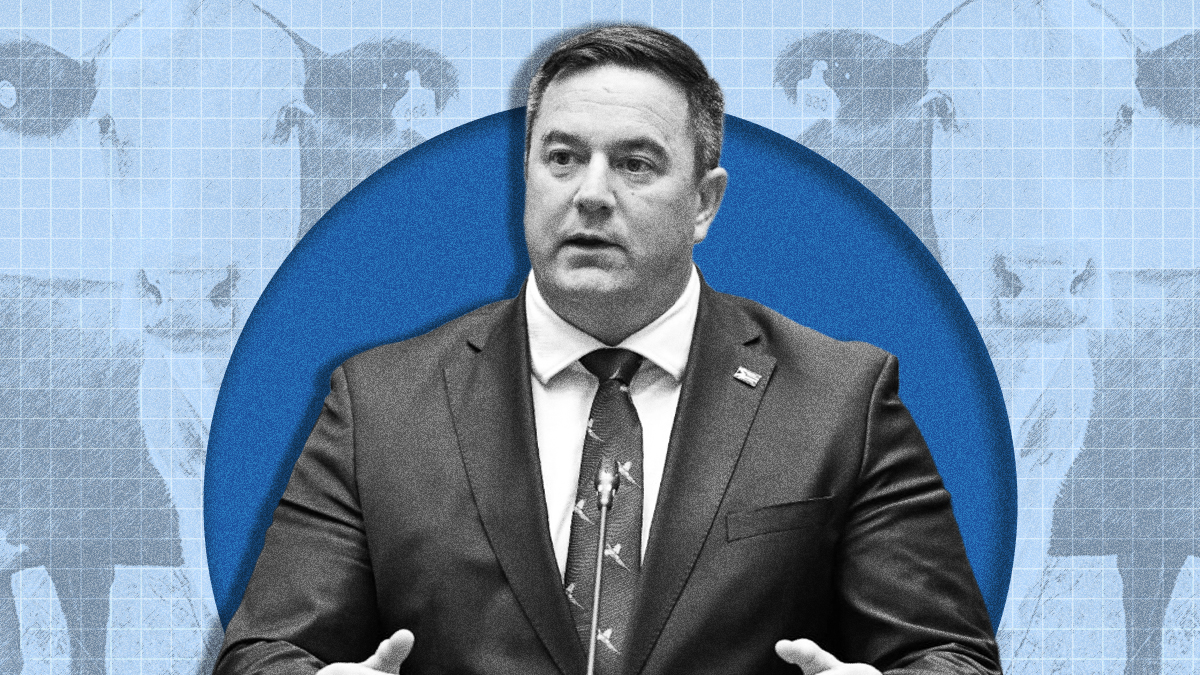
ActionSA MP Atholl Trollip, who recently tabled a bill to abolish deputy ministers and enhance Parliamentary oversight, pointed to two examples of why deputy ministers are unnecessary.
“Mr President, you recently appointed an acting Minister of Police from outside the executive because you couldn’t promote either of the deputies and didn’t trust them to become ministers,” he said.
“You also fired the deputy minister for Trade, Industry, and Competition 75 days ago, a position that remains vacant.”
In response to Trollip, Ramaphosa explained that he also believes the executive should be smaller. However, it is as large as it is now because of the outcomes of the 2024 elections.
“Mr Trollip, you are concerned, as I am, about the size of our executive. The size of the executive is the result of our elections, where we had to put together a Government of National Unity,” he said.
“Ideally, I would like a smaller executive with fewer deputy ministers. Right now, we have deputy ministers putting their shoulder to the wheel and going beyond what I would say is the call of duty of these deputy ministers.”
While not explicitly stated, the selection of these individuals often involves political considerations and rewards for allies, especially in the context of a new administration or a GNU.
Deputy ministers cost taxpayers hundreds of millions annually

South Africa’s cabinet currently comprises 32 ministers and 43 deputy ministers following the formation of the GNU in 2024.
Deputy ministers are paid an annual salary of R2.215 million each, so the 43 positions created last year cost about R95 million in salaries alone.
To that cost must be added salaries for support staff, which are about R192 million, and an unknown extra cost for VIP protection, official residences, luxury vehicles, international travel, and other perks.
However, what they get paid to do remains unclear.
Ramaphosa’s appointment of Firoz Cachalia as acting Minister of Police after former Minister Senzo Mchunu was placed on a special leave of absence caused many to question the role of deputy ministers.
This is because Cachalia was not serving in government, and Mchunu had two deputy ministers serving under him at the time.
Political economics lecturer at Wits Business School, Professor Jannie Rossouw, previously said, “truthfully, I am not sure what a deputy minister actually does, and there are now 43 of them.”
While deputy ministers are often mistaken for members of cabinet, they are not, according to the Constitution.
Section 85 assigns executive authority only to the president and cabinet, while Section 91 defines cabinet as the President, Deputy President, and ministers.
Deputy ministers do not ordinarily attend cabinet meetings, nor can they act in place of absent ministers.
Paul Kaseke, a sessional law lecturer at the University of the Witwatersrand (Wits), argues that because nobody knows what deputy ministers do, it is impossible to provide oversight as to whether they are doing their jobs.
“There are no measurable checks and balances to ensure they actually do any work,” he said.
“While both ministers and deputy ministers are accountable to parliament for the exercise of their functions, only ministers need to submit full and regular reports to parliament.”













 Loading ...
They “ continue to participate in Cabinet discussions”. Classic RAMAPOSER…as long as we’re all talking and denying and deflecting and blaming and promising and lying…ALL IS GOOD. The simple difference between word salads and messy, meaningless cliches and ACTION is totally misunderstood. Keep talking and we keep sinking!