
Farmers murdered in intruder attacks are 2,000% higher than the national average in South Africa


Farmers’ murders in intruder attacks are 2,000% higher than the national average in South Africa and stand out for their violence and brutality.
This was information shared by Advocate Mark Oppenheimer, a consultant to the Free Market Foundation’s Rule of Law Project.
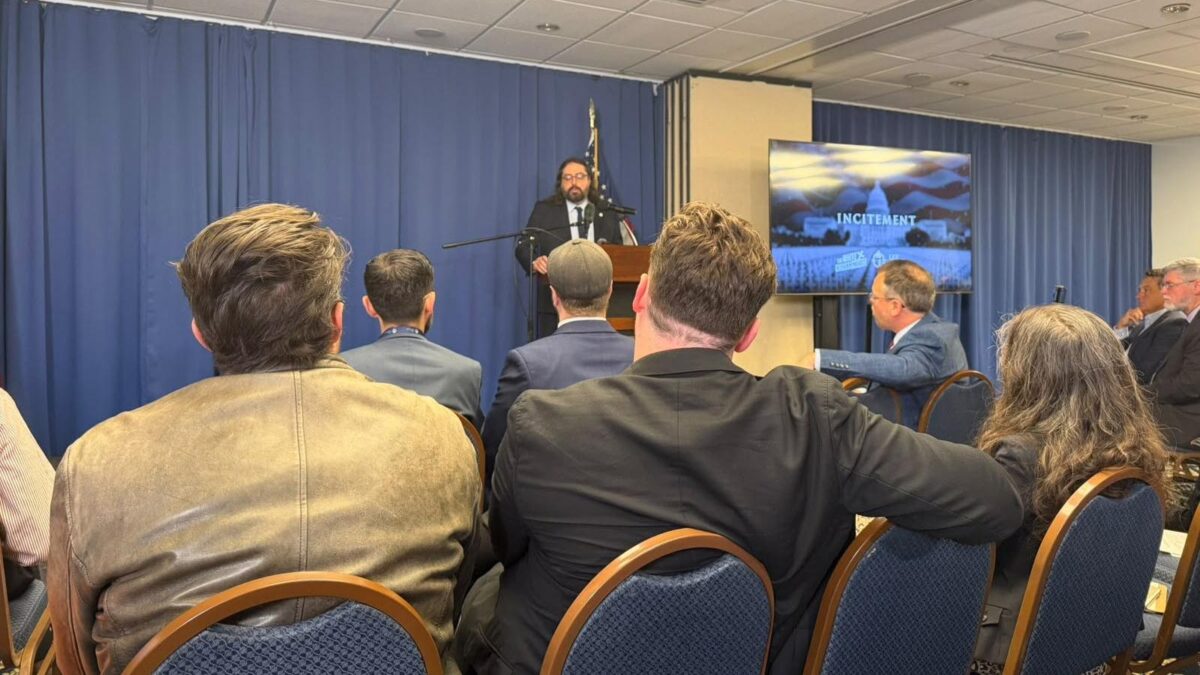
Oppenheimer provided details about the broader context of farm attacks, political rhetoric, and South Africa’s legal response during a speech in Washington.
This speech formed part of the conference linked to the White Cross Project, a public memorial for farm murders in South Africa.
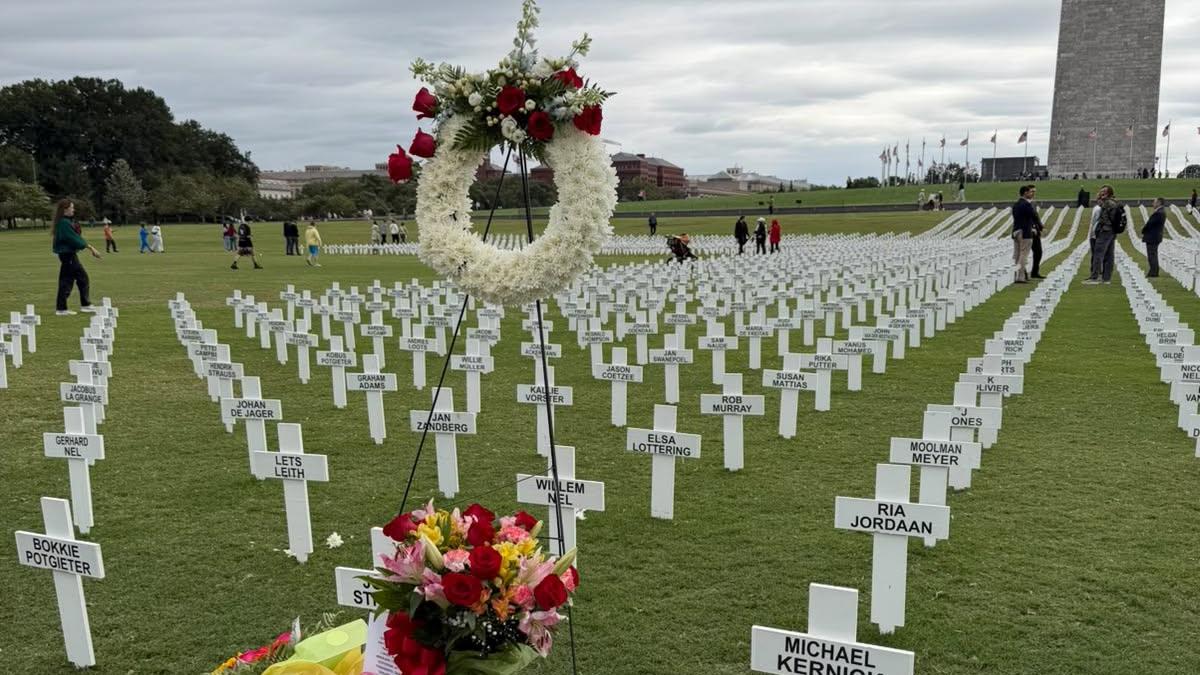
The White Cross Project erected 3,000 white crosses, representing each person killed in a farm attack in South Africa, on the National Mall in Washington.
He argued that farm murders did not get the attention they deserve in South Africa and are often delegitimised and even seen as ‘those people had it coming’.
“There is rhetoric that Afrikaners are not real South Africans, that they are subhuman, and that they deserve death,” he said.
He cited the ‘Kill the Boer, Kill the Farmer’ chant and the unapologetic way EFF leader Julius Malema, who became synonymous with the chant, reacts to farm murders.
He said Malema stated publicly that the song is a call to action and that EFF members should not be afraid to kill.
Despite many viewing the chant as an incitement to violence and hate speech, the courts ruled that the song’s historical context should be taken into account.
As such, it was ruled that ‘Kill the Boer, Kill the Farmer’ is not hate speech, and that Malema can sing it without any restrictions. He continues to do so.
“The rulings showed that the law will not be applied equally. Some races are more equal to others,” Oppenheimer said.
“If you are powerful and from the right race, you are given absolute licence to engage in acts of hate speech and incitement.”
Farm murders in South Africa are unique
Oppenheimer said that farm attacks are extremely violent and are often not associated with theft of any kind.
“People are targeted based on their race. They are not only murdered. They are often tortured to death,” he said.
In the documentary, Crossed Out: Confronting Persecution in South Africa, he shared data about farm attacks.
He said that South Africa’s general murder rate is around 33 per 100,000 people, with intruder and home-invasion attacks accounting for 5 murders per 100,000.
“Farm murders in South Africa are, by definition, intruder attacks, as the perpetrators unlawfully entered the farm and house,” he said.
“If we look at the rate of farmers who are murdered in intruder attacks, it is 100 per 100,000 people.”
“That is 20 times the national average. Farming is not a dangerous job anywhere else in the world.”
His analysis aligns with research from The Common Sense, which found that farming households are attacked at twice the rate of households in the general population.
It further found that farmers in South Africa are 670% more likely to be killed in an attack than the national average.
Another thing which stands out, he said, is the nature of the attacks. There is only a small element of theft, unlikely other intruder attacks in South Africa.
“If there were ordinary crimes, you would not expect people to be tied up, tortured for hours, and racially abused,” he said.
“That shows some level of animosity. Given that you have use of messaging, like ‘Kill the Boer’, shows that the criminals have motivation for doing this.”







 Loading ...
The disbandment of the Commando system and the legal controversy surrounding the song “Dubul’ ibhunu” (“Kill the Boer, Kill the Farmer”) are two of South Africa’s most prominent and deeply polarizing security and social issues.
The Dissolution of the Commando System
In February 2003, former President Thabo Mbeki announced the phased disbandment of the South African National Defence Force (SANDF) Commando system. The process was completed between 2003 and 2008.
• The Government’s Rationale: The African National Congress (ANC) government argued that the Commando units—originally established as a rural self-defence force—were part of the apartheid state’s security apparatus and did not align with a democratic dispensation. There were also mounting allegations of human rights abuses committed by some commando units against black farm dwellers. The government stated that specialized units of the South African Police Service (SAPS) would assume the responsibility of rural safety.
The Criticism: Opposition parties (such as the Democratic Alliance) and civil society groups like AfriForum fiercely criticized the move, warning that replacing the commandos with police would leave rural communities defenceless against violent crime. In recent years, ongoing violence against farmers has led to renewed calls from security experts and opposition figures to revive a similar decentralized rural safety model.
AfriForum & Critics Argue that the chant is literal hate speech that directly incites violence and dehumanizes white Afrikaners and farmers, contributing to a volatile environment where brutal farm attacks occur.
(Note: While Malema was cleared of hate speech regarding this specific struggle song, he was separately found guilty of hate speech by a Western Cape Equality Court in August 2025 over unrelated statements made during a 2022 rally).
Farmers called for Specialized Unit to be implemeted refused by Police Minister
The refusal to implement a dedicated, standalone “Farm Protection Unit” or a specialized police branch solely for commercial farm murders is a long-standing point of friction between successive Ministers of Police and agricultural unions like AgriSA and TLU SA.
The government’s persistent refusal is rooted in several operational and political arguments:
1. The Official Position: “No Categorization of Crimes”
Former Police Minister Bheki Cele and current Police Minister Senzo Mchunu have maintained that the South African Police Service (SAPS) cannot create specialized units based on specific geographic locations, job categories, or the racial profile of victims.Creating a specialized unit specifically tailored to commercial farm attacks is viewed by the ruling party as a step backward into apartheid-era policing models, which prioritized protecting white property owners over the broader population.