
Rich white people paid an ‘apartheid tax’ in South Africa



In 1994, the South African Government introduced a transition levy, also known as an ‘apartheid tax’, on both individuals and corporations.
This transition levy applied to all South African citizens and businesses which had a taxable income exceeding R 50,000 per year.
The levy was 5% for both individuals and businesses that met the R50,000 threshold, with a few exceptions, like married women, where a higher income applied.
Because the wealthy and middle class at the time were predominantly white, the tax burden fell heavily on white taxpayers.
Despite targeting mostly white people, there was very little resistance to the once-off wealth tax. This showed the dedication most people had to the democratic transition.
To understand the need for the transition levy, it is important to go back to the early nineties when South Africa was facing significant financial challenges.
When the ANC took over from the Apartheid regime after South Africa’s first democratic elections in 1994, the economy was struggling.
Debt service costs as a share of gross domestic product (GDP) were crippling, and economic growth rates were declining.
The economy’s annual average growth rate was 1.0% between 1985 and 1990, falling to 0.2% between 1990 and 1994.
Simply put, South Africa was in dire financial straits and lacked sufficient money to fund everything needed for the democratic transition.
At the time, the Transitional Executive Council (TEC) and the Independent Electoral Commission (IEC) incurred unplanned expenditures of R4 billion.
To address this shortfall, the new government temporarily levied an extra 5% on the taxable income of taxpayers earning over R50,000 a year.
Derek Keys, the first Minister of Finance in Nelson Mandela’s cabinet, said that the levy would yield R3.4 billion.
Calls for compensation for apartheid
The transformation levy is an important ‘apartheid tax’ to remember in discussions about reparations.
In South Africa, calls for redress, structural economic transformation, and material compensation for apartheid are prominent themes among left-leaning figures.
The African National Congress (ANC) focus on state-driven restitution mechanisms, such as Black Economic Empowerment (BEE), social grants, and land reform.
However, several prominent political leaders frame economic justice as restitution or resource transfers from white South Africans.
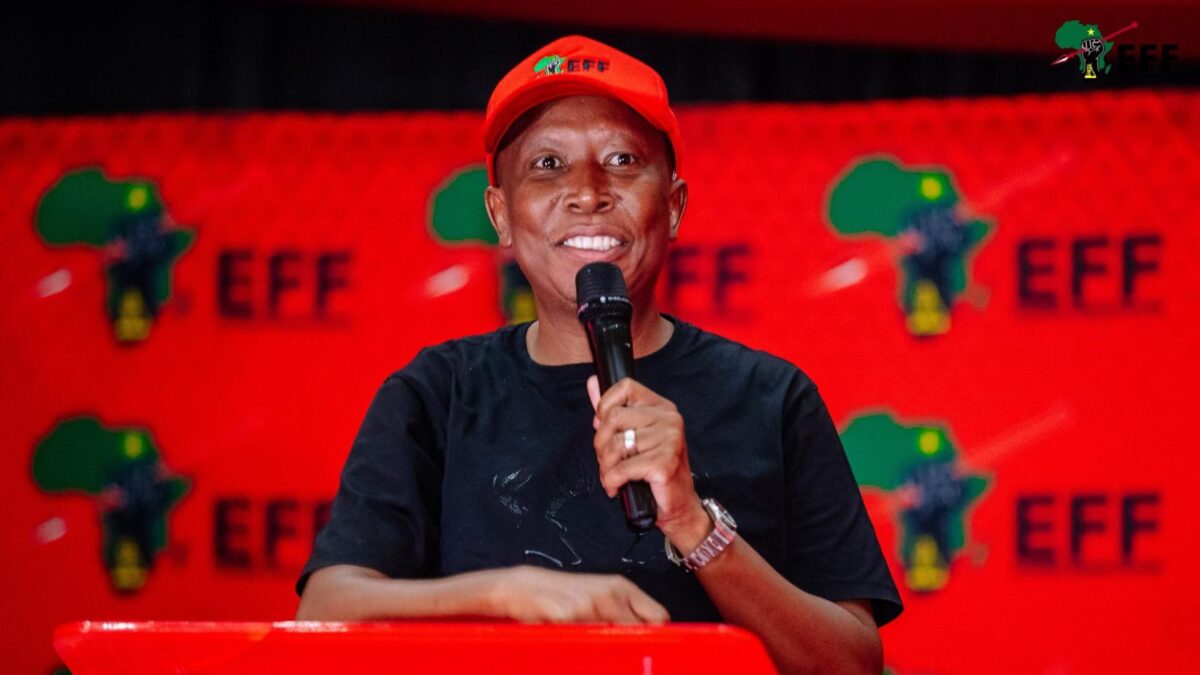
EFF leader Julius Malema, for example, advocates for direct economic redress targeted at white South Africans.
Malema argues that the racial wealth gap stems from uncompensated historical exploitation during colonialism and apartheid.
He promotes higher taxation and targeted municipal rates on wealthy white citizens to fund free utilities, housing, and infrastructure for poor black communities.
The EFF also wants an annual levy on inherited wealth above R10-million. Unlike the existing estate duty, which is applied once, this would be an ongoing tax.
He frames these targeted higher costs and taxes as a form of back-payment for benefits accrued during apartheid.
However, Malema and others promoting these ideas never mention the wealth tax in 1994, which mostly white people paid for the democratic transition.
The fact that rich South Africans, who opposed wealth taxes, accepted the transition levy without much protest showed the national unity among white people in 1994.




 Loading ...
That is an exaggeration of the truth. Yes white S.A’s paid this “apartheid tax” also black, brown, Indian S.A’s and Chinese S.A’ s contributed the same % towards that tax from 1994 – 1995 and I am proud that I could contributed to that tax. Whites tax contributions were more cause through the luxurious of apartheid they had the most wealth and they earn unfairly more then other S.A’s.