
Black people lucky to have white people in South Africa – Prince Mashele


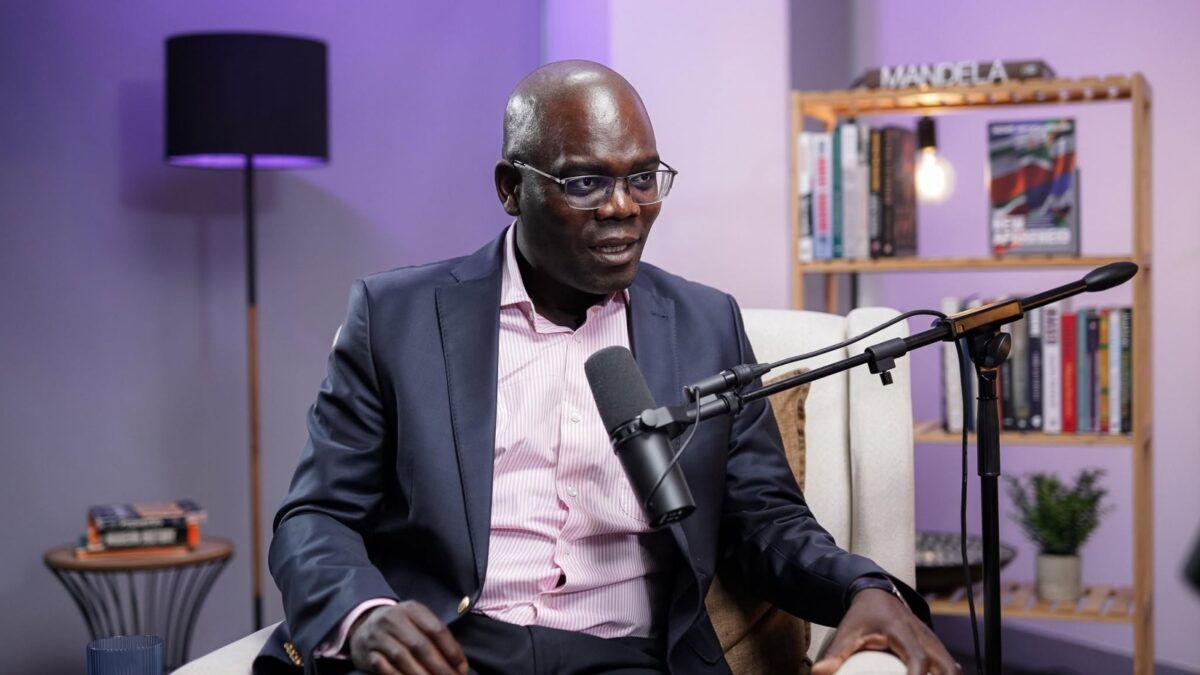
Political analyst Prince Mashele argues that black people are lucky to have white people in South Africa, as they brought many positive things to the country.
Mashele shared his views about the South African political and social environment during a speech at the Future of Nations Conference 2026.
“I am confident enough to tell people the uncomfortable truth. I say to my black brothers that we are lucky to have white people in South Africa,” he said.
“They usually disagree, saying that white people colonised black people and did other bad things.”
“But I say to them, show me a single country in the world with a beautiful history where no one was murdered. Just one. Maybe you know of such a country, but I don’t.”
He explained that throughout history, human beings have committed terrible acts against one another. This is not a black-versus-white issue.
“White people have murdered each other in Europe for centuries. The World Wars were essentially European wars that spread to the rest of the world,” Mashele said.
“So, the idea that white people have only oppressed us ignores history. They have oppressed each other, just as they did to the Chinese during the Opium Wars.”
He said that white people brought Western civilisation to this part of the world, and that he was a beneficiary of it.
“They also gave us the English language. If they hadn’t given me English and I started speaking in Shangaan, nobody would understand me,” he said.
“You can understand me today because English serves as a common medium for communication with you, which is ultimately a positive thing.”
He added that the historical crime white people committed was excluding black people from the benefits of their economic success.
“We have to confront that directly so we can fix it,” Mashele said.
Helen Zille’s view on colonialism
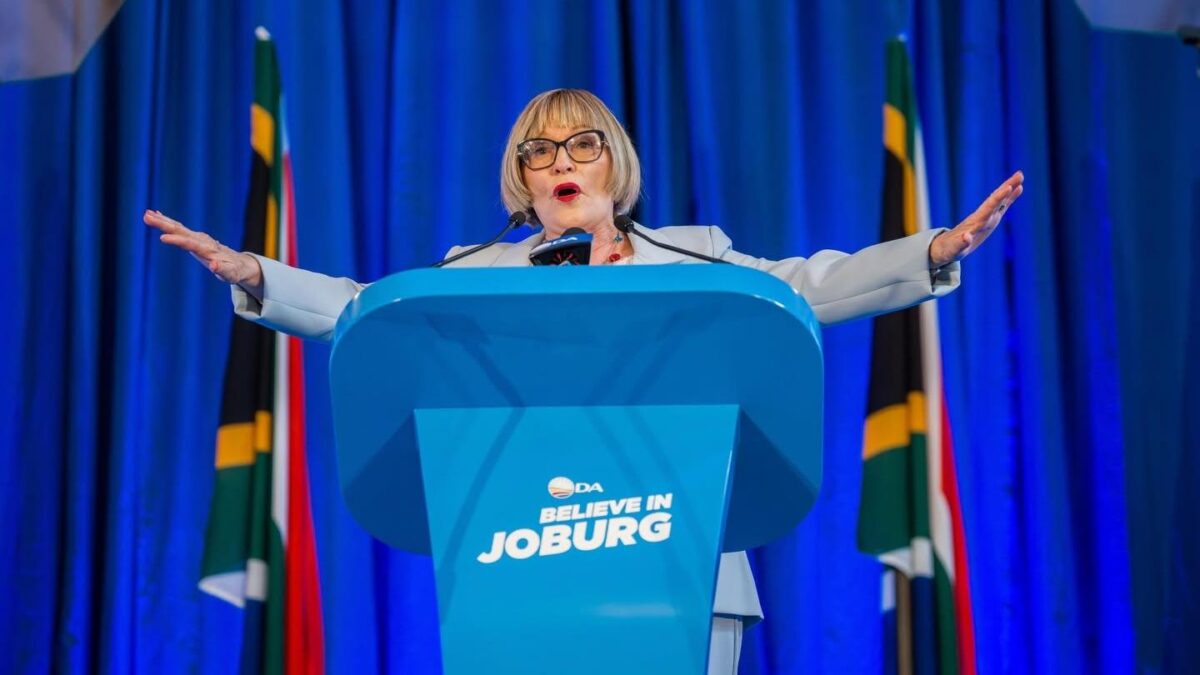
Mashele’s views on colonialism align with those of Helen Zille, the former leader of the Democratic Alliance (DA) and Western Cape Premier.
Zille argued that while colonialism was oppressive and unjust, its legacy was not exclusively negative, pointing to modern development and institutions.
In a series of social media posts in 2017, Zille said that colonialism brought many benefits to South Africa.
“For those claiming the legacy of colonialism was only negative, think of our independent judiciary, transport infrastructure, and piped water,” she said.
“Would we have had a transition into specialised health care and medication without colonial influence? Just be honest, please.”
She argued that South Africa can learn a great deal from Singapore, which was colonised for as long as South Africa.
Zille said these lessons include meritocracy, multiculturalism, work ethic, being open to globalism, the English language, and future orientation.
She added that other reasons for Singapore’s success include parents taking responsibility for children and building on valuable aspects of colonial heritage.
“Singapore suffered centuries of colonial oppression but succeeded in re-purposing aspects of colonialism’s legacy to build an inclusive modern economy,” she said.
“This, among other things, has enabled its people to escape poverty within a generation,” she added.
The African National Congress (ANC) and Economic Freedom Fighters (EFF) condemned her comments as racist and reckless.
These political parties argued that she was trivialising centuries of land dispossession, racial oppression, and human rights abuses.
Former DA leader Mmusi Maimane, who later resigned from the party, also publicly distanced the party from her comments.
At the time, he stated that colonialism, like apartheid, was a system of oppression and subjugation. The DA launched a disciplinary process against her.
The South African Human Rights Commission (SAHRC) and the Public Protector investigated the comments.
Former Public Protector Busisiwe Mkhwebane released a report concluding that the tweets violated the Executive Ethics Code and risked inciting racial division.
Zille issued an apology stating that she never intended to defend or justify colonialism itself, which she acknowledged was an indefensible system of oppression.





 Loading ...
According to the ANC, whites are the problem. So let’s give them a score of negative one (-1). By implication non-whites then get a score of positive one (+1).
According to non-ANC supporters, the ANC is the problem. ANC gets a score of negative one (-1) and all other political parties get positive one (+1).
Non-ANC whites get (+1) + (-1) = 0
ANC whites get (-1)+(-1) = -2
ANC blacks get (-1)+(+1) = 0
Non-ANC blacks get (+1)+(+1) = +2
The solution for this country is for black people to vote not ANC