
South Africans who refused to pay for a corrupt government scheme get rewarded


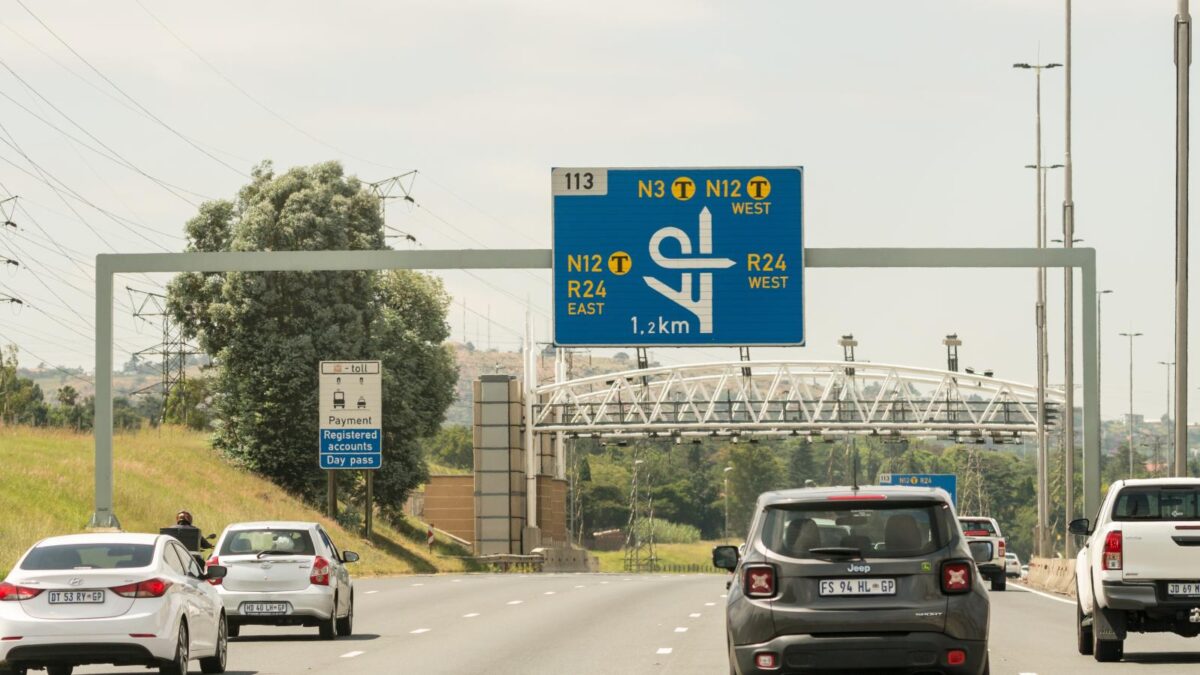
The Cabinet’s decision to write off outstanding e-toll debt showed that people who refused to support the corrupt Gauteng Freeway Improvement Project (GFIP) were rewarded.
On Sunday, 7 June 2026, the Department of Transport announced that all outstanding and unpaid historical GFIP e-toll debt owed by road users will be written off.
The Minister of Transport, Barbara Creecy, and the Deputy Minister, Mkhuleko Hlengwa, have welcomed the cabinet’s decision.
“This brings relief to road users who are currently hard-pressed by high fuel costs due to geopolitical matters that are currently unfolding,” they said.
The Gauteng Freeway Improvement Project was controversial, and there were many indications of widespread corruption linked to the scheme.
The Opposition to Urban Tolling Alliance (OUTA), a civil action group formed to challenge e-tolls in Gauteng, was effective in opposing the system.
It convinced motorists to refuse to pay e-tolls in Gauteng, and the GFIP e-toll scheme collapsed financially.
On 11 April 2024, the government closed the GFIP e-toll scheme and subsequently withdrew the e-toll declarations.
“The failure of the e-toll scheme was evident within months of its launch, yet the government took more than a decade to formally acknowledge reality,” OUTA said.
The government discontinued e-tolls in 2024, but left motorists facing uncertainty over historical debt and legal action.
However, the latest decision paved the way for the resolution of outstanding legal matters and brought long-awaited relief to affected motorists.
What stood out was that road users who lawfully paid e-tolls while the system was legally in force will not be refunded.
“The no-refund position arises from lawful levies at the time they were paid, that is, before the toll declarations were withdrawn,” the department said.
This means that South Africans who refused to pay for the allegedly corrupt e-toll scheme got rewarded.
Organisation Undoing Tax Abuse welcomes the decision

The Organisation Undoing Tax Abuse (OUTA) welcome the Cabinet’s decision to write off outstanding Gauteng Freeway Improvement Project (GFIP) e-toll debt.
It said that the move finally acknowledges a reality that became clear more than a decade ago: the vast majority of the debt was never going to be recovered.
“The failure of the e-toll scheme was evident within months of its launch,” said Wayne Duvenage, OUTA CEO.
“Compliance levels peaked at around 40% during the first six months and then declined steadily thereafter.”
“By mid-2014, it was clear that the scheme lacked public support and was not financially sustainable.”
While the e-toll system was officially discontinued in April 2024, the government left motorists facing uncertainty over billions of rands in historical e-toll debt.
OUTA warned that the debt issue remained unresolved and questioned how authorities intended to recover debt that SANRAL had struggled to collect for more than a decade.
For years, the government persisted with the notion that motorists could eventually be compelled to pay debt arising from a scheme they had overwhelmingly rejected.
The Cabinet’s decision confirms what OUTA and many others have been saying for more than a decade. This debt was never realistically recoverable.
Duvenage said it was a travesty that it took the government more than a decade to formally accept the inevitable.
“This prolonged delay reflects a broader concern about the government’s inability to act decisively when the evidence clearly points to policy failure,” he said.
Had the government acted when the scheme’s failure became apparent, taxpayers could have been spared years of legal disputes.
“Instead, South Africans were left waiting while the government delayed a decision that should have been taken years ago,” he said.
He said the latest decision will bring significant relief to motorists who have lived with uncertainty about outstanding e-toll accounts and the threat of legal action for years.
OUTA said that the e-toll saga should serve as a cautionary lesson for future infrastructure funding decisions and government policymaking.
“The e-toll saga stands as a warning of what happens when the government ignores public sentiment and persists with flawed policy,” he said.







 Loading ...
What about the law abiding citizens, I paid the toll fees as required by the law and have to now fit the bill for a second time with the writeoff being paid for by the tax payer. No wonder that crime and corruption is so rampant in SA