
South Africa’s third-largest party wants to shift land claims to 1652 when Jan van Riebeeck arrived in the Cape



MK Party wants to move the legal date for land tracking and restitution to 1652, and replace land titles in South Africa with 100-year leases.
Mzwanele Manyi, a member of Parliament representing the uMkhonto weSizwe Party (MK Party), shared this information during a State of the Nation podcast.
The party recently tabled the Constitution Twenty-Second Amendment Bill, which aims to amend the Constitution of the Republic of South Africa.
The bill wants to affirm that land and natural resources are the common heritage of all citizens of South Africa.
It seeks to provide for the state’s and traditional or Khoi-San leadership’s custodianship of land and natural resources.
It also wants to allow the expropriation of land without compensation for a public purpose or in the public interest.
It also seeks to extend the historical cut-off date for land restitution to 6 April 1652, when Jan van Riebeeck landed on local shores.
The Bill seeks to remove all references to compensation for land expropriation, as required by Section 25 of the Constitution.
Section 25, commonly known as the Property Clause, balances the protection of existing private property rights with the mandate for land reform.
This section states that no one can be deprived of property unless it is done under a law of general application, i.e., one that applies to everyone equally.
It strictly forbids arbitrary deprivation, meaning the government cannot seize property without a valid, rational, and legally backed reason.
MK Party fighting for expropriation without compensation
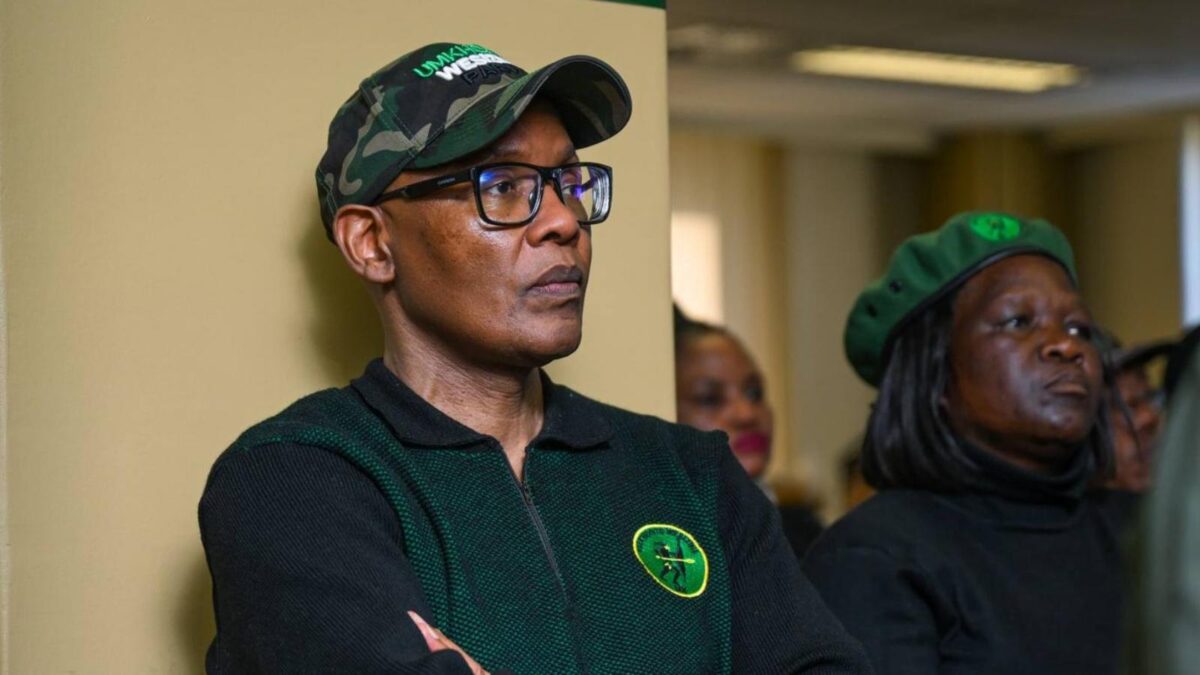
Manyi told State of the Nation that the South African Constitution, which set the land restitution cutoff date at 19 June 1913, is insufficient.
“The problems of this country started in 1652 with the arrival of Jan van Riebeeck. When they arrived, they wanted to settle here,” he said.
“Even then, we Africans, being very welcoming people, allowed them to settle. But that was not enough for them.”
“They invaded, destroying everyone in their path to capture the country. That is exactly what we are trying to reverse as the MK Party.”
Manyi said that if people want a South Africa for all, where everyone feels they belong, the first step is to move the land claims baseline date backwards.
“When we discuss land, we must discuss it in its totality, rather than focusing on a fragmented post-1913 timeline,” he said.
“We need to talk about the land as a whole. That is what this discussion is about, and that is what we are trying to achieve.”
He also advocated that all land in South Africa be owned by the state, replacing land titles with 100-year leases.
“What we are saying is that industrial land, commercial land, and farmland must belong to the people of South Africa,” he said.
“We are not saying the state must own it, nor are we saying any individual must own it. We are saying it is the national heritage of the people of South Africa.”
“The state is simply the custodian. Therefore, what you do on that land must be for the benefit of the country.”
Manyi argued that the renewal or transfer of 100-year leases to beneficiaries of land will not be guaranteed.
Instead, a bureaucratic mechanism will evaluate whether the land is being used productively for the national interest.






 Loading ...
If land truly belongs to the people, then people should own it.
If government officials decide who gets land, who keeps it, and whether a lease is renewed, then the state is the real owner, and citizens are just tenants.
These people are ridiculous.