
The SA Government wanted to reduce unemployment to 6%, but it increased to 33%


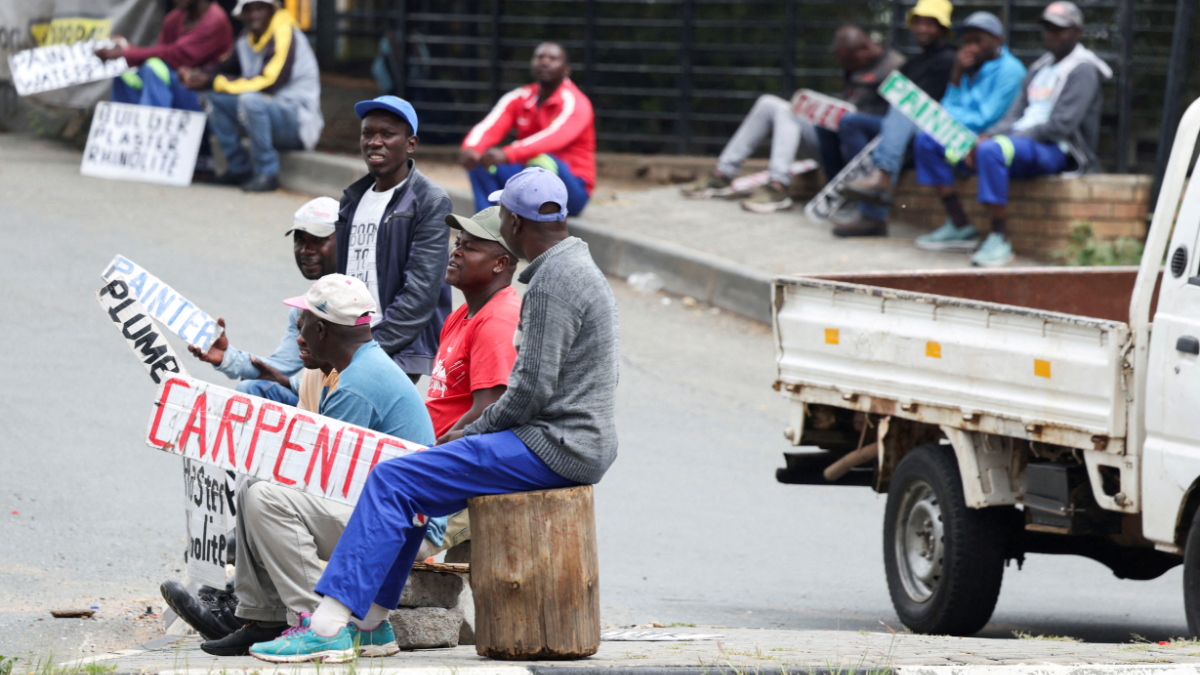
The South African Government’s National Development Plan (NDP) 2030 planned to reduce unemployment from 24.9% to 6%. However, it increased to over 30%.
The government published its National Development Plan (NDP) 2030 in 2012, providing a roadmap for the country over the next eighteen years.
The former Minister in the Presidency of the National Planning Commission, Trevor Manuel, launched the plan during a joint sitting of both houses of Parliament.
Manuel said the NDP was the product of thousands of inputs and perspectives from South Africans.
It received inputs from individuals and organisations and engaged with government departments, provinces, municipalities, and state-owned enterprises.
“They spoke about the ravages of crime. They expressed concern that good policies are poorly implemented and therefore fail,” Manuel said.
These consultations and feedback were used to develop the NDP, which set overarching objectives and key targets for various sectors.
The National Development Plan also made 119 recommendations on how these targets can be achieved.
“It is a plan for a better future in which no person lives in poverty, where no one goes hungry, where there is work for all,” he said.
The NDP said South Africa must find ways to urgently reduce alarming levels of youth unemployment and to provide young people with broader opportunities.
It set clear goals regarding unemployment and even suggested ways to achieve them, which include strong GDP growth.
- The unemployment rate should fall from 24.9% in June 2012 to 14% by 2020 and to 6% by 2030. This requires an additional 11 million jobs.
- Total employment should rise from 13 million to 24 million.
The government also promised to pilot mechanisms and incentives to help the unemployed access the labour market.
Time to take stock
2030 is fast approaching, and it is time to see how the government performed in achieving its National Development Plan targets.
Its first labour-market target was to reduce South Africa’s unemployment rate from 24.9% in June 2012 to 14% by 2020.
It failed dismally. Instead of reducing unemployment, the South African government significantly increased it.
In 2020, the country’s unemployment rate hovered between 30% and 32.5%, a far cry from the target of 14%.
However, the bad news does not stop here. Instead of moving towards the 6% target for 2030, unemployment increased over the next five years.
South Africa’s 2025 unemployment figures ranged between 31.9% and 33.2%. This meant that the country is grappling with all-time-high unemployment.
Youth unemployment remains severe. For those aged 15 to 24, the unemployment rate was 58.5%, and for the 25 to 34 age group, it was 38.4%.
The latest data showed that it is easy for a government to create ambitious targets to show that it is doing something. However, these targets mean nothing.
The ANC government continued to mismanage the country and accelerated the widespread corruption and looting.
It also introduced numerous disastrous policies which kill economic growth, like expropriation without compensation and NHI.
Add to that the collapse of state-owned enterprises, like Eskom and Transnet, and the results were predictable.
The table below shows the National Development Plan 2030 targets and where it stands now.
| Metric | 2012 | 2025 | Target |
| Unemployment | 24.9% | 32.7% | 6% |
| Number of jobs | 13 million | 17.1 million | 24 million |
| Adults working | 41% | 41% | 61% |















 Loading ...