
Only six people made the cut to be interviewed for one of South Africa’s most important jobs



Only six candidates were found to have met the minimum requirements necessary to become South Africa’s next National Director of Public Prosecutions (NDPP), a position described as a high-risk “poisoned chalice.”
The advisory panel for the appointment of the NDPP received just 32 applications and nominations for the role currently filled by Advocate Shamila Batohi, who retires in January.
The NDPP is the head of the National Prosecuting Authority (NPA) and is responsible for ensuring that criminal prosecutions are conducted without fear, favour, or prejudice.
The NDPP role is critical because the NPA was severely weakened by years of political interference, including the 2009 disbanding of the Scorpions, its most effective anti-corruption unit.
This has left the institution vulnerable and eroded its ability to pursue high-level corruption independently.
Batohi had promised that her term would be focused on rebuilding the capacity of the NPA.
The six shortlisted candidates who will be interviewed to succeed Batohi include the controversial former NDPP, Menzi Simelane, whose 2012 appointment was set aside by the courts.
Simelane is now practising as an advocate after previously serving as NDPP, justice director-general and special adviser to Minister Lindiwe Sisulu.
He joins a shortlist dominated by senior prosecutors and former heads of key prosecuting units.
The list includes Western Cape DPP Nicolette Bell, whose career spans senior roles in Cape Town and Johannesburg.
Then there is former Investigating Directorate head, Hermione Cronje, who is now an international anti-corruption specialist.
There is also the current Investigating Directorate chief Andrea Johnson, a long-serving organised-crime and prosecutions specialist.
Also shortlisted are Xolisile Khanyile, former Free State DPP and ex-director of the Financial Intelligence Centre, now chair of the Global Coalition to Fight Financial Crime.
Closing off the list is Western Cape deputy DPP Adrian Mopp, who has held senior roles in the Asset Forfeiture Unit and organised-crime investigations.
The panel appointed by President Cyril Ramaphosa reviewed 32 applications before identifying the six candidates for interviews on 10 December.
The public has been invited to comment on their suitability before the process moves forward.
A ‘poisoned chalice’
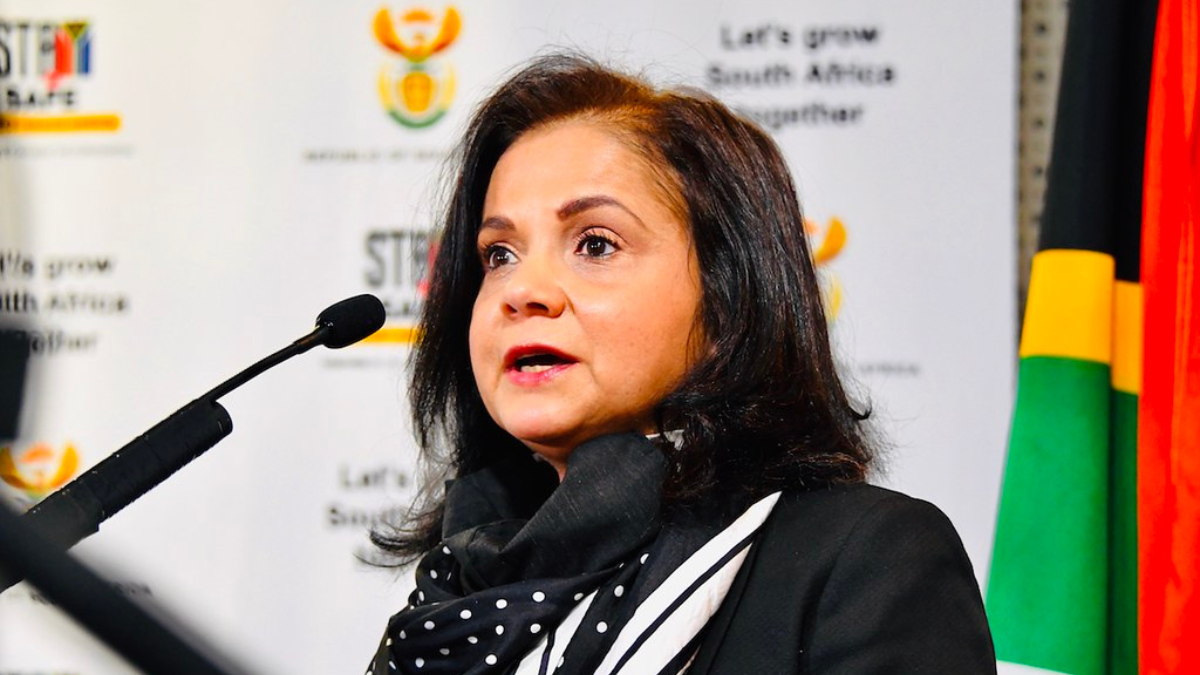
The severely limited interest in the NDPP role appears linked to the prevailing narrative that the position is a “poison chalice,” a reflection of its historically short and precarious tenure.
In an interview with the SABC, Minister of Justice and Constitutional Development, Mmamoloko Kubayi, noted that candidates have previously withdrawn their applications, sometimes citing concerns that taking the job could “destroy my career”.
One candidate explained their withdrawal by noting the political risks associated with the role.
With the current president in his second term, the candidate feared that a new president coming in 2029 might dislike them and subsequently remove them, a risk they were unwilling to take.
The history of the NDPP office reinforces these fears.
Batohi is slated to be the first NDPP ever to leave without being removed, retiring based on age, not years of service.
All previous NDPPs have been removed before finishing their term, indicating that the position has “always been a poison chalice,” said the Minister
Beyond the political risk and volatile tenure, the panel has identified the salary package as a significant deterrent.
Kubayi stated that the remuneration is “not attractive enough” for a senior advocate doing well to accept the role.
The current legislation equates the NDPP’s salary to that of a judge. However, unlike a judge, the NDPP is not provided with additional benefits such as houses and cars.
The panel is discussing potential legislative amendments to decouple the salary from that of a judge and is exploring ways to convert typical judicial benefits into monetary compensation to make the package more appealing.
Kubayi said that the six candidates who met the minimum requirements have been sent a questionnaire concerning their suitability, ethical standards, legal and management experience, health issues, and financial situations.
The public has also been invited to comment on the suitability and fitness of these candidates. Submissions may be sent to the Secretariat at [email protected] by no later than 5 December 2025.















 Loading ...