
The downfall of one of South Africa’s best-run state-owned enterprises



Once a cornerstone of South Africa’s defence industry, Denel was regarded as one of the world’s leading firms in aerospace and military technology design.
Today, however, the company is in financial turmoil, having failed to publish annual reports or financial statements for the past five years.
Denel first reported insolvency in 2019, incurring a loss of nearly R2 billion. It soon became apparent that the entity had been struggling to pay its suppliers and employees’ salaries.
This caused what little talent the company had left to be scooped up by foreign countries such as the United Arab Emirates and Australia.
In 2022, it was estimated that the company required around R3 billion in government bailouts to begin its turnaround, which the Treasury did not grant.
While it is unknown what the current state of the company’s finances is, Gloria Serobe, the chair of the Denel board, told Parliament that its realised net loss sat at R463 million as of the end of 2023.
Denel has also experienced ongoing leadership woes, with seven people serving as CEO over the past decade.
According to reports, Denel has even failed to keep its website online. However, it’s easy to remember a once-great company by its downfall.
As a former Denel supplier, who asked not to be named and will be referred to as Harold, puts it, “it used to be part of that group of South African companies you would only describe with superlatives.”
When it was decided that the Armaments Corporation of South Africa (Armscor) would become the procurement agency for the South African National Defence Force, an entity needed to inherit its manufacturing subsidiaries.
Thus, Denel was established as a state-owned corporation in 1992 and reorganised Armscor’s subsidiaries into five groups: systems, manufacturing, aerospace, informatics, and properties and engineering services.
However, it is essential to note that Denel itself never had any capacity to manufacture. Instead, it sold intellectual property.
Harold told Newsday that he remembers walking through Denel offices the size of football fields, “one after the other, filled with drawing boards surrounded by engineers and technicians.”
“It was breathtakingly big, and you had an awful lot of extremely skilled engineers back then.”
He says that because South Africa was sanctioned in the early 1990s, the country was unable to procure military vehicles and equipment from abroad.
Therefore, Denel engineers mastered the art of engineering longevity, which the Cheetah embodied.
Other well-known Denel intellectual properties include the Casspir mine-resistant vehicles, the Ratel armoured vehicles, and the G5 cannon, which Harold describes as the best in the world at the time, bar none.
“The G5 cannon could fire a shell from Benoni, target a swimming pool in Pretoria, and drop six shells a minute into it without even cracking the tiles around the outside,” he said.
“The talent was terrifyingly good. Another design was the Kukri helmet, which was the first line-of-sight helmet in the world.”
“It controlled everything to target a weapon wherever the pilot was looking, which they sold around the globe,” he added.
While Denel had its engineers design these weapons, the manufacturing was left up to its subsidiaries.
This meant there were hundreds of supply chains employing thousands of people, each dependent on the success of the conglomerate.
If Denel went under, it would drag all of them with it – or at least significantly impede their ability to stay afloat.
State capture

While there had been allegations of maladministration within Denel in the early 2000s, the state capture period between 2011 and 2017 saw the entity looted to the point where it had nothing left.
During the Zondo Commission of Inquiry into state capture, it was revealed that a Denel supplier, VR Laser, was used as a vehicle to capture the company.
Harold explains that it was a subsidiary of VR Steel, founded by John van Reenen, a powerhouse in the South African steel industry.
He says that Van Reenen was able to negotiate a deal with SSAB, a Swedish steel company, to become the sole supplier of Armox, a high-strength steel that provides ballistic and blast protection, in South Africa.
Instead of selling it under VR Steel, Van Reenen decided to sell it under VR Laser, which had the plasma cutting capacity to cut the Armox steel.
Given that VR Laser’s only competition was international firms, it was identified as a gold mine.
The State Capture Report stated that Gupta associate Salim Essa acquired a 74.9% stake in Denel in 2013, with the remaining shares sold to Craysure Investments.
Company records show that Jacob Zuma’s son, Dudazane, and the Guptas were directors of Craysure’s holding company.
Once the Guptas controlled one of Denel’s most reliable suppliers, the report stated that Essa approached then-Denel CEO Riaz Saloojee about expanding Denel’s business into the Middle East and Asia.
The Commission heard that VR Laser was then awarded two contracts by Denel in 2014 and 2015, worth hundreds of millions of rands, linked to the construction of the hulls of 217 armoured vehicles.
According to Democratic Alliance MP Chris Hattingh, only fourteen hull shells were transported to Denel for integration.
The Zondo Commission said that when Mr Saloojee showed “that he would not dance to the Guptas’ tune, steps were taken to oust and control him.”
In 2015, Minister of Public Enterprises Lynne Brown appointed a new Denel board, removing the old one, which had been “competent and honest” and had accumulated the company’s highest order book in its history at R35 billion.
The new board then suspended Mr Saloojee, Denel’s CFO, and the company’s secretary, eventually paying them large settlements to leave the company.
“The reputational damage which Denel suffered from its capture and the fact that the control of Denel passed into unscrupulous hands was enormous,” the report read.
“The evidence shows that rebuilding Denel will take a long time. That is, if it does not go under.”
Quality takes a back seat
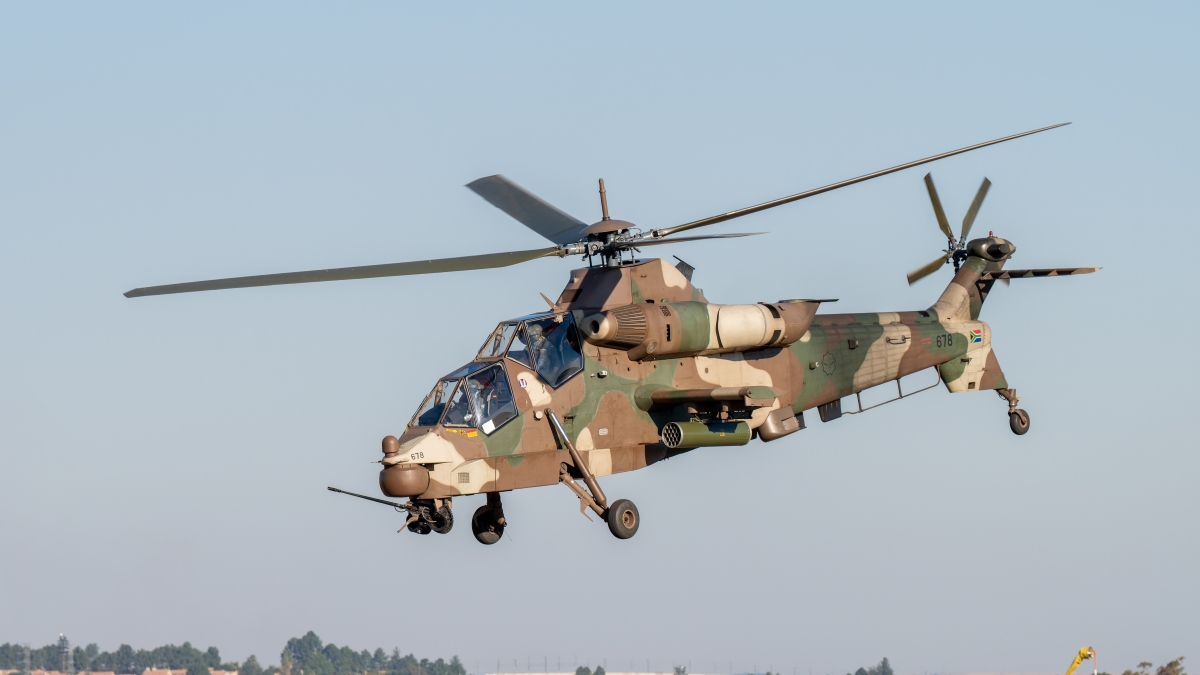
Former Denel employee Stef Pretorius explained that Denel’s demise was particulalry noticeable from the insider’s perspective.
He shared these views in a recent Solidarity documentary titled Race to the Bottom.
Pretorius said that from 2023, the strong culture of teamwork had been sidelined, and employees instead found themselves “trying to catch each other doing something wrong.”
Professionalism and quality took a back seat. “Using engineering methods to find a solution and produce results fell by the wayside. Everything was ideologically driven,” he said.
“The strict old men were replaced with new training officers. This caused the quality of training to collapse.”
Pretorius also mentions how dodgy tenders also began to eat away at the company’s financials.
He explains that when Denel tendered for the procurement of equipment, the company qould receive three quotes of tenderpreneurs.
However, these tenderpreneur merely inflated the price by 25% to 30% and then gave it to the company that fulfilled the contract.
“The tenderpreneur did not even collect and deliver the goods. The true provider delivered the products directly to Denel,” he said.
Newsday has reached out to the Department of Defence for comment, who did not respond.





 Loading ...
Crying shame…..like Terry said, what has the ANC NOT destroyed.
All the talent gone and no wish/capacity to learn from highly skilled and successful people….