
Eskom accused of misleading the public about R145 billion cost for Medupi and R160.5 billion cost for Kusile


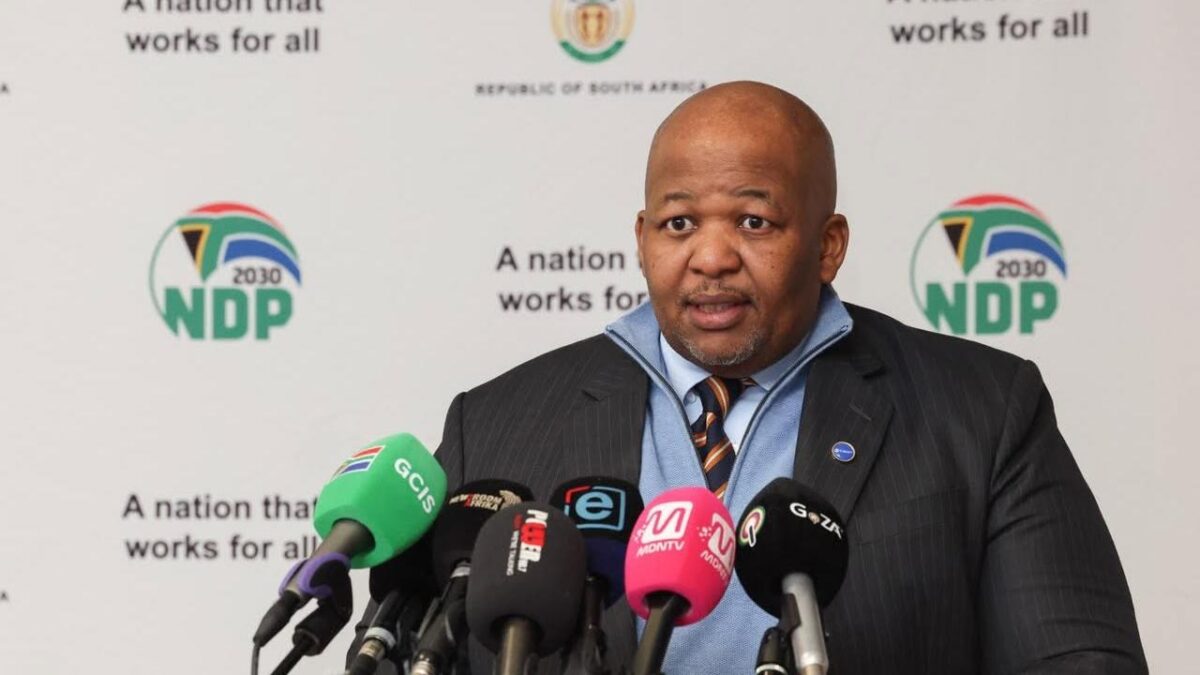
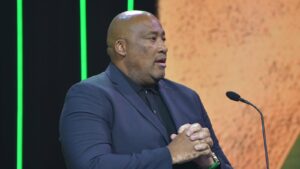
Member of Parliament, Kevin Mileham, said that Eskom must come clean on the real cost of the Medupi and Kusile power stations.
Daily Investor reported that Eskom began building the Kusile Power Station in 2008, with completion scheduled for 2017.
However, it is more than a decade late, and the cost has reportedly escalated to R233.4 billion, much higher than the budget.
MyBroadband reported that construction of the Medupi power station was also delayed and that costs have escalated to R176.6 billion.
Eskom hit back, saying that these figures do not reflect Eskom’s approved construction budgets and do not represent expenditure recorded against either project.
It said that the latest approved construction budgets for Kusile and Medupi remain R160.5 billion and R145 billion, respectively.
The power utility added that the recorded expenditure for Kusile was R155.5 billion and for Medupi R131.1 billion.
“Eskom has not approved, adopted or published project budgets of R233.4 billion for Kusile or R176 billion for Medupi,” it said.
However, experts were quick to point out that Eskom is playing with words and has not provided the actual costs associated with the projects.
“That may be an accurate statement of Eskom’s approved construction budgets, but it is not the same thing as the total cost of the projects,” Mileham said.
They highlighted that project budgets can differ significantly from the cost that Eskom paid for the Kusile and Medupi projects.
Energy expert Chris Yelland said that, apart from its approved budget, Eskom should also disclose the other costs associated with the projects. These include:
- All owners’ development costs.
- All interest during construction.
- All rework and repair costs, including modifications to the boilers at Medupi and Kusile, replacement of the Medupi Unit 4 exploded generator, and repair of the Kusile Units 1, 2 and 3 duct failure.
- All lost revenue due to the extended outages of Medupi Unit 4 and Kusile Units 1, 2 and 3 due to plant failures.
- All rate-of-exchange variation claims and extras.
- All cost price escalation claims.
- Settlement of all outstanding contractor claims.
Mileham also asked Eskom to disclose these figures, saying the public is entitled to know what the Kusile and Medupi power stations truly cost.
“The World Bank’s completion assessment for Medupi recorded construction costs of R132.2 billion, together with R44.6 billion in interest during construction,” he said.
“That produces an all-in figure of approximately R176.8 billion, almost exactly the figure Eskom is now seeking to dismiss.”
“Similarly, the R233.4 billion figure associated with Kusile has previously been reported as a cost-to-completion estimate, including interest during construction.”
He said that Eskom cannot compare a narrowly defined construction budget with a broader cost estimate and then declare the broader figure wrong.
“There are also further costs that require explanation. Kusile remains in project close-out until July 2028, including defect-related and balance-of-plant work,” he said.
“Medupi still requires its flue gas desulphurisation programme, which Eskom now describes as a separate environmental compliance project.”
Mileham said that changing the accounting does not change who ultimately pays the bill for the project.
“South Africans financed these projects through electricity tariffs, Eskom debt and substantial support from the fiscus,” he said.
“They are entitled to know the full cost, not simply the number that fits within a particular project accounting definition.”
Mileham has submitted a formal request under the Promotion of Access to Information Act, requiring Eskom to disclose the records underlying these figures.
“Eskom has chosen to make a very specific public claim about what these stations cost. It must now produce the documents that support it,” he said.
Newsday asked Eskom for details on the Kusile and Medupi project costs, but the company would not answer these questions.
Instead, it said, “Please refer to the media statement we issued on Thursday, 10 September 2026.” This is the statement which raised the question.



 Loading ...