
Deputy Finance Minister resigns as Public Investment Corporation chair


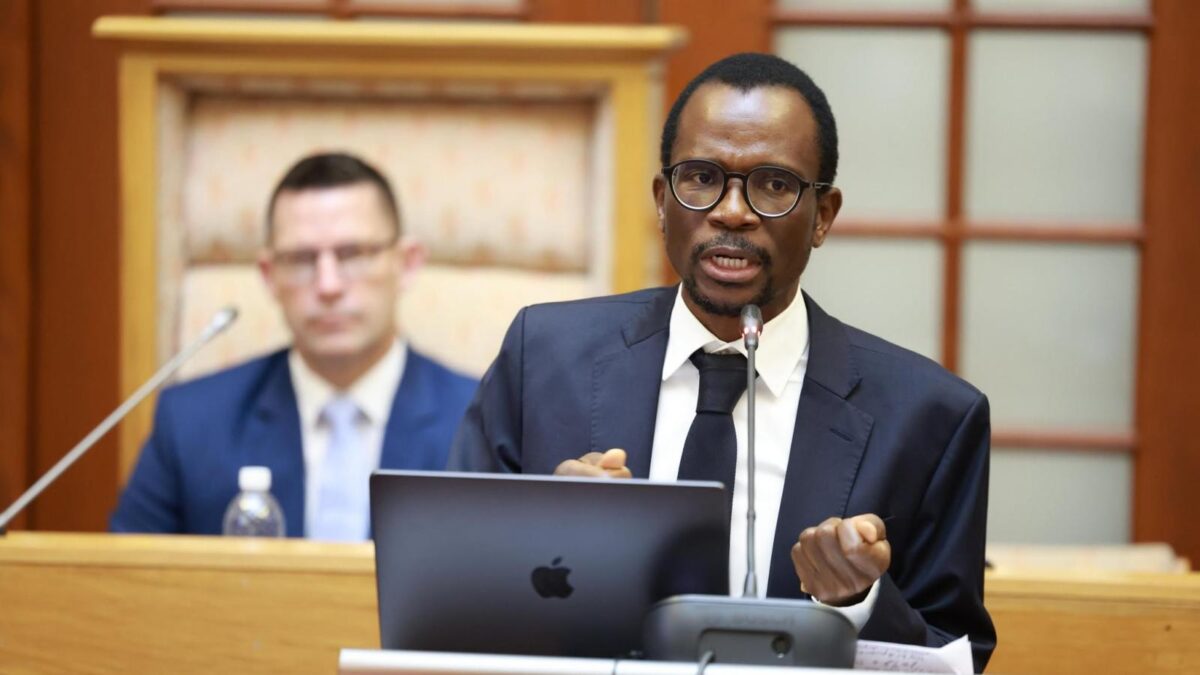
South Africa’s Deputy Finance Minister David Masondo has resigned as the chair of the board of directors of state-owned asset manager the Public Investment Corporation.
The asset manager faces mounting scrutiny after its chief executive was suspended pending an investigation into allegations raised by a whistleblower.
South Africa’s financial regulator has also launched a governance probe.
“After careful reflection, I have decided to resign as Chairperson of the Board of the Public Investment Corporation,” Masondo said in a statement.
The asset manager is one of Africa’s largest, overseeing more than R3 trillion of assets under management.
Its biggest client is South Africa’s Government Employees Pension Fund, and it is the largest investor on the Johannesburg Stock Exchange.
The PIC has faced governance challenges for more than a decade, and many of the issues now confronting the institution echo findings of a judicial inquiry.
In 2018, President Cyril Ramaphosa appointed the Judicial Commission of Inquiry into Allegations of Impropriety at the PIC, chaired by former SCA President Lex Mpati.
Its 2020 report revealed that the PIC had operated as a politically captured institution where governance was routinely bypassed.
Most of the worst abuses occurred in unlisted investments, handled under the Isibaya Fund.
Decision-makers bypassed internal risk controls, investment committees, and due diligence to approve high-risk deals for politically connected individuals or entities.
Despite post-Mpati reform attempts, the PIC continues to grapple with leadership instability and regulatory scrutiny.
PIC CEO Patrick Dlamini was placed on precautionary suspension following whistleblower allegations concerning governance lapses.
There were also allegations of conflicts of interest in management and of unauthorised investigations into legacy deals such as Lanseria Airport.
The Financial Sector Conduct Authority (FSCA) launched a formal investigation into the PIC over leadership stability, transparency, and governance concerns.
Board turnover remains high, with multiple non-executive directors resigning amid clashes over governance, executive oversight, and board composition.
Reporting with Reuters










 Loading ...
I hate the fact that when things start going wrong these board directors resign and nothing happens.
David Masondo and the rest of the board should be held to account.
These directors think serving on a board is free money. They don’t understand the responsibility that goes with it. The only way is to make them personally liable.