
South Africa’s economy shows modest growth


South Africa’s economy expanded more than expected in the first quarter of 2026, with output growing in nearly all sectors.
However, Statistics South Africa warned that the impact of the Iran war was likely to show up in the next release.
South Africa’s gross domestic product (GDP) grew 0.5% quarter-on-quarter on a seasonally adjusted basis in the first three months of this year.
Economists polled by Reuters had forecast GDP growth of 0.3%, compared to a 0.4% increase in the last quarter of 2025.
This means that the economy exceeded expectations from most economists, albeit by a small margin.
Nine of the 10 sectors tracked by Statistics SA grew in the first quarter, with the finance sector making the largest contribution to growth.
South Africa started to pick up pace last year, and investor sentiment brightened on signs of fiscal discipline. However, the Iran war has dampened the near-term outlook.
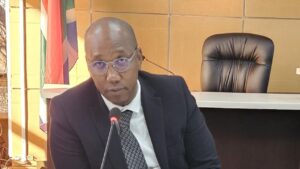
Stats SA national accounts director Bokang Vumbukani-Lepolesa said fixed investments declined after two consecutive quarters of expansion.
He explained that the decline in fixed capital formation was a concern because, for the economy to grow, the country needs investment.
Shireen Darmalingam, an economist at Standard Bank, said growth was expected to slow in the coming quarters because of the protracted conflict in the Middle East.
“We continue to expect a moderate improvement in growth to around 2% over the medium term, although this trajectory has been disrupted by the conflict,” she said.
Citadel Chief Economist Maarten Ackerman cautioned that the data reflect conditions before the latest global and domestic headwinds intensified.
“SA’s first-quarter GDP number came in slightly ahead of expectations and confirms that the economy still has the underlying capacity to generate growth,” he said.
“However, this is largely a pre-geopolitical conflict number, supported by the continuation of favourable tailwinds from 2025.”
South Africa’s latest GDP figures are deeply disappointing – Solidarity
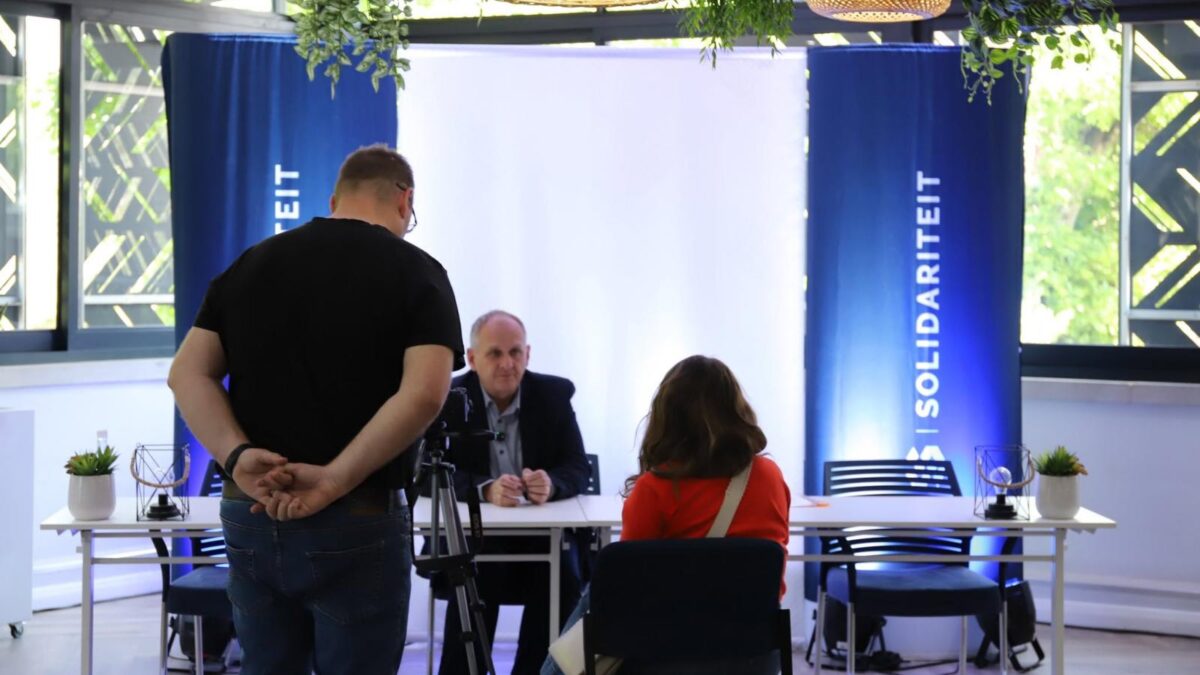
Solidarity Research Institute’s economic researcher, Theuns du Buisson, said that the latest GDP figures are disappointing.
“It does not seem as though the government is making any effort to save South Africa from further impoverishment,” he said.
“Quarterly growth of 0.5%, or annual growth of 1.9%, is not enough to meet South Africans’ needs.”
He said that South Africa cannot continue struggling along at such a low growth rate, particularly against the backdrop of ongoing inequality and dissatisfaction.
Du Buisson argued that the poor economic growth is the cause of nearly all the country’s biggest problems.
“The government, therefore, urgently needs to listen to the challenges faced by business leaders and take decisive action to reduce these obstacles,” he said.
“When large enterprises tell the government that expensive electricity is a problem, the government remains silent.”
“When entire industries complain about high transport costs and the deterioration at Transnet, they struggle to get more than half-baked promises.”
“When they complain about the costs of Black Economic Empowerment (BEE), the government promises to make this legislation even stricter.”
He argued that the government itself is the greatest enemy of growth. “The failure to listen to the needs of businesses is evident in the decline in manufacturing,” he said.
Manufacturing accounted for roughly a quarter of the South African economy in the 1980s. Today, it makes up less than 12% and continues to shrink.
Because it is a labour-intensive industry, specific attention should be paid to restoring the sector and creating jobs.
Reporting with Reuters





 Loading ...
This is really fantastic to hear. It means we are developing an economy outside of the ANC structures. It would be great if we could be fully independent of the state.
Our government is like a poison that kills everything it touches. The less we have to do with them, the better for us all.