
South Africa’s oldest state-owned company at risk of liquidation



The South African Post Office (SAPO) is in serious financial trouble, with its Business Rescue Practitioners (BRPs) warning that it faces liquidation.
The SA Post Office traces its postal roots back to March 2, 1792, when the first official post office was opened at the Castle of Good Hope in Cape Town.
The first postage stamp, the Cape Triangular, was issued in South Africa on 1 September 1853. It was designed by Charles Davidson Bell.
In 1973, postcodes were introduced to facilitate automated mail sorting, and standardised letters followed later that year.
The South African Post Office SOC Limited was established on 1 October 1991, when it was corporatised as a public company under the state.
In recent years, it has been hit hard by a prolonged period of corruption, mismanagement, and maladministration.
The South African Post Office is currently facing the most critical point in its 234-year history, teetering on the edge of liquidation.
Hundreds of branches have permanently shut down, and thousands of workers have been retrenched.
This significant reduction in branches and staff has isolated rural and lower-income communities that rely on the Post Office for basic communication.
The core service that kept it relevant has also collapsed. Domestic registered mail volumes declined from over 326 million letters in 2021 to just 142.7 million.
People and corporate entities have migrated entirely to digital alternatives, private couriers, or email, leaving SAPO with infrastructure it cannot afford to maintain.
Minister of Communications and Digital Technologies Solly Malatsi gives details
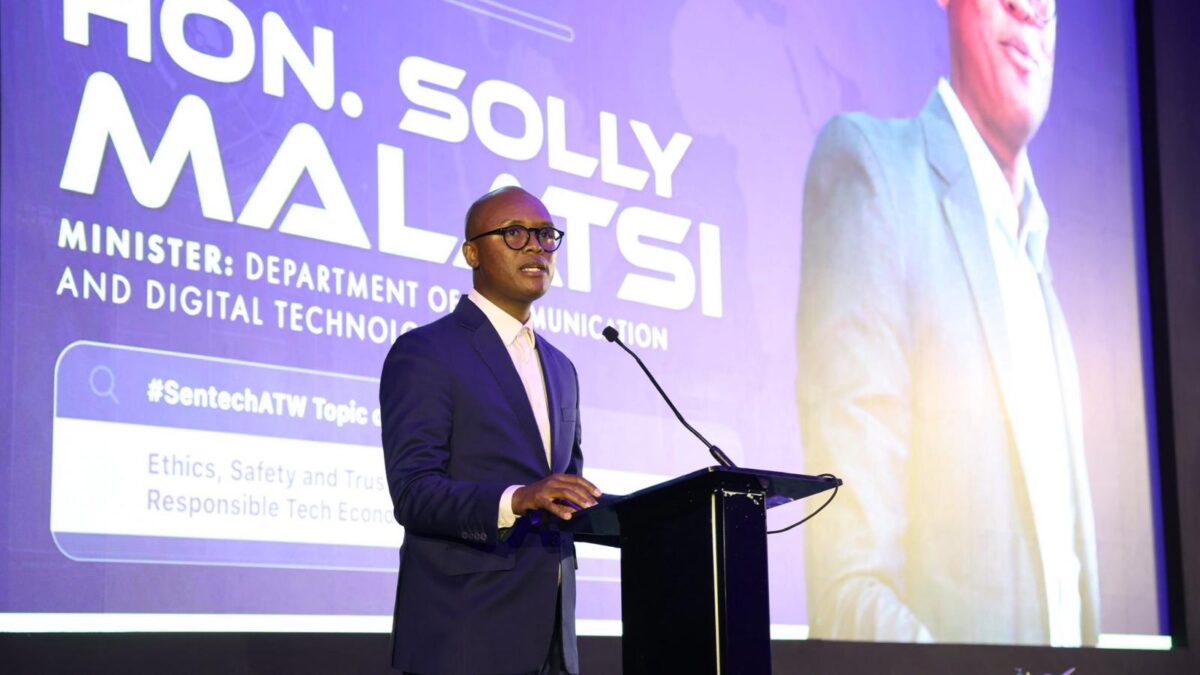
The severity of the problems at the South African Post Office was laid bare in a recent question-and-answer session in Parliament.
Minister of Communications and Digital Technologies Solly Malatsi detailed the financial, legal, and operational realities at the institution.
When the SA Post Office entered business rescue in July 2023, the plan relied on R6.2 billion in funding.
It received an initial R2.4 billion tranche. The business rescue practitioners (BRPs) used this to cut historical debt.
They also reduced employee costs and closed underperforming branches. However, the entity’s long-term survival hinged on a second allocation of R3.8 billion.
This missing R3.8 billion was earmarked for essential upgrades. It was meant for modern IT systems, infrastructure, and vital working capital.
The money was also supposed to fund an 18c-to-the-rand top-up dividend for creditors by early 2025.
This payout has now lapsed because the funding never arrived. Retrenched employees are currently disputing the cancellation of this dividend.
The turning point came when the National Treasury excluded the R3.8 billion from its budgets. Without this capital, the Post Office’s financial position rapidly worsened.
By mid-January 2026, the entity faced a crippling cash-flow shortfall. It could no longer meet monthly trading obligations without urgent bridge funding.
Legal constraints have tightly bound the BRPs’ hands as they cannot independently borrow from banks or sell non-core assets to raise capital.
Faced with an empty treasury and strict legal blocks, the business rescue practitioners reached a statutory dead end.
If there is no reasonable prospect of rescue, practitioners must apply for liquidation. This non-discretionary legal obligation triggered a letter of intent to liquidate.
Malatsi said they complied with their statutory duties. They maintained regular consultations with his department, organised labour, and key statutory creditors.
These creditors include SARS, Medipos, and the Post Office Retirement Fund. All affected parties received monthly progress updates.





 Loading ...
This will not be the first time once before it was nearly bankrupt so much so that we at Medipos medical scheme nearly went bankrupt because monies were deducted from our pensions, for medical aid but not paid over to them . I can cry because we were proud to be postoffice employees . Now i am 87 and just praying that we will still get our pensions and our medical aid kept alive