
Humanity has entered a ‘dangerous new phase’ in the climate crisis



Humanity has entered a “dangerous new phase” in the climate crisis.
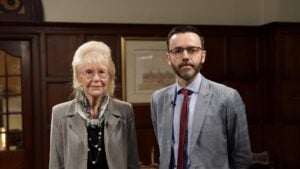
This is the warning from Professor Debra Roberts, one of the world’s leading climate scientists and a veteran of the Intergovernmental Panel on Climate Change (IPCC) during a powerful lecture delivered at a Wits University seminar on climate change hosted by Pro Vice-Chancellor Imraan Valodia
Her presentation, on the emerging concept of temperature goal overshoot, challenged academics, policymakers and practitioners to rethink both the science and the politics of climate action.
“We’ve come together in a global compact to try and deal with this challenge,” Roberts said. “But our current trends of emission and development are simply incompatible with a sustainable and equitable world.”
Roberts, who co-chaired IPCC Working Group II during the Sixth Assessment Cycle and spent three decades leading Durban’s climate and environmental planning, spoke from the intersection of science, policy and local experience.
Her tone balanced scientific precision with deep concern for what she called the “radical realism” needed to confront the crisis.
At the heart of her presentation was a sobering reflection on the Paris Agreement’s temperature targets to limit global warming to well below 2°C and pursue efforts to keep it below 1.5°C above pre-industrial levels of 1850 and 1900.
Roberts noted that when negotiators agreed to these targets in 2015, they did not fully grasp the magnitude of the risks attached.
“Even at current warming levels of about 1.2°C, the world is already extremely dangerous,” she warned.
“We’re seeing continental-scale wildfires, multi-seasonal droughts, devastating floods, and extreme heat events in our cities. 1.5°C is not safe.”
Roberts reminded the audience that the IPCC’s Sixth Assessment Report (AR6), finalised in 2023, made it clear that “the risks, impacts, and related losses and damages increase with every fraction of a degree of warming.”
High-risk thresholds are now occurring at much lower temperature levels than previously thought.
Drawing on the latest IPCC data, Roberts described a world undergoing unprecedented changes. Global average surface temperatures have risen faster since 1970 than during any 50-year period in at least 2,000 years, she noted.
The impacts, she said, are “widespread and rapid”. Heatwaves, heavy rainfall and droughts are intensifying.
Ocean warming and acidification are reducing fish stocks, while coral reefs — vital for marine biodiversity — are on the brink of collapse.
Africa’s agricultural productivity has declined by 34% since 1961, and nearly half the world’s population faces water scarcity at some point each year.
“These are not projections anymore,” Roberts emphasised. “They are lived realities, especially across Africa, Asia and the small island states. No one is immune.”
The adaptation and mitigation gaps

While global awareness of the climate threat has grown, Roberts highlighted that humanity’s responses remain inadequate.
Adaptation efforts, adjusting to the changes already underway, are happening but remain “fragmented, incremental and sector-specific”.
“There’s a huge adaptation gap between what we should be doing and what we are doing,” she said. “And the bad news is, you can’t adapt your way out of this anymore.”
Roberts warned that hard limits to adaptation are already being reached, particularly in vulnerable ecosystems like coral reefs, rainforests and polar regions.
“Even if we had all the money and political will, we are already committed to a certain amount of losses and damages,” she said.
On the mitigation front, efforts to cut greenhouse gas emissions also fall short.
Even if all national climate plans under the Paris Agreement were fully implemented global emissions would fall by only 3% by 2030, far below the 43% reduction needed to stay near 1.5°C.
“The gap between promises and action is staggering,” Roberts said. “We are moving in the right direction, but far too slowly.”
Overshoot: the new climate frontier

The most urgent part of Roberts’ lecture focused on what she called the emerging reality of “temperature goal overshoot.”
This refers to the likelihood that global temperatures will temporarily exceed the Paris Agreement targets before possibly stabilising or declining later.
“The pragmatic scenario,” she cautioned, “is that we are almost certainly going to exceed 1.5°C, and probably 2°C. Three degrees is more likely”.
Overshoot brings new and dangerous consequences, including irreversible loss of species, thawing of permafrost (which releases trapped carbon), and centuries of committed sea-level rise.
By mid-century, over a billion people could be living in low-lying coastal zones vulnerable to flooding.
To address this, Roberts argued, we need “a new development model” and “a new toolbox” for local, regional and national planning, one that factors overshoot into every level of policy and investment.
Roberts underscored the equity and justice dimensions of climate change. Nearly half of the world’s population, between 3.3 and 3.6 billion people, live in highly vulnerable regions, mostly in the Global South.
From 2010 to 2020, deaths from floods, droughts and storms were 15 times higher in these regions than in wealthier countries.
“This is not just an environmental crisis,” she said. “It’s a justice crisis.”
She pointed to growing inequality, rapid urbanisation, and what the World Bank has called “the great reversal”— a trend where half of the world’s 75 poorest countries are now getting poorer.
“While some individuals become trillionaires,” she said, “millions are losing livelihoods, homes, and lives.”
A call to action
Despite the grim outlook, Roberts closed with a message of urgent hope. “Don’t get into doom-scrolling,” she urged. “We simply can’t backslide.”
Her prescription for action was clear and memorable: “mitigate as if 1.5°C is possible. Adapt for 2°C. And build resilience for 3°C.”
She emphasised that the world must “do more of everything — more mitigation, more adaptation, more finance, more loss and damage response.”
The ultimate goal, she said, is to measure success not just in carbon terms but in human and ecosystem well-being.
Her closing words carried the weight of both science and humanity: “The goal doesn’t change, even with overshoot. We must keep doing as much as we can, as ambitiously as we can. The future depends on what we do now.”
- Dr Enock Sithole is the executive director of the South Africa-based Institute for Climate Change Communication.



 Loading ...
The IPCC is known by all intelligent, impartial people to be an utterly corrupt globalist body. The whole climate scam is designed to destroy cheap fossil fuel energy to impoverish the world, particularly the Third World. This would then bring about poverty, hunger & the desired elimination of 2 or more billion of what they call the useless eater class. Those who don’t understand this by now can only be lacking in any level of analytic ability.