
The banking billionaire who is one of South Africa’s largest political funders



Since disclosure became mandatory in 2021, entities linked to Capitec co-founder Michiel le Roux have donated over R135.37 million to two South African political parties.
Over the past five years, le Roux’s Fynbos entities have donated R120.37 million to the Democratic Alliance (DA) and R15 million to businessman Roger Jardine’s now-inactive Change Starts Now (CSN) party.
These include:
- Fynbos Kapitaal – R60 million to the DA;
- Fynbos Ekwiteit – R60.1 million to the DA and R15 million to CSN;
- Fynbos Trust – R271,000 to the DA.
According to Forbes, le Roux’s net worth is estimated at $3.4 billion (R58.98 billion), making him Africa’s eighth-richest person.
Since disclosures of funding over a certain amount became compulsory in 2021, parties in South Africa have reported over R880.7 million in donations exceeding the minimum declaration threshold.
According to IEC declaration reports cross-checked with data from civil watchdog My Vote Counts (MVC), since reporting began in 2021, le Roux’s companies have been some of the biggest private backers of the DA.
The party has received 44% of its private donations above the disclosure threshold of R100,000, later changed to R200,000, from the Fynbos group of companies linked to Le Roux.
Le Roux’s role in the DA allegedly goes beyond donating millions.
According to News24, he was part of a delegation that met with former DA leader Mmusi Maimane and asked him to consider resigning in the party’s best interests.
He was also the author of the report the DA commissioned after its electoral performance in 2019.
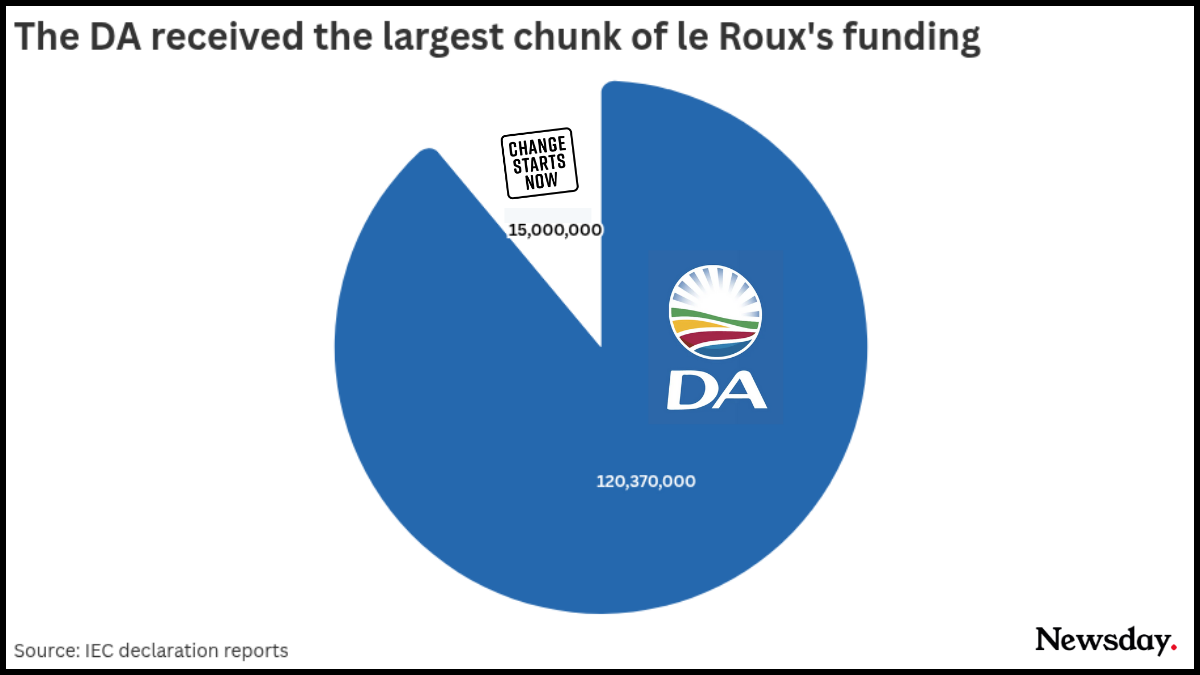
Donations over the threshold
For most of South Africa’s democratic era, political party funding remained opaque, with no obligation to disclose private donations.
Civil society groups challenged this secrecy, arguing that voters had a constitutional right to know who funds political parties.
In 2018, the Constitutional Court ruled that Parliament must pass legislation to ensure transparency. This led to the Political Party Funding Act, which came into effect in April 2021.
The law introduced disclosure rules, donation limits, IEC oversight, and public access to funding data.
While the Political Funding Act caps donations from a single donor or entity, MVC said that le Roux has long bypassed this by maxing out donations through multiple entities.
“It is important to note that, because the Act does not prohibit donations from related entities, this is in fact entirely legal, although it clearly circumvents the spirit of the Act,” said My Vote Counts.
For example, for the year ending March 2022, when the annual donation cap was at R15 million, two entities connected with Le Roux, Fynbos Ekwiteit, and Fynbos Kapitaal donated a total of R30 million to the DA.
The group said that it is for this reason, among many others, that it brought application proceedings to challenge the constitutionality of the Act.
“In our legal papers, we argued that the Act’s failure to regulate donations from related entities renders it unconstitutional and unable to meet its objectives.”
“Private funding remains dominated by a small group of high-profile individuals who can easily divide or channel contributions through multiple entities to sidestep any nominal thresholds.”
“Consequently, these few donors exert disproportionate influence, underscoring the vulnerability of the current system to circumvention and the need to regulate donations from related entities/ persons,” said My Vote Counts.
It is essential to note that this does not provide a comprehensive view of political party funding, as billions of taxpayer funds are allocated to represented political parties.
Additionally, many parties do not disclose details of their funding, often circumventing requirements of the act by receiving donations just below the threshold.
The MK Party, for example, has disclosed receiving only R300,000 – a fraction of what would have been the spend on their 2024 election campaign.
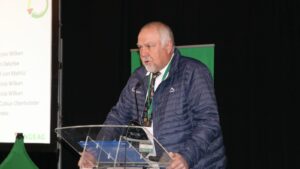
Who is Michiel le Roux?
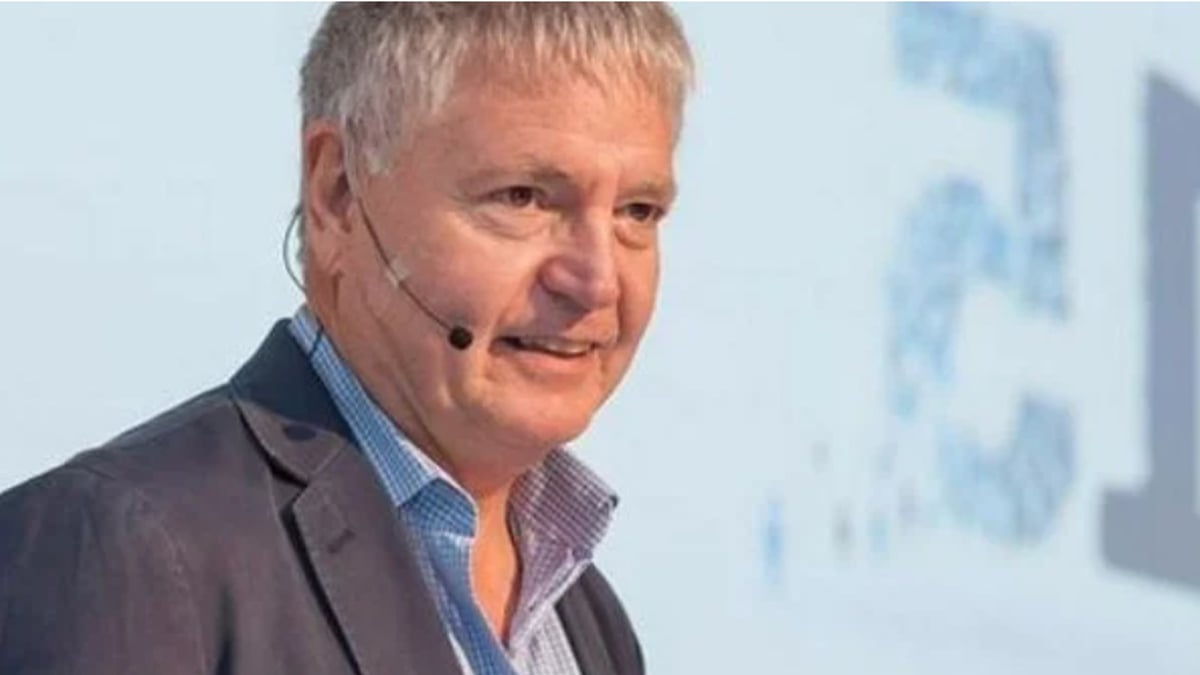
Born on 20 May 1949, Le Roux studied BCom (Law) and LLB degrees at the University of Stellenbosch, where he shared a room with future PSG Group founder Chris Otto.
After graduating, he joined Distillers, becoming managing director in 1979.
In 1994, Le Roux was appointed managing director of Boland Bank by chair Christo Wiese.
A disagreement over the bank’s direction led to his resignation four years later and a costly legal dispute— an experience that would shape his views on modern banking.
Seeing the sector as outdated and inefficient, he set out to create a more accessible, customer-focused bank.
In 2001, he co-founded Capitec Bank with Riaan Stassen, targeting South Africa’s under-served middle- and lower-income markets. The bank listed on the JSE in 2002.
Le Roux chaired Capitec’s board from 2007 to 2016 and remains a director, holding about 11% of its shares.
The bank now operates 866 branches, employs 15,000 people, and serves over 22 million clients.
Capitec has been ranked the world’s best bank by Lafferty (2016) and recognised for innovation in Africa Bank 4.0 Awards.
Its 2024 financial results showed transaction volumes rising 21% to 9.9 billion and app users up 19% to 11.2 million, reinforcing its position as South Africa’s leading digital bank.
Le Roux denied that Capitec had any links with the DA. “Capitec does not fund any political parties,” he said to Sunday World.
READ: We do not know where 78% of the ANC’s private funding came from



 Loading ...
….and the other political parties? Where do their donations come from…full disclosure!!