
Government plans to expand sex offender register access, but public still locked out



The Department of Justice and Constitutional Development has announced plans to expand access to the National Register for Sex Offenders (NRSO), though significant legal limitations remain.
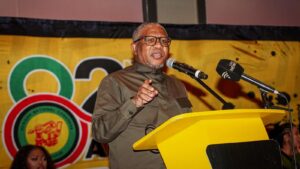
Replying to questions in Parliament, Minister of Justice Mmamoloko Kubayi said the department is prioritising access for institutions working with vulnerable groups.
“The department is prioritising providing swift and responsible access for institutions that work with vulnerable groups, such as schools, day-care centres, and care facilities, to support their vetting processes,” she said.
The Minister added that the Registrar’s office will be expanded to handle applications more efficiently.
“There is an intention to create more capacity in the Registrar’s office, including in the various provinces, to process applications efficiently and expeditiously,” said Kubayi.
However, access is not yet open to the general public.
The register, initially scheduled for release at the end of February 2025, has been delayed due to privacy provisions in current legislation, which restrict public disclosure.
The Information Regulator welcomed this, saying that “sexual assault and gender-based violence are doubtlessly a scourge in South Africa and all legally sound actions must be taken to protect the vulnerable against such egregious violations.”
“However, in a rules-based society such as South Africa, it is also imperative that such action must fall within the confines of the law.”
They claimed that an outright publication of the NRSO would not be consistent with the eight conditions for lawful processing of personal information in terms of the Protection of Personal Information Act.
Current law, Kubayi said, “prohibits and criminalises publication of the Register, except for the purpose of giving effect to the provisions of the Act, or when required to do by any competent court.”
A legal opinion from the Office of the Chief State Law Advisor said that wider publication would require a law specifically authorising it.
To address this, she said that an amendment bill has been drafted and is undergoing consultation.
“Further consultations will be undertaken with experts, including the Information Regulator, regarding the accessibility of the Register. Once this consultation has been concluded, the Bill will then be subjected to the parliamentary processes,” Kubayi said.
The Minister said that this move is intended to improve protections for children, women, and other vulnerable groups, but access remains limited, and the department is still navigating the balance between public safety and ‘legal safeguards’ for those listed on the NRSO.
An important step forward

The Teddy Bear Foundation has highlighted the urgent need to publish the NRSO to help combat high levels of child sexual abuse in South Africa.
In an interview with the SABC, child protection expert Dr. Shaheda Omar emphasised the problem of low conviction rates for child sexual abuse cases, revealing that over a five-year period, only 4% of more than 5,000 children who went to court saw a successful conviction.
“This raises serious concerns about access to justice for children, who are often unable to advocate for themselves,” she said.
Omar stressed that despite operational challenges, the NRSO remains a vital tool.
“It is extremely important to safeguard and protect children, ensuring they are not subjected to sexual violence. Employers such as schools, day-care centres, and hospitals rely on the register to vet potential employees,” she said.
Kubayi said “Government has noted that the GBVF scourge continues to ravage our country despite the interventions put in place. GBVF and in particular sexual offences have continued to be a challenge.”
“My Department remains committed to the protection of all vulnerable persons including children, women and persons with disabilities.”
“We have been consistent on many occasions that their continued protection remains our priority,” she added.
Build One South Africa (BOSA), who has long been pushing for full disclosure of the list, welcomed the government’s commitment to make the NRSO more accessible.
It said public access is “essential to protecting the safety of our most vulnerable” and would empower communities to take proactive steps against sexual abuse and gender-based violence.
BOSA highlighted its two-year campaign for transparency, including a petition signed by over 20,000 South Africans and a PAIA application.
The organisation called for urgent timelines, emphasising the risk of repeat offending.
“Nine out of ten ex-offenders reoffend after release. Public access can help break this cycle and protect communities.”








 Loading ...