
Eskom chairman Mteto Nyati comments on Helen Zille and Herman Mashaba in the battle for Johannesburg, Tshwane, and Ekurhuleni


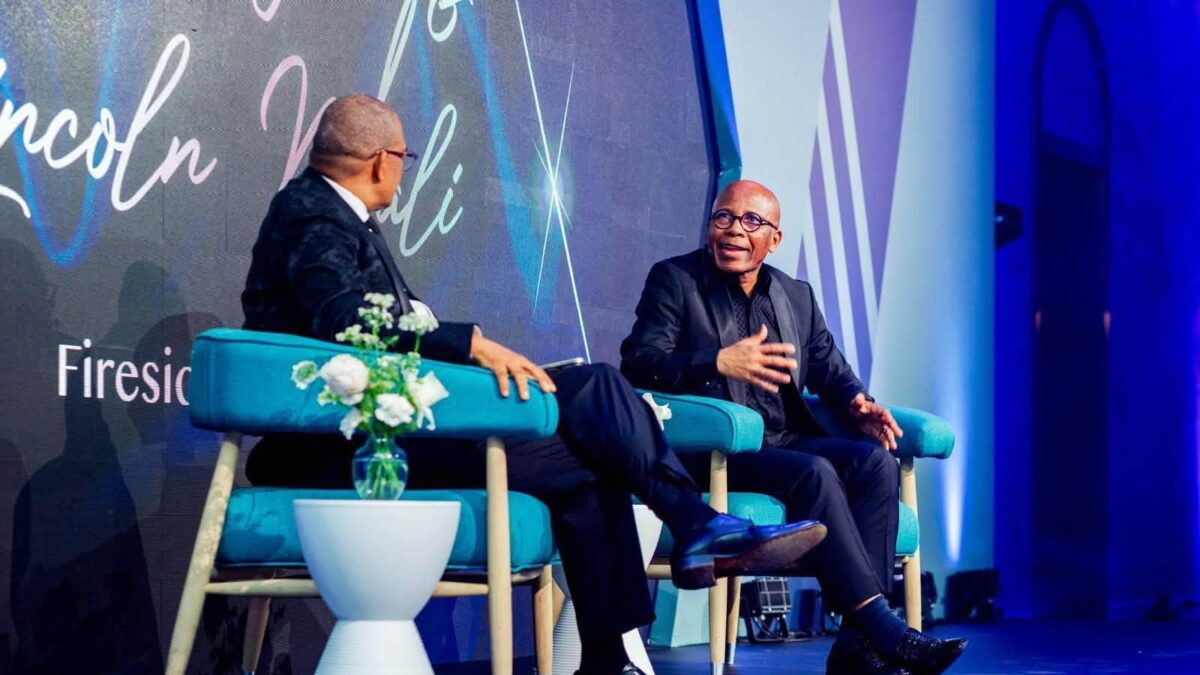
Eskom chairman Mteto Nyati said that complex coalition negotiations following the 2026 local government elections are being reduced to assumptions about personalities.
His comment came amidst the fierce battle over the Gauteng metros, Johannesburg, Tshwane and Ekurhuleni, where no party won an outright majority.
Although the Democratic Alliance gained the most votes in these three metros, ActionSA emerged as the kingmaker.
ActionSA leader Herman Mashaba offered the DA a deal where it would take over the mayoralties of Johannesburg and Ekurhuleni.
As part of the deal, ActionSA will hold deputy mayor positions and participate in executive government, while the DA must support Nasiphi Moya as mayor in Tshwane.
There is a requirement that Helen Zille and Cilliers Brink must step aside, given Zille’s history of breaking coalitions and Brink’s poor performance as Tshwane mayor.
Mashaba would also step back in Johannesburg, creating an environment where successors could lead both parties forward.
However, the DA rejected this and countered by demanding total executive control over Johannesburg and Ekurhuleni.
ActionSA national chairman Michael Beaumont said that this offer was a non-starter, as ActionSA would be a spectator in Johannesburg and Ekurhuleni.
Democratic Alliance (DA) leader Geordin Hill-Lewis explained that Zille stepping back was not on the table and that it amounted to extortion.
“We put it before the public and said Helen Zille is our candidate. She ran an energetic campaign that inspired many people and won a lot of confidence,” he said.
“We are not going to agree to allow other parties to choose who can represent us. That is just not on the cards. That is, frankly, extortion.”
“The rule of life about extortion is that as soon as you pay the price once, the price just keeps going up, so it is a very bad idea to give into that right from the beginning.”
Mteto Nyati comments on the battle in Gauteng
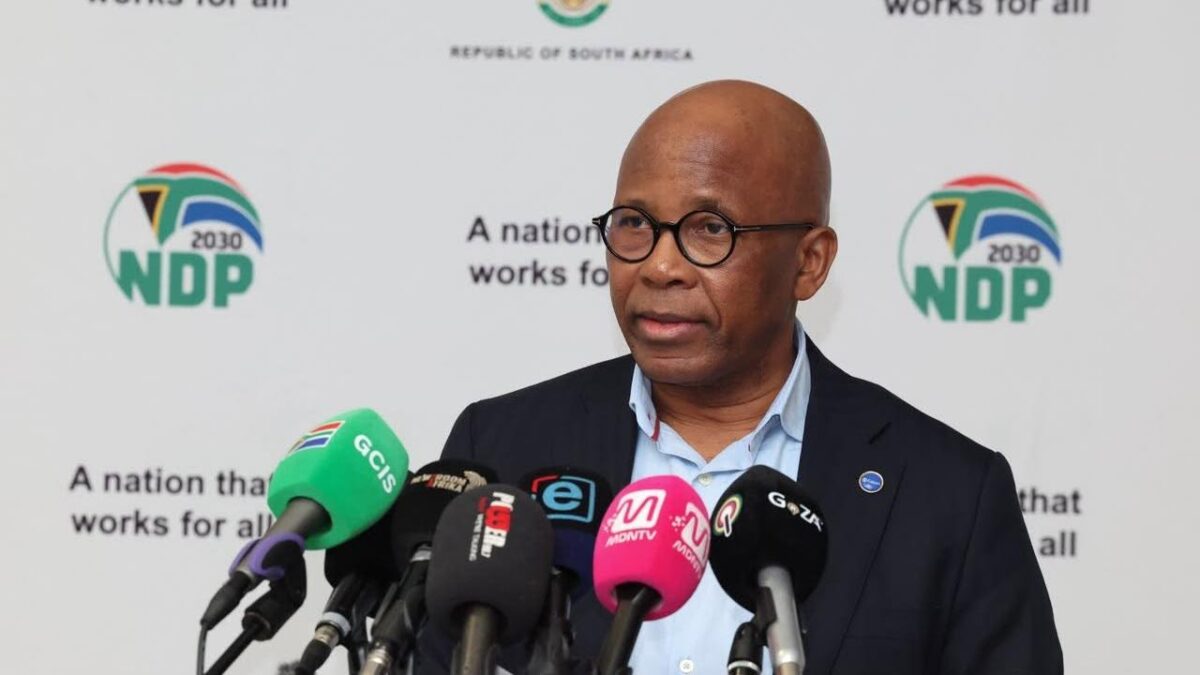
Eskom chairman Mteto Nyati said that South Africans are watching a familiar pattern in the negotiations around the Gauteng metros.
“Complex coalition negotiations are being reduced to assumptions about personalities rather than a clear-eyed focus on what the cities actually need,” he said.
“Mashaba has stated that ActionSA is willing to work with the DA in Johannesburg, Tshwane and Ekurhuleni, provided Zille and Brink are not the mayoral candidates.”
The prevailing response has been to treat this position as the product of ego, personal grievance, or immaturity, and to question his grasp of the mandate of Gauteng voters.
“What is absent is any serious effort to examine the substance of the concerns he is raising, or to apply the same standard of putting the country first to every leader.”
Nyati said that this was not the first time South Africa has seen prevailing assumptions treated as settled fact.
He said that when the Eskom board was appointed in late 2022, three ideas were widely accepted without rigorous challenge.
- That the coal fleet was simply too old and should be retired.
- That higher levels of loadshedding meant the grid was close to collapse.
- That investing in planned maintenance was good money after bad.
“In the period before the 2024 national election, once loadshedding had largely ended, another set of assumptions took hold,” he said.
“This included that Eskom was burning diesel at an unsustainable rate and that Stage 8 would return immediately after the polls.”
By 2025 and into 2026, the Generation Recovery Plan produced sustained results and Eskom’s Energy Availability Factor increased to over 68%.
There were fewer unplanned outages, reduced diesel expenditure, and 550 consecutive days without loadshedding.
“The explanation shifted once again. The recovery was attributed mainly to lower demand and rooftop solar,” he said.
Eskom was not credited for disciplined maintenance, operational recovery, and consistent leadership focus.
“These successive narratives were not always offered in bad faith. They were, however, rarely tested against the operational evidence,” he said.
“The same habit of mind is now visible in the metros. The DA has long spoken of its leadership depth. This is the moment to demonstrate it.”
Nyati said that the residents of Johannesburg, Tshwane and Ekurhuleni do not require any particular individual to succeed.
“They require capable leadership that can command broad support and concentrate on restoring service delivery,” he said.
“Negotiation is, by definition, a process of give and take. Drawing permanent lines around named individuals is a choice, not an obligation.”
“Even at this late stage, it remains possible to put the citizens of Gauteng first. That requires leadership. Giving up cannot be an option.”
You have read 1 out of 5 free articles. Log in or register for unlimited access.






 Loading ...
This whole episode is a crisis because I call this a major crisis. When will the leaders of anc, ASA, EFF,mk put the citizens first. We had 32 years of criminal actives left all municipalities in a crisis, disastrous state, they can’t fix any thing nor will they ever do to make a change, their are money hungry.
Here comes DA with Helen Zillie for JHB a hard working group who got the highest votes, unfortunately not the majority.
Mostly because the 20 % short was due to those individuals sitting on the fence undecided who to vote. That same 20% will turn to DA in a blink as conditions going to get worse, no water, no service delivery no nothing the ANC coalition can not change. While enjoying the perks and loading their pockets.