
Free State municipalities collapse in plain sight



Parliament got a front-row seat to the collapse of local governance in the Free State, as municipalities struggled to explain years of mismanagement, financial disorder, and service delivery failures before a joint oversight delegation.
From billions in unpaid water debts to pension funds deducted but never paid over, the hearings exposed municipalities drowning in dysfunction and a lack of accountability.
Among other issues, MPs were told how officials with poor track records, including fraud and illegal contractor appointments, continue to move between municipalities, leaving trails of destruction behind.
Many of them hold senior roles such as municipal managers, CFOs, or administrators.
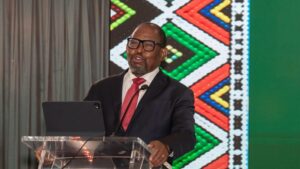
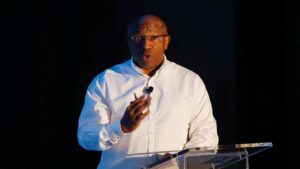
“The crisis in the Free State is no longer a matter of concern – it is a matter of urgency,” said Cooperative Governance and Traditional Affairs (CoGTA) Portfolio Committee chairperson Dr. Zweli Mkhezi.
Parliament’s Portfolio Committee on CoGTA, Standing Committees on Public Accounts (SCOPA), and Auditor General, along with Members of the Free State Provincial Legislature, hauled 23 municipalities from across the province before them.
This came following a lacklustre performance by Free State municipalities, as flagged by the Auditor-General’s (AG’s) latest audit.
Based on the AG’s report, the province ranks among the worst in the country, with 70% of municipalities running unfunded budgets and accumulating R4.2 billion in unauthorised expenditure.
Many failed to submit financials on time and received repeated disclaimer audit opinions. They posted a net loss of R745 million, owe Eskom R6.2 billion, and face rising irregular (R12.5 billion) and fruitless expenditure (R5.3 billion).
The AG warned of a “culture of complacency” and urged action to end the “culture of impunity,” which is significantly impacting service delivery and hurting the residents.
At the end of 2024, the South African Human Rights Commission published a report of its inquiry into service delivery at the local government level in the Free State
After being inundated with complaints about a lack of access to water, electricity, housing, sanitation, and refuse collection, the probe found numerous issues.
Among the findings were that Free State municipalities are plagued by staff shortages, failing infrastructure, sewage pollution, rising debt, poor service delivery, and legal violations.
‘What is it that you do?’

Lawmakers were delivered a grim reality check when municipalities appeared before them in Bloemfontein.
Overall, municipalities reported stagnant audit outcomes, repeated irregular expenditure, poor procurement, and weak consequence management.
Many are grant-reliant, with bloated salary bills and unfunded budgets that leave little room for service delivery.
Common issues include poor revenue collection and mounting debts to Eskom and water boards.
Prolonged vacancies in senior positions and reliance on consultants without skills transfer further weaken capacity, while infrastructure decay, water losses, and unmanaged overtime have added to the crisis.
Oversight committee members heard of audit units that do not function, financial records destroyed to cover tracks, and towns where no official has faced consequences despite years of red flags.
Some councils have failed to pay over R100 million in pension contributions deducted from workers’ salaries, while others are buckling under unsustainable wage bills, overstaffing, and collapsed internal controls.
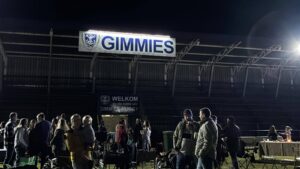
Recordings of the meeting went viral, especially when MPs grilled the Lejweleputswa District Municipality, which includes Welkom.
Executive Mayor Veronica Ntakumbana, Municipal Manager Motlatsi Makhetha, and CFO Kevin Khoabane admitted their municipality is 98% reliant on national grants and spends over 95% of its R156 million equitable share on salaries and councillor remuneration.
Despite having 127 staff members, officials struggled to explain the municipality’s core function, especially since local municipalities handle basic services like water.
When asked to justify its salary-heavy budget, Ntakumbana and Makhetha cited broad functions like municipal support, EPWP, food and water testing, HIV programs, and environmental health.
Their vague responses drew criticism, with MPs arguing these tasks require minimal staff and could be done by NGOs. The claim of being a “special district” was dismissed.
“We can’t pick up even one valuable item that is a sole mandate… it functions as another layer of paying salaries,” said MP Sanele Mwali, calling it “a special patronage zone or a gravy train… just there to take money from the fiscus.”
“We are seeing collapsing local municipalities under a district municipality that is getting over R150 million. There’s no value for money because we don’t see any performance from the local municipalities that fall under this district municipality,” he added.
We are cracking the whip, claims Parliament
Oversight members called for urgent reforms, consequence management, and improved financial controls. Mkhize described the crisis as “self-inflicted ruin,” driven by poverty, incompetence, and leadership failure.
Some municipalities face “unsustainable structural conditions,” being rural, grant-dependent, and politically unstable.
“This kind of administrative and political instability has created a climate where municipalities cannot operate effectively,” he said.
Others have revenue potential but suffer from “poor leadership, weak governance.” “It is a kind of self-inflicted injury,” he added.
Parliament ordered provincial MECs to report back in three months with actions taken. “We are here to take responsibility… ensure consequence management,” said Mkhize.





 Loading ...
A shameful state of affairs, incompetence and corruption and nobody is ever held responsible. It is tragic what this government has done to this beautiful country! We need a change of government, qualified competent people should be running municipalities and the corrupt should be charged and pay back public monies! Not paying over pension money is criminal. If strong action is not taken soon we will reach the point of no return!