
8,465 government buildings are in a poor or critical condition and will cost R28 billion to fix



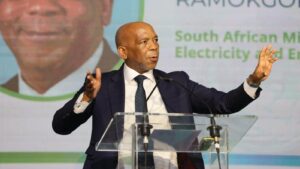
Minister of Public Works and Infrastructure, Dean Macpherson, said that 8,465 government buildings are in a poor or critical condition.
Macpherson shared this information in response to a Parliamentary question from National Assembly member Siphosethu Ngcobo.
Ngcobo asked him for details on the number of government buildings classified as in poor or critical condition.
He also requested information on the percentage of properties that have funded maintenance plans and the timeline for addressing the maintenance backlog.
Macpherson responded, saying there are 8,465 government buildings currently classified as in poor or critical condition as of 1 August 2026.
He added that the 8,465 buildings represents 10.8% of the total population of government buildings in South Africa.
He explained that the day-to-day maintenance responsibilities reside with the User Departments.
Building maintenance is carried out under the auspices of the User Departments’ devolved budgets.
“It is estimated that 50% of poor or critically classified buildings are registered for refurbishment,” he said.
“Notwithstanding the projects which are in execution, the maintenance backlog of approximately R28 billion will require substantial capital injection”.
“The scheduling of a timeline and refurbishment plans is subject to the confirmation of budget by the National Treasury and User Departments.”
This, Macpherson said, is why he has proposed forming the South African National Property Company.
This company would see the creation of a dedicated, commercially driven institution that ringfences its revenue.
The South African National Property Company will employ the technical skills needed to operate a property company.
“It will make use of innovative PPP models that will maintain, refurbish and construct new assets that will maximise revenue for the country well into the future,” he said.


 Loading ...
The type of questions asked by Ngcobo, a member of the National Assembly, ought to be asked annually and followed up on a monthly basis. Has this ever been done? Perhaps, but there was never any follow-up. Smart questions are asked, but there are no “smart” answers or actions—typical ANC.