
Name change of historic South African town under siege


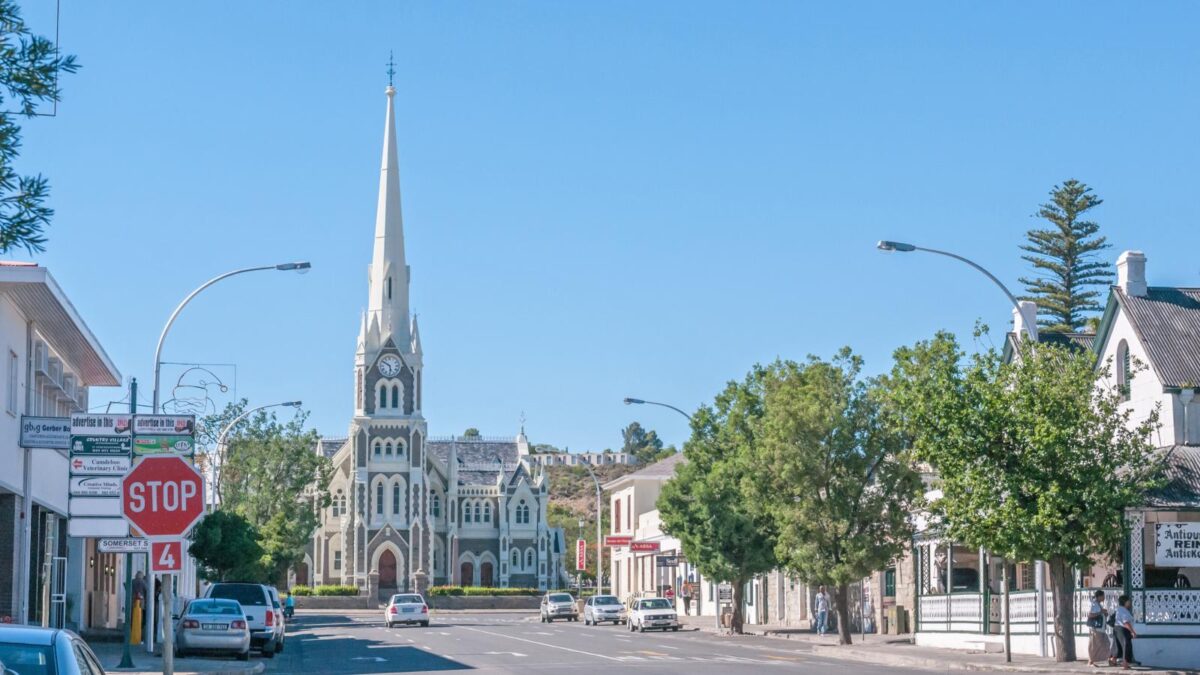
AfriForum is preparing for a court battle over changing the name of Graaff-Reinet to Robert Sobukwe Town, arguing that it is not in line with the law.
The issue dates back to 6 February 2026, when Minister of Sport, Arts and Culture, Gayton McKenzie, announced the name change in the Government Gazette.
The South African Geographical Names Council Act 118 of 1998 provides for objections to be lodged within 30 days of the publication of a name change.
AfriForum sent a legal letter to the Minister on 16 February 2026, objecting to the name change of Graaff-Reinet.
After the letter remained unanswered, the application was filed with the High Court in Pretoria in May 2026.
Initially, there was no opposition notice. However, after the case had been placed on the unopposed roll, this notice was received.
The Department of Sport, Arts and Culture’s legal team indicated that the Minister and the South African Geographical Names Board intend to oppose the application.
Alana Bailey, AfriForum’s head of cultural affairs, said that their objection is based on the fact that this is not an exceptional case.
The Eastern Cape provincial policy on place names states that renaming places of particular historical significance should be considered only in exceptional cases.
“With regard to Graaff-Reinet, with its 240-year legacy, AfriForum is of the opinion that no such circumstances can be found,” Bailey said.
“Contrary to the policy, the change also indicates that the necessary consideration for preserving the town’s historical and cultural heritage has not been given.”
She added that a study found that the majority of Graaff-Reinet residents oppose the name change to Robert Sobukwe Town.
“The name change process is unconstitutional, as the department’s own process for reviewing the relevant legislation currently appears to confirm,” she said.
Residents of Graaff-Reinet fight against the name change
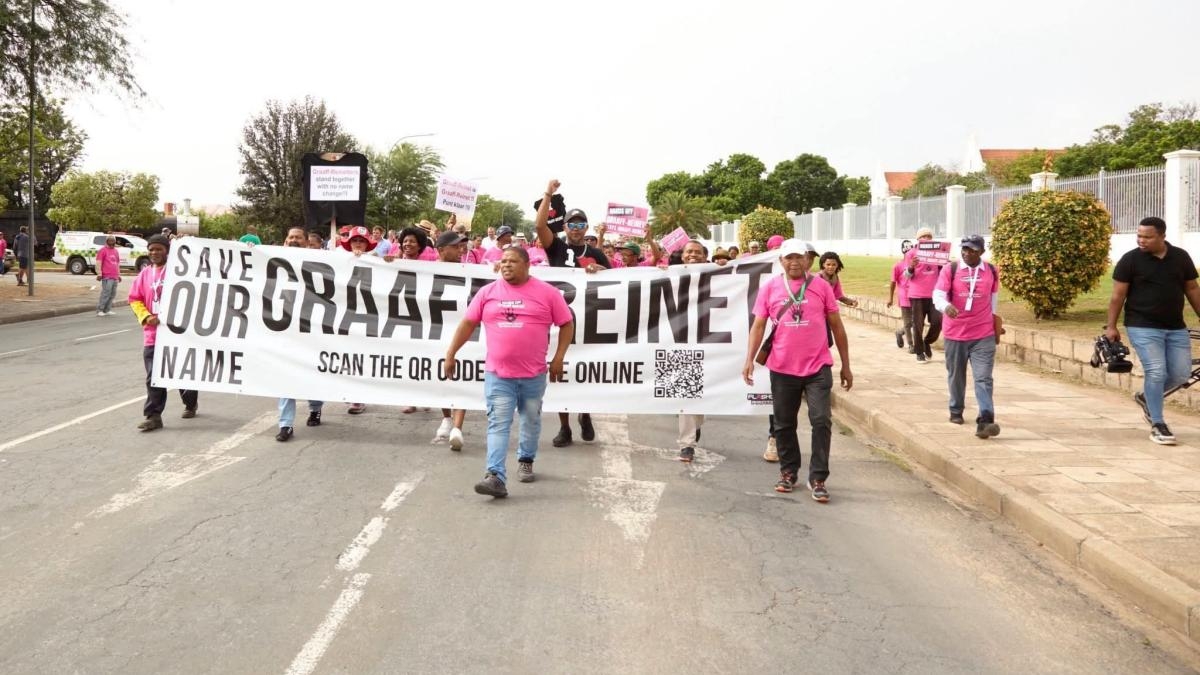
Residents of Graaff-Reinet, one of South Africa’s most historic towns, are putting up fierce resistance to changing the name to Robert Sobukwe Town.
Graaff-Reinet dates back to 1786 and honours Cornelis Jacob van de Graaff, a Dutch governor of the Cape Colony under the VOC, and his wife, Cornelia Reynet.
In 1795, citizens rid themselves of VOC taxes and established the short-lived Republic of Graaff-Reinet.
Much later, in the 1830s, Graaff-Reinet was also the point of departure for the Great Trek, a historic event in Afrikaner culture.
This historical significance, many argue, was brushed aside by McKenzie’s decision to rename it Robert Sobukwe Town.
The Freedom Front Plus said this name change was an example of cultural imperialism in which Afrikaner cultural history was annihilated.
“It has become customary to expect Afrikaners, and only Afrikaners, to sacrifice their heritage on the altar to appease the rest. We refuse to keep doing it,” the party said.
The Freedom Front Plus rejected Graaff-Reinet’s name change and said it would rectify it at the first opportunity that arises.
The party’s leader, Dr. Corné Mulder, urged everyone who values the name Graaff-Reinet to remain loyal to the name and not change to Robert Sobukwe Town.
Derek Light, a Graaff-Reinet resident and attorney at Derek Light Attorneys, is also challenging the name change through a legal process.
Light said the administrative process for the Graaff-Reinet name change was flawed and invalid.
He explained that this was made clear in 2024, when the proposed name change was halted due to a flawed consultation process.
Due to procedural issues, the South African Geographical Names Council (SAGNC) halted the name change and referred it back to the provincial council.
Despite these problems, McKenzie unexpectedly gazetted the name change on 6 February 2026.
Light challenged the government gazette notice, saying it was defective because it did not inform the public that they had 30 days to object and where to object.
He added that, apart from the administrative process being flawed, the name change has no merit.







 Loading ...
The damages are done ever since black corrupt government tool power in 1994. Changing of historical names of the places was the way of black corrupt government determining everything in the country is collapsed. ANC government did not build new things so that they can name them unless to change the towns, cities or airports built by apartheid government as if they participated in building them. We know they were burning everything during their struggle for power even now they are still burning, looting of facilities.