
The government does not know whether land reform is positive or negative, or how many projects fail



The Minister of Land Reform and Rural Development said that the socio-economic outcomes of land reform projects in South Africa remain unknown.
This feedback followed a question from National Assembly member Letta Maseko about the impact of land reform in South Africa.
Land reform is one of the South African government’s key policies, addressing the historical dispossession of black people through colonial and apartheid-era policies.
The land reform program is structured into three constitutional pillars: restitution, redistribution, and tenure reform.
The most controversial part of land reform is the Expropriation Act, which President Cyril Ramaphosa signed into law in January 2025.
This act legally permits the state to expropriate private property in the public interest, allowing for ‘nil compensation’ in specific scenarios.
It has had severely negative consequences for South Africa, since property rights are a core ingredient to a healthy economy.
Given the negative impact of such a policy, one would expect the government to know that land reform has a positive socio-economic impact.
However, this is not the case. The Minister of Land Reform and Rural Development, Mzwanele Nyhontso, said they do not know what the impact is.
Maseko asked the Minister what measurable socio-economic outcomes have resulted from land reform projects in the past five financial years.
She also asked how many direct and indirect jobs have been created through land reform initiatives in the specified period.
She then requested the percentage of redistributed land that has been reverted to the state due to project failure, non-use, or breach of conditions.
Minister Nyhontso responded, saying the socio-economic outcomes are unknown because no socio-economic impact study has yet been undertaken.
Simply put, the government is implementing land reform programmes without any idea whether the impact is positive or negative.
The minister added that no direct and indirect jobs have been created through land reform initiatives.
“The Department of Land Reform and Rural Development does not have initiatives that directly or indirectly create jobs,” he said.
Nyhontso could also not provide the percentage of redistributed land that has been reverted to the state.
“The department does not keep a database of land that has been redistributed and reverted to the state,” he said.
Land reform continues unabated
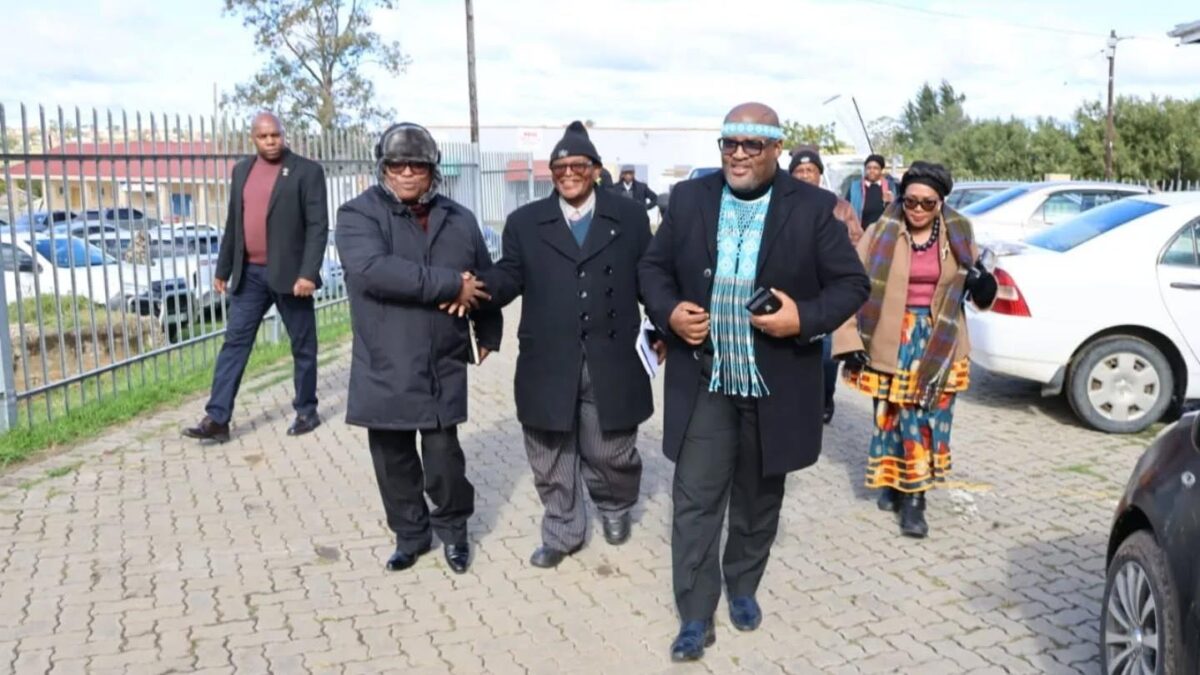
Despite not knowing the impact of land reform and whether it creates jobs, the government is continuing with this policy.
The Minister said that approximately 1.2 million hectares of state-owned land have been identified for redistribution.
He explained that land redistribution is implemented through both leasehold and freehold arrangements.
- Under the leasehold programme, approximately 2.3 million hectares are currently under leasehold.
- In respect of freehold, a total of 74,055 hectares were transferred during the last financial year to land reform beneficiaries and municipalities for human settlements purposes.
He explained that his department targets strategically located land to meet the land needs of previously disadvantaged South African citizens.
“Land that is unencumbered and not utilised is released for purposes of land redistribution,” he said.
“In allocating land, the department looks at South African citizens who are previously disadvantaged and have a need for access to land for various uses.”








 Loading ...
Blind fake activity with known general negative outcome to take away the focus from looting the state coffer. Tragic.